
Hot Keywords:
- All
- Product Name
- Product Keyword
- Product Model
- Product Summary
- Product Description
- Multi Field Search

Industrial production processes often generate smoke, dust, heat, odors, and various types of process exhaust gases. If these pollutants accumulate inside a workshop for long periods, they can negatively affect indoor air quality, equipment operation, and the working environment. Therefore, establishing an effective industrial exhaust ventilation system is an important part of modern industrial environmental management.
An efficient solution combines source capture, duct transportation, exhaust gas treatment, and safe discharge. In practical applications, flexible ventilation ducts offer advantages such as low weight, easy installation, and flexible routing, making them suitable for equipment exhaust, temporary ventilation, and industrial exhaust applications.
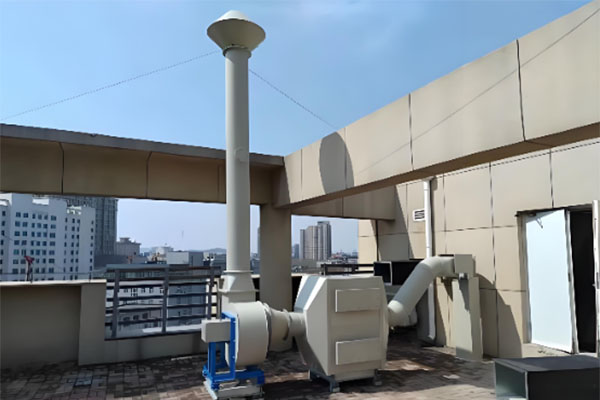
An industrial exhaust ventilation system generally consists of exhaust hoods, ventilation ducts, fans, filtration or purification equipment, and other components. Together, these components create an effective airflow path that captures pollutants generated during production and transports them to appropriate treatment equipment before safe discharge.
For welding, grinding, painting, cutting, chemical processing, and similar operations, local exhaust ventilation should be installed as close as practical to the pollution source. Proper positioning of the exhaust hood can improve pollutant capture efficiency and reduce the spread of contaminants throughout the workshop.
After pollutants are captured, they must be transported through ventilation ducts. Traditional metal ducts are suitable for large permanent systems, while flexible ventilation ducts can be bent, extended, and adjusted according to equipment locations and available space. This makes them particularly useful for equipment connections, temporary exhaust systems, and areas with limited installation space.
Ventilation fans provide the airflow and pressure required by the system, while filters, dust collectors, activated carbon units, and other purification equipment help remove specific pollutants. Proper matching of airflow, pressure, and duct diameter is essential for stable and efficient operation.
Industrial production layouts are not always permanent. Equipment may be relocated or production lines may be modified as manufacturing requirements change. A completely rigid duct system can require significant dismantling and reconstruction during these changes, increasing installation time and maintenance costs.
Flexible ventilation ducts can adapt to complex installation environments within their designed operating range. NSTARP's Flexible Ventilation Duct products use high-strength polyester fabric with PVC coating and are designed to provide flexibility, wear resistance, and moisture resistance. They can be used in applications including industrial exhaust ventilation, mining, and tunnel ventilation.
Flexible ducts can follow different routes and bend around obstacles, making them suitable for mobile equipment, temporary exhaust systems, and confined industrial areas.
Compared with some conventional rigid ducting systems, flexible ventilation ducts are easier to transport, handle, and install. Their rollable design can also reduce storage requirements.
PVC-coated materials can provide useful protection against moisture, abrasion, and certain environmental conditions. This makes flexible ducts suitable for industrial areas where dust, humidity, or complicated installation conditions are present.
An effective industrial exhaust ventilation solution should not focus only on the ductwork. The overall system should be designed according to the pollution source, exhaust characteristics, production process, and factory layout.
Analyze where exhaust gases are generated and determine their temperature, concentration, particulate content, corrosiveness, and potential flammability. Different pollutants require different capture and treatment methods.
The distance between the pollution source and treatment equipment should be optimized. Avoid unnecessary bends and excessively long ducts whenever possible to reduce system resistance and energy consumption.
The duct must be selected according to the operating pressure and application. Positive-pressure air supply and negative-pressure exhaust systems have different requirements. For exhaust applications involving smoke, dust, or process gases, the duct should maintain adequate structural stability under negative pressure.
Industrial environments may involve high temperatures, dust, static electricity, or fire risks. Therefore, ventilation ducts may need specific properties such as flame retardancy, anti-static performance, or temperature resistance depending on the operating conditions. NSTARP also offers flexible ventilation duct options with flame-retardant and anti-static features for different industrial applications.
| Application | Main Pollutants | Recommended Ventilation Method | Key Duct Requirements |
|---|---|---|---|
| Welding Workshop | Welding fumes, heat | Local exhaust + purification | Abrasion resistance, flame retardancy, negative-pressure stability |
| Metal Processing Workshop | Metal dust, oil mist | Local extraction + filtration | Reduced dust accumulation |
| Painting Workshop | Paint mist, VOCs | Local exhaust + exhaust treatment | Chemical resistance, good sealing |
| Chemical Processing Area | Chemical exhaust gases | Local capture + purification | Corrosion resistance, safety performance |
| Tunnel Construction | Dust, equipment exhaust | Mechanical exhaust ventilation | Flexibility, abrasion resistance, easy extension |
| Temporary Industrial Work Area | Smoke, heat | Mobile exhaust ventilation | Fast installation, flexible routing |
Proper installation is only the foundation of reliable system operation. Regular maintenance is equally important. Flexible ventilation ducts should be inspected periodically for surface damage, abrasion, cracks, and loose connections. Damaged sections or leaking connections should be repaired or replaced promptly.
The operating condition of the ventilation fan, dust accumulation inside the ducts, and the service condition of filtration and purification equipment should also be monitored. If airflow decreases significantly or exhaust efficiency drops, the system should be checked for excessive resistance, duct blockage, leakage, or equipment problems.
For high-dust, high-temperature, or corrosive industrial environments, maintenance intervals should be determined according to actual operating conditions.
Several factors should be considered when selecting an industrial exhaust ventilation duct.
Dust, smoke, chemical gases, and high-temperature gases have different requirements for duct materials. The PVC coating, fabric structure, reinforcement method, and other specifications should be selected according to the actual operating medium.
Positive-pressure air supply and negative-pressure exhaust applications should not automatically use the same duct configuration. The appropriate duct structure should be determined according to fan pressure, airflow volume, and operating conditions.
Duct diameter, length, bending radius, and connection method can all affect system performance. Proper sizing helps reduce airflow resistance, leakage, and unnecessary energy consumption.
Industrial exhaust treatment is not simply about removing contaminated air from a building. An effective system should integrate pollution source capture, airflow transportation, exhaust gas purification, and safe discharge into a complete process.
Flexible ventilation ducts can provide an adaptable solution for equipment connections, mobile exhaust systems, temporary ventilation, and complicated industrial spaces where rigid ductwork may be difficult to install.
For factories, tunnels, mines, and temporary industrial work areas, high-strength, abrasion-resistant, moisture-resistant, and application-specific flexible ventilation ducts can provide reliable duct connections for industrial exhaust ventilation systems.
By designing an efficient airflow route and selecting the appropriate fans, purification equipment, and flexible ventilation duct, manufacturers can improve exhaust control and indoor air quality while creating a safer and more efficient working environment.
