
Hot Keywords:
- All
- Product Name
- Product Keyword
- Product Model
- Product Summary
- Product Description
- Multi Field Search

Large-scale outdoor events usually require the rapid construction of temporary venues that combine sun protection, rain resistance, safety, and space utilization. Scenarios such as music festivals, exhibitions, sports events, and celebrations have different requirements for tent materials. PVC tent fabrics, with properties such as waterproofing, weather resistance, and tear resistance, can be used for large event tents, tent halls, and temporary structures. Only by configuring materials and structures based on event scale, service life, and local climate can the stability of tents in actual use be ensured.
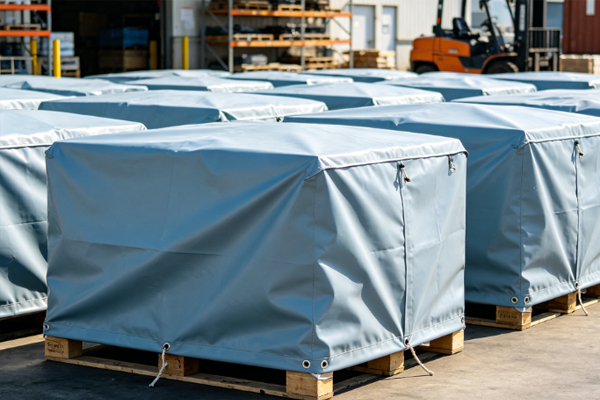
Temporary spaces for large events must not only provide shelter for people but also cope with rain, sunlight, wind, and frequent assembly and disassembly. Relying solely on appearance design is not enough to meet all practical requirements.
Outdoor events are highly affected by weather conditions, and sudden rain or prolonged sun exposure may disrupt normal operations.
The tent roof must have reliable waterproof performance to reduce water penetration.
For long-term use, UV resistance and weather durability must be considered.
In high-wind areas, structural design and anchoring methods must be integrated.
PVC-coated fabrics can provide basic protection such as waterproofing, UV resistance, anti-aging, anti-mildew, and weather resistance.
Large events usually require column-free or minimal-column spaces, which places higher demands on fabric width, strength, and splicing methods.
Reduce seams: lower leakage risk and improve construction efficiency.
Wide-width materials: easier cutting and adaptable to different tent structures.
Structural matching: material specifications must be planned in coordination with the overall structure.
For large-area coverage, materials and structures must be designed in coordination.
Large events also serve a display function, and the tent appearance is part of the overall experience.
Different colors can be selected according to event themes.
Surface finishes can be glossy or matte.
Custom designs are available to match branding or event requirements.
Combining function and visual design enhances the overall on-site presentation.
Different events vary significantly in scale, duration, and site conditions, requiring scenario-based configuration.
Exhibitions and commercial events focus more on space utilization, sun/rain protection, and overall appearance.
Exhibition areas are determined by booth quantity.
Commercial events must consider circulation, display, and equipment space.
Celebrations can be customized in size and color.
These projects typically require fast installation while maintaining visual quality, making PVC tent fabrics highly flexible in application.
Sports events usually require functional zoning in temporary spaces.
Clear zoning: spectator areas, rest areas, equipment zones, and service areas should be properly separated.
Smooth circulation: ensure safe and efficient pedestrian flow.
Environmental adaptability: waterproof, wear-resistant, and weather-resistant performance to handle changing conditions.
Stable materials and structures are the foundation for smooth event operation.
These events are longer in duration and involve complex equipment, requiring higher standards for space and safety. Stage areas must consider roof rain protection and drainage, while audience areas must balance sun protection and safety. Flame-retardant materials that meet relevant standards should be selected according to fire safety requirements. PVC-coated fabrics can provide different flame-retardant grades such as B1, B2, M1, M2, and NFPA701, which must be selected based on local regulations and project requirements.
Material selection directly determines the performance of tents in outdoor environments and is a core part of project procurement and design.
Different event usage durations require different specifications for PVC fabrics.
Event Type | Usage Characteristics | Key Performance Focus | Solution Priority |
One-day events | Frequent setup and dismantling | Waterproof, flexible, easy installation | Fast deployment |
Exhibitions | Short-term use | Appearance, waterproofing, wear resistance | Display effect |
Sports events | High crowd flow | Strength, waterproofing, weather resistance | Stable coverage |
Music festivals | Large area, heavy equipment | Waterproof, flame retardant, weather resistance | Safety and space |
Long-term tents | Repeated use | UV resistance, anti-aging, tear resistance | Long-term durability |
Different durations require different material strategies; proper matching improves cost-effectiveness and performance.
Outdoor tents are exposed to natural environments for long periods and must withstand various climatic conditions.
Rainy regions: focus on waterproofing and seam treatment to reduce leakage.
High-sunlight regions: enhance UV resistance to slow aging.
Regions with large temperature differences: ensure stable performance under both high and low temperatures.
The performance of PVC-coated fabrics is influenced by formulation, coating thickness, and processing technology, and cannot be evaluated solely by a single temperature indicator.
The larger the tent, the higher the requirements for material strength and processing accuracy, which must be considered in coordination with the structure.
Wide-width materials: select appropriate rolls to reduce seams.
Custom processing: cutting and welding based on shape.
Structural matching: materials and structure must be designed together to avoid later adjustments.
Proper coordination between materials and structure reduces rework and waste.
Material selection is only the foundation; construction techniques and structural handling also determine the final performance.
Large tents are usually assembled from multiple fabric pieces, making seams a critical waterproofing point.
Use heat-sealing processes to improve sealing performance.
Inspect seam areas carefully to prevent leakage.
Select appropriate welding methods based on material type to ensure strength.
Proper seam treatment effectively reduces the risk of water penetration.
If rainwater cannot be properly drained from the tent roof, it may accumulate and increase local load. Design should consider span, roof shape, and local rainfall conditions to create proper drainage paths while avoiding low-lying areas on the fabric. For large tent structures, drainage design must be integrated with the overall support system. A well-designed drainage system improves stability during rainy conditions.
Edges and connection points are key load-bearing areas and must be reinforced.
Anchoring methods: choose appropriate fixing systems based on ground conditions.
Edge reinforcement: strengthen high-stress areas to improve wind resistance.
Regular inspection: check connectors and stress points during repeated use.
The more reasonable the structure, the higher the stability in complex environments.
The requirements for outdoor event tents are no longer limited to basic shelter functions but increasingly focus on the integration of material performance and overall solutions. Only by coordinating fabric, structure, and construction conditions can tents better adapt to outdoor environments and ensure smooth event execution. Newstar Plastic Industry Co., Ltd. provides PVC tarpaulins and customized tent fabrics in various specifications, meeting the needs of different large-scale events and offering stable material support and cooperation assurance for outdoor projects.
