
Hot Keywords:
- All
- Product Name
- Product Keyword
- Product Model
- Product Summary
- Product Description
- Multi Field Search

Laboratories support a wide range of activities, including chemical analysis, biological research, material testing, and product development. Different laboratory processes may generate chemical vapors, dust, aerosols, odors, and other airborne contaminants. If ventilation is poorly designed, these pollutants may spread throughout the room, affecting personnel safety, laboratory conditions, and equipment performance.
Therefore, a professional laboratory ventilation solution should integrate source control, local exhaust, general air exchange, airflow organization, make-up air, and safety controls. Fume hoods are particularly important in chemical laboratories because they are designed to capture and exhaust hazardous gases, vapors, and particulates generated during laboratory procedures.
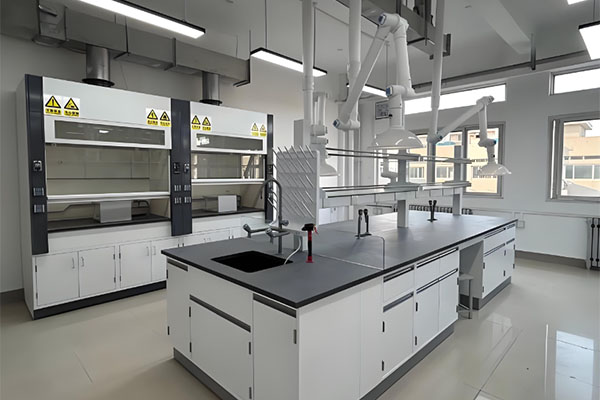
Chemical experiments, sample preparation, heating, evaporation, and chemical reactions may produce different types of airborne contaminants. Ordinary air conditioning or natural ventilation alone may not effectively control these contaminants before they spread.
A professional laboratory ventilation system can install fume hoods, extraction arms, or other local exhaust devices close to pollutant sources. This allows contaminants to be captured promptly and discharged through dedicated exhaust systems.
Laboratory ventilation needs to do more than remove contaminated air. It should also provide an appropriate amount of fresh air. Proper air exchange can reduce the accumulation of airborne contaminants and create a more comfortable working environment.
The required ventilation rate should not simply use one standard value for every laboratory. It should be determined according to the type of laboratory work, room size, equipment quantity, and risk level. Different laboratory areas may require different ventilation and exhaust requirements.
Local exhaust ventilation is an important method of controlling laboratory air contaminants. For operations that may generate hazardous gases, vapors, or dust, contaminants should ideally be captured close to the source rather than allowing them to spread throughout the room before being diluted by general ventilation.
Fume hoods, slot exhaust systems, and adjustable extraction arms can be configured according to the laboratory process. The airflow performance of a fume hood can be affected by sash height, equipment placement, and personnel movement. Therefore, proper airflow organization is essential during both system design and daily operation.
Laboratory ventilation systems need to coordinate supply air and exhaust air. Improperly positioned supply outlets may create strong crossflows that interfere with the capture performance of fume hoods.
Therefore, supply outlets, exhaust outlets, fume hoods, and workstations should be considered as part of an integrated layout. In laboratories with contamination risks, negative pressure relative to adjacent areas can also be used to help direct air from cleaner areas toward the laboratory before it is exhausted outdoors.
Different laboratories generate different contaminants, so exhaust systems should be designed according to actual operating conditions. For chemical vapors, dust, or specific hazardous substances, suitable filtration, adsorption, or other purification technologies can be selected based on pollutant characteristics.
For contaminated air that should not be recirculated indoors, an appropriate outdoor exhaust method should be designed according to laboratory risks and applicable local requirements. This helps prevent discharged contaminants from being drawn back into the fresh air intake system.
| Laboratory Type | Main Air Problems | Ventilation Focus | Recommended Measures |
|---|---|---|---|
| Chemical Laboratory | Chemical vapors, hazardous gases | Source capture | Fume hoods, local exhaust |
| Biological Laboratory | Aerosols, potential contaminants | Directional airflow | Negative pressure, dedicated exhaust |
| Materials Laboratory | Dust, fumes, volatile substances | Local exhaust | Extraction arms, filtration and purification |
| Analytical Laboratory | Chemical vapors, odors | Stable airflow | Fume hoods, mechanical exhaust |
| Clean Laboratory Area | Particles, cross-contamination | Air cleanliness | Filtration, fresh air, pressure control |
| Sample Preparation Area | Dust, volatile substances | Source control | Local exhaust, air purification |
Fume hoods are important local exhaust devices in laboratories. Their performance is closely related to face velocity, sash position, equipment placement, and surrounding airflow conditions. Items positioned near the front edge of a fume hood, rapidly moving the sash, or large equipment obstructing internal airflow can affect contaminant capture performance.
Therefore, airflow, pressure, or operational status monitoring devices can be installed, while fume hood performance should be inspected regularly.
For laboratories where operating hours and experimental intensity vary considerably, a variable air volume (VAV) ventilation system can be considered. The system can adjust fan operation according to fume hood sash position, laboratory requirements, or changes in room pressure.
Compared with continuously operating at maximum airflow, appropriate VAV control can help reduce the energy consumption of fans and air conditioning systems while maintaining the required laboratory airflow conditions.
After long-term operation, filters may become clogged, ventilation ducts and outlets may accumulate dust, and fan performance may change. Therefore, filters, fans, ducts, air outlets, fume hoods, and control systems should be inspected regularly.
Critical equipment such as fume hoods should also undergo periodic performance testing. Laboratory ventilation systems should be reassessed after installation and whenever major modifications are made to ensure that the system continues to perform as intended.
A professional laboratory ventilation solution is not simply a matter of installing several exhaust devices. Instead, it should establish a complete air control system based on laboratory risks. From source capture and general ventilation to make-up air, pressure control, filtration, purification, and intelligent monitoring, every component needs to work together effectively.
A properly designed laboratory ventilation system can reduce the spread of chemical vapors, dust, and aerosols, improve the working environment for laboratory personnel, and help maintain stable airflow direction and pressure relationships between different areas.
For new laboratory construction or renovation projects, ventilation systems should be customized according to the laboratory type, equipment layout, pollutant characteristics, building structure, and applicable safety standards. Through professional ventilation engineering, laboratories can achieve a better balance between personnel safety, laboratory conditions, equipment operation, and energy efficiency, providing reliable support for long-term and stable laboratory operations.
