
Hot Keywords:
- All
- Product Name
- Product Keyword
- Product Model
- Product Summary
- Product Description
- Multi Field Search
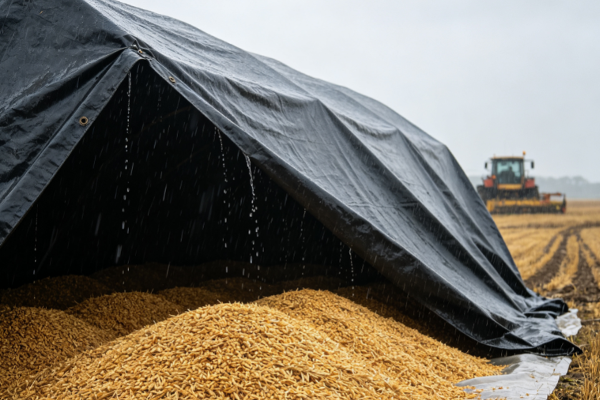
Crop harvesting does not mean the end of agricultural work. In many cases, post-harvest storage is a stage that requires extra attention. Grain, straw, feed materials, and other agricultural products often need to be temporarily stored outdoors before transportation or processing. If sudden rainfall, humid weather, or prolonged sunlight occurs, crops may become damp, moldy, or lose quality, causing economic losses for farmers. Choosing a suitable rain protection covering solution can help farmers better protect harvested products. PVC and Canvas tarpaulins offer excellent waterproof, wear-resistant, and tensile properties, making them suitable for temporary covering and long-term protection in agricultural applications.
The storage conditions after harvesting directly affect the quality of agricultural products during later sales and processing. Many farmers face similar situations during harvest seasons: after completing harvesting, weather conditions suddenly change, and outdoor-stored crops cannot be moved in time. Once rainwater enters, significant losses may occur. Therefore, preparing proper protection measures after harvest is an important way to reduce agricultural losses.
Freshly harvested crops usually contain a certain amount of moisture. If they are exposed to rain for a long time, their storage condition can be affected. This is especially important for grains, as moisture problems may increase difficulties during later processing.
Reduce direct contact between rainwater and crops;
Lower the risk of mold caused by humid conditions;
Maintain the original quality of agricultural products;
Reduce losses caused by moisture damage.
Using rainproof tarpaulins can provide an additional protective layer for crops. Even when weather changes suddenly, farmers have more time to respond and protect harvested products.
In actual farming operations, not all crops can be immediately moved into storage facilities. Due to limited space, transportation schedules, and processing arrangements, many products need to stay outdoors temporarily.
Protect grain storage areas;
Cover hay, straw, and other agricultural materials;
Reduce mud and dust contamination;
Prevent weather-related damage.
Proper tarpaulin coverage makes outdoor storage safer and reduces additional management work caused by environmental changes.
Harvest seasons are usually busy periods with large workloads. If farmers need to move products every time the weather changes, labor costs increase and harvesting efficiency may be affected.
Reduce frequent material movement;
Improve post-harvest management efficiency;
Make temporary storage easier;
Lower labor requirements.
Preparing reliable protection materials in advance allows farmers to respond more efficiently to unexpected weather conditions.
Agricultural environments are complex, and protection materials need to handle not only rainfall but also sunlight exposure, wind, and long-term outdoor use. Ordinary covering materials may not provide enough protection for agricultural applications. PVC and Canvas tarpaulins offer stable performance and can be used in different agricultural protection scenarios.
PVC tarpaulins provide excellent waterproof performance and are suitable for covering harvested crops stored outdoors. Especially in rainy seasons or humid regions, PVC tarpaulins help reduce water penetration.
Prevent rainwater infiltration;
Suitable for long-term outdoor use;
Provide good tensile strength;
Easy to reuse.
For agricultural farms that require repeated harvesting and storage operations, durable PVC tarpaulins can help reduce long-term operating costs.
Besides PVC materials, some agricultural situations require more flexible covering solutions. For temporary protection, equipment covering, or short-term storage, Canvas tarpaulins provide a convenient option.
Easier handling and transportation;
Suitable for different areas;
Quick to install and remove;
Meet temporary protection needs.
Canvas tarpaulins can serve as useful auxiliary protection tools in agricultural operations and improve overall management convenience.
Different agricultural products have different storage requirements after harvest. Choosing suitable covering methods can improve protection results.
Crop Type | Common Issues | Protection Solution |
Grain crops | Moisture from rain exposure | PVC waterproof tarpaulin covering |
Hay and straw | Long-term outdoor exposure | Canvas or PVC tarpaulin protection |
Feed materials | High moisture sensitivity | Waterproof tarpaulin covering |
Agricultural equipment | Sun and rain exposure | Weather-resistant tarpaulin protection |
Selecting products according to actual conditions helps create more effective agricultural protection solutions.
When selecting agricultural rain protection tarpaulins, price should not be the only consideration. Weather conditions, crop quantity, and storage duration all affect product selection. A suitable agricultural tarpaulin should provide reliable protection while also being easy to install and maintain.
Agricultural storage environments can change significantly. Tarpaulins need to withstand rain, sunlight, and wind exposure. If the material strength is insufficient, damage may occur during use.
Check waterproof performance;
Consider material thickness;
Evaluate wind and wear resistance;
Choose products suitable for outdoor environments.
Durable tarpaulins can reduce replacement frequency and provide better long-term value.
Different harvest quantities require different storage areas. If the tarpaulin is too small, coverage may be incomplete; if it is too large, fixing may become more difficult.
Measure the storage area in advance;
Confirm required coverage range;
Reserve space for fixing.
Proper sizing improves coverage performance and enhances rain protection.
Agricultural areas often experience strong winds. If tarpaulins are not fixed properly, they may be lifted or moved, reducing protection effectiveness.
Use ropes or fixing tools;
Regularly check edges and connection points;
Remove accumulated water;
Repair damaged areas promptly.
Proper maintenance extends tarpaulin service life and keeps protection performance stable.
Post-harvest crop protection is not simply about placing a tarpaulin over products. It requires proper planning based on storage methods, weather conditions, and future usage schedules. Especially for large agricultural farms, where harvest volumes are high, poor planning may lead to management difficulties and increased losses.
Proper storage arrangement improves protection efficiency and makes future management easier.
Choose higher ground areas;
Avoid direct contact with standing water;
Keep surroundings clean;
Maintain convenient access for transportation and inspection.
Good storage planning reduces environmental impact on harvested crops.
Different weather conditions require different protection methods. Adjusting measures according to actual conditions helps maintain better storage quality.
Strengthen waterproof coverage during rainy seasons;
Pay attention to ventilation during dry weather;
Check fixing conditions during strong winds;
Inspect regularly during long-term storage.
Flexible adjustments help crops remain in better condition during storage.
High-quality tarpaulins can be reused for many years with proper maintenance. For agricultural users, good care can reduce long-term investment.
Clean after use;
Avoid long-term storage in damp environments;
Ensure the tarpaulin is dry before folding;
Regularly check material condition.
Good maintenance habits not only extend tarpaulin life but also ensure reliable protection during future harvest seasons.
Rain protection covering solutions after crop harvest help agricultural producers reduce weather-related losses and improve crop storage safety. By selecting suitable PVC and Canvas tarpaulins, farmers can meet various protection needs for grains, straw, feed materials, and agricultural equipment. NEWSTAR PLASTIC INDUSTRY CO., LTD. provides high-quality PVC and Canvas tarpaulin products, offering professional protection solutions for agriculture, aquaculture, construction engineering, and ventilation engineering applications.
