
Hot Keywords:
- All
- Product Name
- Product Keyword
- Product Model
- Product Summary
- Product Description
- Multi Field Search

Blasting is a common excavation method used in mining, tunnel construction, and underground engineering projects. After blasting, the working area may contain significant amounts of smoke, dust, and other airborne pollutants. If these contaminants cannot be removed efficiently, they may affect subsequent construction activities and reduce air quality in the working area.
A reliable rapid smoke exhaust solution for blasting areas is therefore an important part of underground construction ventilation. Flexible ventilation ducts can work together with ventilation fans and local ventilation equipment to transport contaminated air away from the blasting area, improve air exchange efficiency, and help create a more suitable environment for subsequent operations.
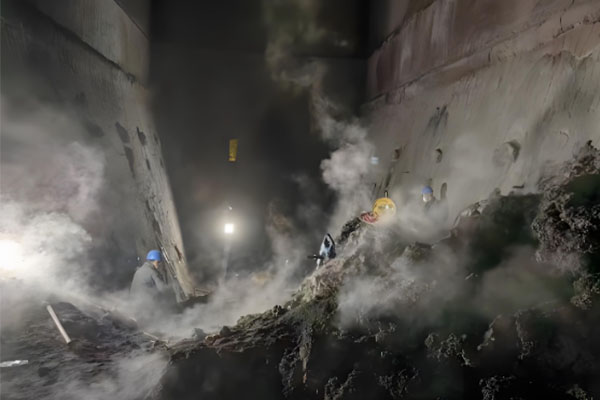
Underground tunnels and mine workings have relatively limited natural air circulation. Smoke and dust generated after blasting can remain concentrated around the working face if they are not removed efficiently.
Mechanical ventilation can strengthen airflow and help transport contaminated air away from the blasting area, improving overall air exchange.
Tunnel and mining projects often require continuous construction operations. Excessively long smoke exhaust times can delay personnel access, equipment operation, and subsequent excavation activities.
A properly designed ventilation system can be configured according to the location of the blasting area and tunnel length, allowing smoke exhaust operations to better match the construction schedule.
When the blasting face is located far from the tunnel entrance, the exhaust duct must transport contaminated air over a considerable distance. Duct strength, abrasion resistance, sealing performance, and installation methods can all affect the overall smoke exhaust efficiency.
NEWSTAR flexible ventilation ducts use high-strength fabric with PVC coating, providing good abrasion resistance, tear resistance, water resistance, and corrosion resistance. These properties make the ducts suitable for ventilation applications in mines, tunnels, and underground construction.The flexible structure is relatively lightweight and convenient to transport, install, reposition, and remove. This makes it suitable for projects where the exhaust route changes as construction progresses.
The exhaust duct system should be designed according to tunnel length, cross-sectional dimensions, fan capacity, and the location of the blasting area.Minimizing unnecessary bends, compression, and excessive sagging can help reduce airflow resistance and allow contaminated air to move more efficiently through the ventilation system.
Long-distance exhaust systems usually consist of multiple duct sections. Poor sealing at connection points can result in air leakage and reduce exhaust performance at the working face.Reliable connection methods and heat-welding technology can help improve system sealing and increase the effective utilization of exhaust airflow.
| Blasting Area Requirement | Common Challenge | Recommended Solution |
|---|---|---|
| Rapid smoke removal after blasting | High concentration of smoke and dust | Install a mechanical exhaust ventilation system |
| Long-distance exhaust | Gradual airflow loss | Properly match fan capacity and duct diameter |
| Frequent duct relocation | Difficult installation and adjustment | Use flexible ventilation ducts |
| Humid underground environment | Moisture-related aging | Select PVC-coated water-resistant materials |
| Heavy machinery operation | Duct abrasion | Use high-strength, abrasion-resistant materials |
| Special safety requirements | Potential static or fire risks | Select antistatic and flame-retardant configurations |
Duct diameter directly affects airflow capacity and system resistance. The appropriate duct size should be determined according to tunnel dimensions, exhaust distance, fan parameters, and actual construction requirements.Selecting a duct that does not match the ventilation equipment can reduce overall system efficiency.
During installation, the duct should remain as open and unobstructed as possible. Excessive bending, compression, and blockage should be avoided.For long exhaust routes, proper suspension and support are also important to prevent the duct's weight or external conditions from affecting airflow.
Blasting areas may contain dust, rock fragments, moisture, and mechanical friction. For demanding environments, abrasion resistance, tear resistance, and water resistance should be prioritized.For projects with specific safety requirements, flame-retardant or antistatic duct configurations can also be selected according to the operating conditions.
NEWSTAR specializes in flexible PVC industrial fabrics and ventilation products, offering Lay Flat Ventilation Duct, Oval Ventilation Duct, and Spiral Ventilation Duct, as well as OEM, ODM, and customized solutions.
For mining, tunnel, and underground blasting applications, ventilation ducts can be selected according to exhaust distance, airflow requirements, installation methods, and operating environment.
The lightweight design makes the ducts easier to transport and install on site, while their flexible construction allows ventilation routes to be adjusted as underground construction progresses.
The key to a rapid smoke exhaust solution for blasting areas is to establish an effective airflow and contaminated-air removal route as quickly as possible after blasting.By properly matching the ventilation fan, exhaust duct diameter, exhaust distance, and connection method, construction teams can improve air exchange efficiency and support faster recovery of the working area.High-strength PVC flexible ventilation ducts offer advantages including lightweight construction, abrasion resistance, water resistance, flexibility, and customization. They can be used in tunnel construction, mining excavation, and underground engineering projects to provide a practical and adaptable solution for post-blasting smoke exhaust and air circulation.
