
Hot Keywords:
- All
- Product Name
- Product Keyword
- Product Model
- Product Summary
- Product Description
- Multi Field Search

TBM (Tunnel Boring Machine) construction is characterized by long excavation distances, enclosed working spaces, concentrated equipment, and continuously extending construction routes. As the tunnel advances, conventional ventilation systems may face challenges such as increasing air supply distances, airflow loss, duct wear, and difficulties in installation and adjustment.
A reliable and efficient TBM tunnel construction ventilation system is therefore essential for improving the working environment, controlling dust and heat, and supporting safe tunnel construction.For long-distance TBM tunneling projects, flexible ventilation ducts can work together with ventilation fans to continuously deliver fresh air to the excavation area. At the same time, the flexible duct system can be extended and adjusted according to the progress of tunnel construction.
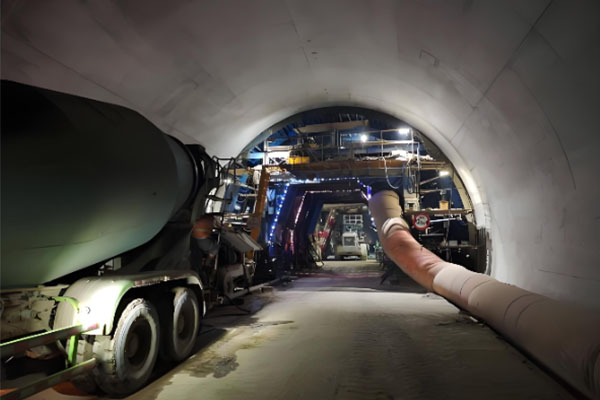
During TBM construction, the machine continuously advances, causing the tunnel length to increase. The ventilation system must also be extended accordingly.
As the duct becomes longer, airflow resistance and pressure loss can increase. Poorly sealed connections may further reduce the airflow reaching the tunnel face.
Therefore, a TBM ventilation system needs to consider factors such as ventilation distance, duct diameter, fan pressure, airflow requirements, and connection sealing performance.
TBM construction sites usually contain tunneling equipment, transportation systems, and various auxiliary machines. During operation, these machines can generate heat, dust, and exhaust gases, which may accumulate in enclosed tunnel environments.
A properly designed ventilation system can continuously introduce fresh air and improve air circulation around the working area.
Unlike fixed building projects, TBM construction involves continuously changing ventilation routes. As the tunnel advances, ventilation ducts need to be extended and repositioned.
The ducts therefore need to provide sufficient mechanical strength while remaining flexible and lightweight enough for convenient installation, extension, removal, and relocation.
NEWSTAR provides PVC flexible ventilation ducts designed for mining and tunnel ventilation applications.
The ducts use a high-strength polyester fabric with PVC coating, combining flexibility with good resistance to tearing, abrasion, water, and corrosion. This makes them suitable for demanding underground construction environments.
The flexible structure also makes transportation and installation easier, particularly for TBM tunnels where the ventilation route needs to be extended continuously as excavation progresses.
Long-distance TBM ventilation systems are normally assembled from multiple duct sections. The sealing performance of each connection can directly affect overall ventilation efficiency.
Appropriate heat-welding technology and connection structures can help reduce air leakage and improve airflow utilization. By selecting suitable duct diameters and lengths, the ventilation system can also be configured according to different excavation distances.
TBM construction environments may involve moisture, dust, mechanical friction, and other challenging conditions. Ventilation ducts therefore need to provide suitable environmental resistance.
Depending on project requirements, ventilation ducts can be configured with properties such as abrasion resistance, water resistance, flame retardancy, and antistatic performance.
| TBM Construction Requirement | Main Challenge | Recommended Ventilation Solution |
|---|---|---|
| Long-distance tunneling | Airflow loss | Select suitable duct diameter and fan parameters |
| Continuous duct extension | Frequent installation adjustments | Use flexible ducts for easy extension and removal |
| Multiple construction machines | Increased heat and pollutants | Continuously supply fresh air |
| Humid tunnel environment | Moisture exposure | Select water-resistant PVC-coated materials |
| Duct contact with equipment | Abrasion and tearing | Use high-strength, abrasion-resistant ducts |
| Special safety requirements | Static electricity or fire risks | Select antistatic and flame-retardant configurations |
TBM ventilation planning should consider not only the current excavation distance but also future construction progress.A modular ventilation duct system can be extended section by section as the tunnel becomes longer, helping maintain an effective air supply throughout the project.
During installation, unnecessary bends, compression, and excessive sagging of the ventilation duct should be avoided.A properly planned duct route can help reduce airflow resistance. Connection points should also be inspected regularly to minimize leakage and prevent insufficient airflow at the tunnel face.
Different TBM projects have different environmental requirements.For high-humidity tunnels, water resistance is important. In areas with frequent contact with machinery, abrasion resistance and tear resistance should be prioritized. For projects with specific safety requirements, flame-retardant and antistatic configurations may also be considered.
NEWSTAR specializes in flexible PVC industrial fabrics and ventilation products, offering Lay Flat Ventilation Duct, Oval Ventilation Duct, and Spiral Ventilation Duct, as well as OEM, ODM, and customization services.
For TBM tunnel construction projects, suitable duct specifications can be selected according to tunnel length, ventilation distance, airflow requirements, installation method, and operating environment.
Flexible ventilation ducts are lightweight, easy to transport, and adaptable to changing construction routes. They provide a practical solution for continuous air delivery in long-distance TBM tunneling applications.
The core objective of a TBM tunnel construction ventilation solution is to ensure that the excavation face continuously receives a stable supply of fresh air.
For projects involving long-distance excavation, concentrated equipment, humid environments, and continuously extending ventilation routes, high-strength PVC flexible ventilation ducts offer advantages such as lightweight construction, abrasion resistance, water resistance, flexibility, and customization.
By properly matching ventilation fans, duct diameter, ventilation distance, and connection methods, construction teams can improve overall ventilation efficiency and create a more stable and suitable working environment for TBM tunnel construction.
