
Hot Keywords:
- All
- Product Name
- Product Keyword
- Product Model
- Product Summary
- Product Description
- Multi Field Search

Manufacturing plants may generate dust, oil mist, volatile organic compounds (VOCs), welding fumes, acidic or alkaline gases, and other industrial pollutants during production. If these pollutants are not collected and exhausted efficiently, they can reduce indoor air quality and potentially affect employees, production equipment, and the surrounding environment. Therefore, developing an effective manufacturing plant exhaust ventilation solution is an important part of industrial ventilation engineering.
An effective exhaust ventilation system is more than simply installing exhaust fans. It requires an integrated approach based on the production process, pollutant type, emission source, workshop layout, and environmental requirements. The system should coordinate pollutant collection, air transportation, purification, and final discharge.
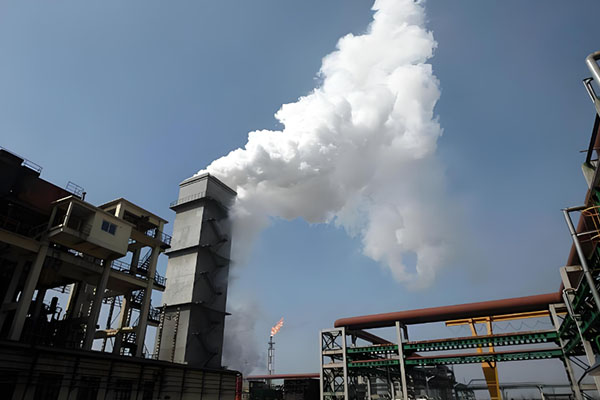
Different manufacturing processes produce different types of pollutants. Metal processing may generate oil mist and dust, welding can produce welding fumes, while painting processes may release VOCs and paint mist.
If a factory relies only on general ventilation, pollutants may spread throughout the workshop before being diluted. This can result in relatively high pollutant concentrations around the source. Therefore, manufacturing plants often need to combine local exhaust ventilation with general ventilation to capture pollutants as close to their source as possible.
Continuous accumulation of exhaust gases, dust, and fumes can negatively affect indoor air quality and create an uncomfortable working environment. Proper mechanical ventilation can continuously remove contaminated air while supplying treated fresh air, helping maintain appropriate airflow throughout the workshop.
For areas with high worker density or significant pollutant generation, ventilation rates and exhaust volumes should be determined according to actual operating conditions to avoid either insufficient ventilation or unnecessary energy consumption.
Local exhaust ventilation is one of the key methods for industrial pollutant control. Equipment such as exhaust hoods, extraction arms, and capture hoods can be installed close to pollutant sources so that contaminants are captured before they disperse into the workshop.
For example, mobile welding fume extraction arms can be used at welding stations, while machining equipment can be equipped with oil mist collection systems. Painting production lines may require dedicated exhaust systems and exhaust treatment equipment according to the specific process.
After pollutants are captured, they need to be transported through ventilation ducts to purification equipment or the final exhaust outlet. Duct dimensions, length, number of bends, and overall layout all affect system resistance and actual exhaust performance.
During system design, unnecessary duct bends should be minimized and duct routes should be kept as short as practical. Airflow should also be balanced according to the requirements of different branches. For dust-laden, oily, or corrosive exhaust gases, duct materials should be selected according to the operating conditions.
Different pollutants require different treatment technologies. Dust can generally be controlled through filtration or cyclone separation, while oil mist may require dedicated oil mist filtration equipment. VOCs may be treated using technologies such as activated carbon adsorption or catalytic oxidation, depending on their concentration and composition.
The ventilation system and purification equipment should be designed as an integrated system. Adequate exhaust airflow alone does not guarantee effective pollutant control if the purification equipment is improperly matched.
| Manufacturing Process | Main Pollutants | Ventilation Focus | Common Solutions |
|---|---|---|---|
| Metal Processing | Oil mist, metal dust | Source capture | Local exhaust, oil mist purification |
| Welding | Welding fumes, heat | Workstation fume extraction | Extraction arms, centralized exhaust |
| Painting | VOCs, paint mist | Enclosure and exhaust | Spray booth exhaust, exhaust purification |
| Grinding | Dust, particulate matter | Dust capture | Dust hoods, dust collection systems |
| Chemical Processing | Corrosive gases, odors | Enclosed exhaust | Corrosion-resistant ducts, exhaust treatment |
| Electronics Manufacturing | Soldering fumes, volatile substances | Local exhaust | Workstation exhaust, filtration and purification |
A ventilation system should not focus only on exhaust volume. It should also consider where replacement air enters, how it moves through the workshop, and where contaminated air is ultimately exhausted.
Proper airflow organization can reduce uncontrolled pollutant dispersion inside the workshop. In areas with higher contamination risks, pressure control can be used to guide airflow in a predetermined direction and reduce the possibility of contaminated air entering other production areas.
Fans are one of the core components of an industrial exhaust ventilation system. Insufficient airflow may prevent effective pollutant capture, while excessive airflow can increase energy consumption and operating costs.
Therefore, fans should be selected according to the required airflow, total system resistance, and characteristics of the exhaust gases. Changes in filter resistance during long-term operation should also be considered.
After long-term operation, filters may become clogged, dust or oil may accumulate inside ventilation ducts, and fan performance may decline. Regular inspections of airflow, static pressure, filter conditions, ducts, and fans can help maintain stable system performance.
A professional manufacturing plant exhaust ventilation solution should begin with pollutant source analysis and integrate local exhaust, general ventilation, duct transportation, exhaust purification, and final discharge.
Compared with simply adding exhaust fans, source capture provides more direct control of pollutant dispersion. Combined with properly designed make-up air and airflow organization, it can significantly improve the overall workshop environment.
For large manufacturing facilities, variable-frequency fans, sensors, and intelligent control systems can also be incorporated into the ventilation system. These technologies allow airflow to be adjusted according to equipment operating conditions, helping meet ventilation requirements while reducing unnecessary energy consumption.
When constructing a new manufacturing facility or upgrading an existing ventilation system, manufacturers should develop a customized solution based on the production process, pollutant characteristics, workshop size, and applicable environmental requirements. Through scientific system design and regular maintenance, factories can establish a more stable and efficient industrial exhaust ventilation system while providing reliable air environment support for safer production and greener manufacturing.
