
Hot Keywords:
- All
- Product Name
- Product Keyword
- Product Model
- Product Summary
- Product Description
- Multi Field Search
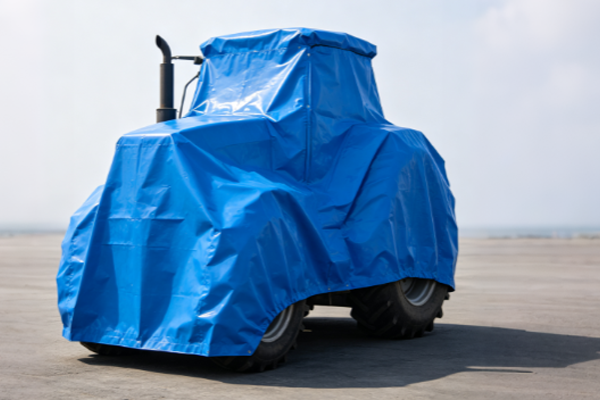
A piece of agricultural machinery is not something you can simply leave outside after finishing a job. Tractors, harvesters, seeders, tillers, and other equipment can cost a lot, and while they may be used every day during the busy farming season, they can sit outdoors for months when the season is over. Constant exposure to sunlight, rain, dust, and mud can gradually affect the equipment body, cab, connections, and other components. Many farm operators start by thinking that any piece of fabric will do, only to find that the cover is too small, too light, or starts cracking after a short period of outdoor use. Choosing the right PVC or Canvas tarpaulin can provide practical protection for agricultural machinery and reduce maintenance headaches later.
Agricultural machinery is different from ordinary cargo. It is usually large, has a complicated structure, and spends a lot of time working in fields. After operation, mud, crop residues, and dust may remain on the equipment surface. Continuous rain or long periods of sunlight can make outdoor storage much more difficult to manage. A suitable covering solution is not just about keeping machinery clean. More importantly, it helps reduce direct exposure to rain, sunlight, and dust, making it easier to get the equipment ready when the next farming season begins.
The tarpaulin should be large enough to cover the cab, engine area, and main body of the machinery.
Leave enough space around the edges for securing, tying, or tightening the cover.
For long-term storage, covering the top of the entire machine is more practical than protecting only certain areas.
If the machinery is used every day, the tarpaulin should also be easy to remove and put back on. A covering system that takes too much time to handle can quickly become a nuisance for workers during busy periods.
Combine harvesters and other large harvesting machines usually have a much larger overall size. Their cutting units, discharge systems, cabs, and other extended components can make standard tarpaulins difficult to use. Before purchasing, measure the machine as a whole and decide how much of the equipment needs to be covered. For long-term outdoor storage, a larger PVC tarpaulin can provide more complete protection and reduce exposed areas.
PVC and Canvas are two common materials used for agricultural machinery covers. Both can be used for agricultural protection, but their applications are slightly different. For machinery that stays outdoors for long periods and needs stronger rain and weather protection, PVC tarpaulins are often a practical choice. Canvas tarpaulins can work well for temporary coverage, frequent movement, or situations where easier handling is important. When purchasing, do not focus only on the material name. Consider where the machinery is stored, how long it will remain covered, and how often the cover needs to be removed.
A practical choice when strong waterproof protection is required.
Suitable for machinery that remains outdoors for extended periods.
Can be used for large agricultural equipment and machinery.
Relatively easy to clean during regular maintenance.
For tractors, harvesters, and other equipment that may remain parked for several months during the off-season, PVC tarpaulins can be a practical solution for outdoor protection.
Canvas tarpaulins can be useful when agricultural machinery needs to be covered and uncovered frequently. They are suitable for temporary storage, smaller equipment, and situations where workers need to move or handle the cover regularly. If the equipment is often transported between different areas of a farm, easier handling can become just as important as weather protection.
Agricultural Equipment | Storage Characteristics | Recommended Material | Key Purchasing Considerations |
Tractor | Long-term or seasonal storage | PVC / Canvas | Size, securing method |
Combine Harvester | Large overall size | PVC | Coverage area, weather resistance |
Seeder | Seasonal use | PVC / Canvas | Easy installation and removal |
Rotary Tiller | Frequent movement | Canvas | Weight, handling convenience |
Small Agricultural Machinery | Frequently moved | Canvas | Flexible coverage |
Agricultural Machinery Parts | Stored separately | PVC / Canvas | Rain and dust protection |
With the right configuration, different types of agricultural machinery can have a covering solution suited to their actual use. It also helps avoid using heavy-duty tarpaulins for small equipment that only needs temporary protection.
Agricultural machinery rarely has a simple rectangular shape. Cabs, mirrors, exhaust pipes, conveyors, cutting units, and other protruding parts can all affect the final tarpaulin size. A common purchasing mistake is to measure only the machine's length and width and place an order immediately. When the cover arrives, there may not be enough material left around the edges for proper securing. The best approach is to measure the equipment based on how the tarpaulin will actually be installed, especially when the machinery will remain covered for a long time.
Measure the overall length of the machinery.
Measure the widest point of the equipment.
Identify the highest point of the machine.
Decide whether the tarpaulin needs to extend close to the bottom.
Leave additional material around the edges for securing and tightening.
Leaving enough space for fastening makes installation much easier and gives workers more room to tighten the cover properly.
Mirrors, exhaust pipes, handles, cutting units, and other protruding components can place extra pressure on a tarpaulin. When requesting a custom cover, provide the supplier with the main dimensions and photos of the machinery whenever possible. This makes it easier to determine the appropriate size and avoid purchasing a cover that looks large on paper but cannot fully cover the actual equipment.
If possible, leave a small amount of space between the tarpaulin and the machinery, especially around sharp or protruding components. Direct contact can create friction when the cover moves in the wind. A suitable covering structure can reduce unnecessary wear and help extend the service life of the tarpaulin.
Agricultural bases are often open areas where wind can be a major concern. Simply placing a few heavy objects on the corners or tying only two points may not be enough when strong wind arrives. The larger the tarpaulin used for agricultural machinery, the more wind pressure the entire cover can receive. A practical securing system should distribute tension across the edges and fixing points while avoiding excessive tension that could damage the material.
Secure the four corners firmly.
Add additional fixing points along the longer edges.
Avoid leaving excessive gaps between fixing points.
Check straps, ropes, buckles, and other fasteners regularly for looseness.
The goal is not to tie the tarpaulin as tightly as possible. It is to reduce excessive movement of the entire cover when the wind blows.
Avoid using sharp stones, metal parts, broken boards, or other objects that could scratch or puncture the fabric. Straps, ropes, and suitable fixing accessories are safer choices for securing large covers. If the tarpaulin is repeatedly exposed to sharp edges, even a durable material can eventually develop holes or tears.
After a period of heavy rain, check whether water has collected on top of the tarpaulin. Large pools of water can create considerable weight and place unnecessary pressure on the cover and fixing points. Adjust the installation when needed so rainwater can drain away instead of remaining on the surface.
Buying a good-quality tarpaulin is only part of the job. Daily handling and storage habits also affect how long the cover can remain in good condition. Agricultural machinery may come back from the field covered with mud, plant residues, and moisture. If the tarpaulin is placed over the machine immediately and then left untouched for a long time, the inside environment may not be ideal. Farm operators can simply include tarpaulin maintenance in their normal machinery maintenance routine. A few basic steps can prevent many avoidable problems.
Remove loose mud, crop residues, and other debris before covering the equipment. This reduces dirt buildup underneath the tarpaulin and helps keep the machinery surface cleaner during storage.
If the cover becomes dirty or wet, clean it when necessary and allow it to dry before folding and storing it. Folding a wet tarpaulin and leaving it in storage for a long time can create an unfavorable storage environment and may affect the material over time.
When the agricultural machinery is back in service, store the tarpaulin in a clean and dry place instead of leaving it on the ground. Keep it away from sharp tools, machinery parts, oil, and other materials that could damage the fabric.
Agricultural machinery is valuable, large, and often exposed to demanding outdoor conditions. A permanent warehouse is not always the only practical solution for protecting tractors, harvesters, seeders, tillers, and other equipment. Properly selected PVC and Canvas tarpaulins can provide an additional layer of protection for seasonal or outdoor storage. PVC tarpaulins are well suited to long-term outdoor coverage and waterproof protection, while Canvas tarpaulins offer flexibility for temporary and frequently moved equipment. NEWSTAR PLASTIC INDUSTRY CO., LTD. supplies PVC and Canvas tarpaulins for agricultural machinery covering, equipment protection, farm material storage, and other agricultural applications, helping customers choose a practical covering solution for their specific needs.
