
Hot Keywords:
- All
- Product Name
- Product Keyword
- Product Model
- Product Summary
- Product Description
- Multi Field Search
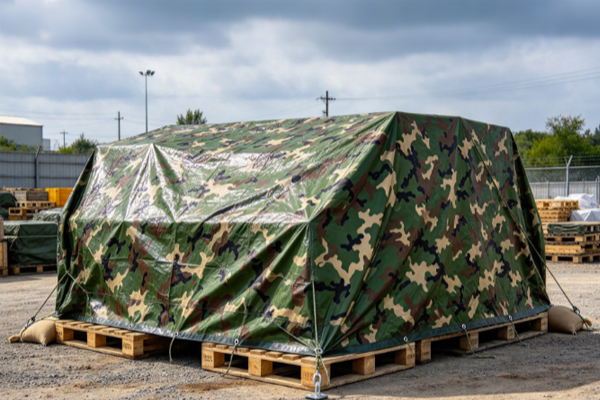
Many people buy Camo Tarps for more than just covering something during a single rainstorm. They plan to leave them outdoors for several months or even longer. That raises a practical question: can a Camo Tarp really handle constant sunlight, rain, and wind? Camo Tarps can be used for long-term outdoor covering, but not every tarp is suitable for this job. Material, weather conditions, and installation all affect how well the tarp performs over time. Choosing the right product and installing it properly can make long-term outdoor use much easier.
Yes, but it depends on the tarp material and the actual outdoor conditions. A tarp used for short-term covering does not need to handle the same level of exposure as one that stays outside for months. For long-term use, the tarp needs to cope with sunlight, rain, humidity, and wind on a regular basis.
When a tarp stays outdoors for a long time, it goes through constant weather changes. Temperatures rise during the day and drop at night. Rain can leave the tarp wet for extended periods, while strong winds can repeatedly pull at the fabric. A suitable Camo Tarp can handle this type of use, but long-term outdoor use does not mean putting it down and forgetting about it. The surface, edges, and fastening points should still be checked from time to time.
Whether a Camo Tarp is suitable for long-term outdoor use also depends on how it will be used. The same tarp will face very different conditions when placed under partial shelter compared with being fully exposed to the weather. Knowing the actual conditions before purchasing makes it much easier to choose a suitable product.
Long-term vehicle covering: The tarp will repeatedly face sunlight, rain, and wind, so PVC is often a practical choice for easier cleaning and maintenance.
Outdoor equipment that is not used regularly: Covering the equipment with a Camo Tarp can reduce its direct exposure to changing weather conditions.
Outdoor storage that needs continuous covering: Choosing the right tarp size can reduce the need for frequent installation and removal.
Situations where visual coverage matters: The camouflage pattern can blend more naturally into certain outdoor environments.
If the local weather is relatively mild and the tarp is not completely exposed to strong sunlight and wind, long-term use is generally easier. If the tarp faces intense sun, frequent heavy rain, or strong winds every day, it is better to choose a product specifically suited to those conditions.
PVC Camo Tarps are well suited to many long-term outdoor covering applications, particularly where waterproofing, easy cleaning, and repeated use are important. Compared with ordinary fabric, the PVC surface is relatively easy to clean when exposed to dust, mud, or rain. This makes it practical for covering vehicles, equipment, and other outdoor items for extended periods.
For long-term outdoor use, however, the product itself is only part of the equation. Installation also matters. The larger the tarp, the more force it can experience when the wind picks up. If the grommets, edges, or ropes are not properly secured, even a durable tarp can be affected over time. When purchasing, it is worth asking about the material, thickness, edge reinforcement, grommets, and suitability for long-term outdoor use rather than simply asking whether it is made from PVC.
Canvas Camo Tarps can also be used for outdoor covering, but their characteristics are different from PVC. Canvas is a fabric material with a more traditional tarp feel, making it a suitable option for users who prefer the texture and handling of fabric tarps. When used outdoors for extended periods, waterproof treatment and moisture conditions deserve particular attention.
For relatively dry outdoor environments, Canvas can maintain a good user experience with suitable care.
For applications requiring long-term rain protection, check whether the Canvas tarp has been treated for outdoor waterproofing.
In frequently damp or rainy areas, allow the tarp to dry properly before folding and storing it.
For applications involving frequent setup and removal, consider fabric flexibility and how easy the tarp is to fold and store.
Canvas is not unsuitable for long-term outdoor use. It simply requires more attention to the surrounding environment and routine care. If the local climate is frequently rainy or humid, these conditions should be communicated to the supplier before purchasing.
If a Camo Tarp will stay outdoors for a long time, installation deserves just as much attention as the tarp itself. The tarp should not be left loose and sagging, but it also should not be pulled excessively tight at every fastening point. A loose tarp can collect water, while excessive tension can place continuous stress on the grommets and edges.
Clear away sharp objects before installation to prevent accidental cuts or punctures.
Distribute fastening points evenly instead of putting most of the tension on just a few grommets.
Check for standing water after rain and adjust the tarp angle if necessary.
Inspect the fastening points after strong winds to make sure ropes, grommets, and edges remain secure.
Clean and dry the tarp before storage, especially when using Canvas, rather than folding it while damp.
These simple habits can make long-term outdoor use much easier. There is no need to constantly handle the tarp every day. A quick inspection after heavy rain or strong winds, along with proper care before long-term storage, is usually enough.
Camo Tarps can be suitable for long-term outdoor use, but the right choice depends on local weather, expected use, the items being covered, and the tarp material. PVC Camo Tarps are a practical choice for users who prioritize waterproofing, easy cleaning, and long-term outdoor covering, while Canvas Camo Tarps require more attention to waterproof treatment and moisture management. NEWSTAR PLASTIC INDUSTRY CO.,LTD. supplies PVC and Canvas Camo Tarps for different long-term outdoor covering needs.
