
Hot Keywords:
- All
- Product Name
- Product Keyword
- Product Model
- Product Summary
- Product Description
- Multi Field Search
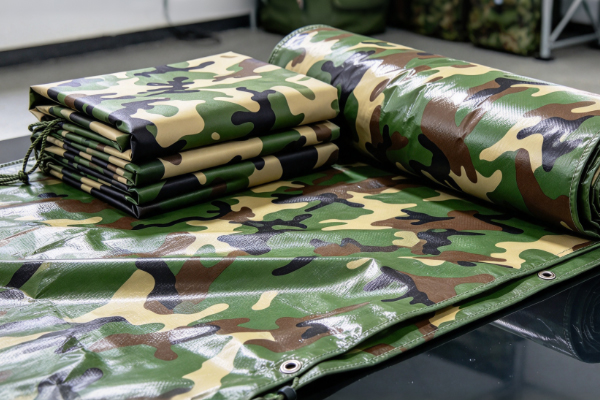
When a Camo Tarp is used outdoors, rain is not the only thing it has to deal with. Constant exposure to sunlight can gradually affect the material too. A new tarp may look bright and feel flexible, but after months of outdoor use, the color may fade and the fabric may lose some of its strength. So, can a Camo Tarp really protect against UV rays? Are all camouflage tarps equally resistant to sunlight? Not exactly. Blocking sunlight and resisting long-term UV exposure are two different things, and choosing the right material matters if the tarp will stay outdoors for a long time.
Yes. A standard opaque Camo Tarp can block a large amount of sunlight, so the area underneath receives much less direct exposure than it would without a tarp. This can be useful when items need protection from direct sunlight.
However, it is easy to confuse “UV protection” with “the tarp will never be damaged by sunlight.” Even when sunlight is blocked from reaching the items underneath, the tarp itself is still exposed to UV rays. Over time, this can cause the material to fade, become harder, or even develop cracks.
PVC Camo Tarps are generally well suited to outdoor use, with good waterproofing and easy-to-clean surfaces. If the product has UV-resistant treatment, it can perform better under long-term sunlight exposure.
Canvas Camo Tarps have a woven fabric structure with a more natural feel. They can block sunlight, but long-term UV resistance also depends on the fabric construction and surface treatment.
PE Camo Tarps are also common for outdoor covering and are often more budget-friendly, although their resistance to sunlight can vary considerably between products.
Oxford fabric is lightweight and often used for lighter-duty covers. For permanent outdoor use, it is still important to check whether the material has specific UV-resistant treatment.
So, simply calling something a Camo Tarp does not automatically mean it has strong UV resistance. The material and manufacturing treatment are what really matter.
Yes, and fading is often one of the first changes you will notice.
A Camo Tarp that stays under direct sunlight for a long time may gradually lose some of the original brightness of its camouflage pattern. In some cases, the change is mainly cosmetic. With continued aging, however, the material itself may also start to feel different.
Here are some signs worth watching:
The color becomes lighter. This is usually the easiest change to notice.
The tarp feels harder. A material that was once flexible may gradually become stiff after prolonged exposure to heat and UV rays.
Folding becomes less smooth. Frequently folded tarps may develop more noticeable wear along repeated fold lines.
Small cracks appear around the edges or fold lines. At this stage, the issue is no longer just about appearance.
Fading alone does not necessarily mean that the tarp needs to be replaced immediately. What matters more is whether the material still has good flexibility, whether it stretches normally, and whether the edges remain intact. If the color has changed slightly but the tarp is still flexible and undamaged, it may continue to work well. If it cracks easily when pulled, the material has clearly experienced significant aging.
If a tarp will remain outdoors for a long period, both PVC and Canvas are worth considering, but they offer different characteristics.
PVC Camo Tarps are particularly practical when waterproofing is important. The coated surface is relatively easy to clean, and for outdoor covering applications, it is useful to look for good weather resistance and UV treatment. If the tarp will regularly face both rain and strong sunlight, PVC can be a practical option.
Canvas Camo Tarps feel more like traditional heavy-duty fabric. They have a noticeable woven texture and provide a different overall experience from PVC. They can work well for applications where fabric feel, breathability, or the structure of woven material is important. For long-term sun exposure, though, thickness alone is not enough. Fabric density, fiber quality, and surface treatment also matter.
For occasional use, PE or Oxford camouflage tarps can meet some basic covering needs. But if the tarp will stay outdoors all year round, it is better not to choose based only on price or camouflage patterns. Sun resistance, waterproofing, flexibility, and long-term performance are all worth checking.
When buying a tarp, many people look at the color first, then the thickness, and only later ask about UV resistance. It makes more sense to ask about the intended use from the beginning. This is especially important for bulk orders or tarps that will remain outdoors for extended periods.
You can ask the supplier a few straightforward questions:
Does it have UV-resistant treatment? This is worth asking if the tarp will be exposed to sunlight for long periods.
How long is it recommended for outdoor use? Different materials and manufacturing processes can have very different service expectations.
Can it remain outdoors in direct sunlight for extended periods? Instead of simply asking whether it is “sunproof,” describe your actual conditions to the supplier.
Would PVC or Canvas be more suitable? If waterproofing is a major concern, PVC may be worth considering. If you prefer a woven fabric structure, Canvas may be a better fit.
Can I get a sample for testing? For bulk purchases, testing a small sample in actual conditions can tell you much more than photos or specifications alone.
If the tarp is mainly used for short-term covering and stored after use, there may be no need to pay extra for extreme UV resistance. But if it needs to stay outdoors throughout the year, UV and weather resistance should be given much more attention.
Camo Tarps can block sunlight and UV rays, but the tarp itself is still exposed to long-term sunlight. PVC Camo Tarps are a practical choice when waterproofing and outdoor weather resistance are important, while Canvas Camo Tarps retain the characteristics of woven fabric. PE and Oxford materials can also work for different lightweight covering needs. Sharing your actual usage time and environment with the supplier is more useful than choosing based only on color or thickness. NEWSTAR PLASTIC INDUSTRY CO.,LTD. supplies PVC and Canvas tarps for different outdoor covering and protection needs.
