
Hot Keywords:
- All
- Product Name
- Product Keyword
- Product Model
- Product Summary
- Product Description
- Multi Field Search

PVC tarpaulin ventilation ducts can be used in some dusty environments, but whether they are suitable for long-term use depends on factors such as dust concentration, dust type, ventilation method, duct length, and site temperature. PVC tarpaulin offers good flexibility, relatively low weight, easy folding, and convenient installation, making it commonly used for ventilation in factories, construction areas, warehouse exhaust, temporary dust removal, and localized air supply. For locations where ventilation ducts need to be moved frequently, flexible PVC tarpaulin ducts can also reduce installation and removal work.
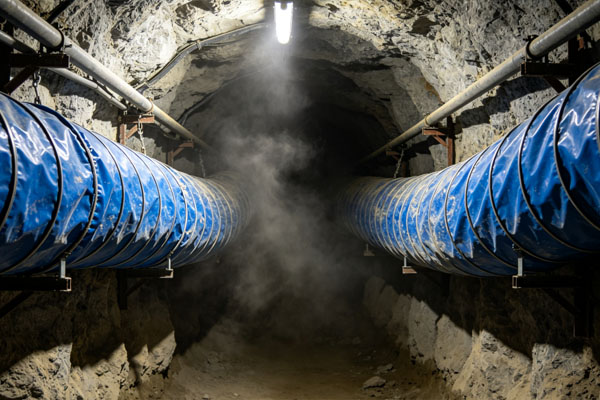
Ventilation ducts used in dusty environments need to withstand continuous airflow, friction from dust particles, and pulling forces caused by handling at the site. If the duct material does not have sufficient abrasion resistance, long-term use may cause surface wear, connection damage, or even air leakage. For special locations containing large amounts of combustible dust, professional ventilation design, explosion protection, electrical grounding, and other requirements also need to be considered comprehensively. Ordinary PVC flexible ducts alone cannot address all safety concerns.
In ordinary factories, warehouses, processing areas, or construction sites, PVC tarpaulin ventilation ducts can be used as airflow conveying ducts when dust is controlled through local exhaust or air supply. Common applications include woodworking areas, building material processing areas, general machining areas, and temporary ventilation at construction sites. These environments generally place greater emphasis on duct abrasion resistance, flexibility, connection strength, and ease of installation. PVC tarpaulin ducts can bend according to the available space and can be connected to fans, dust removal equipment, and other components using clamps, flanges, or other connection structures.
When dust-laden airflow continuously passes through the duct, dust particles repeatedly come into contact with the inner wall. Larger or harder particles and higher airflow speeds can cause more noticeable friction on the inner wall. Therefore, in environments with high dust concentrations, it is recommended to select PVC tarpaulin with more suitable abrasion resistance based on actual operating conditions and, when appropriate, increase the material thickness. Duct connections, bends, and areas that are more exposed to friction should also be reinforced to prevent localized damage after long-term operation.
When PVC tarpaulin ventilation ducts are used in dusty environments, material selection and structural design need to be based on actual operating conditions. Ordinary ventilation flexible ducts should not simply be installed in areas with high dust concentrations, as they may not meet long-term operating requirements.
After dust enters the ventilation duct, it moves together with the airflow. When airflow velocity is high, particles continuously impact the duct wall, especially at bends, near connections, and areas where airflow direction changes. These locations are more prone to wear. During customization, wear-resistant PVC tarpaulin can be selected according to the properties of the dust, while unnecessary sharp bends should be minimized. If curved sections are required, the bending radius should be kept reasonable to prevent dust from continuously impacting a particular area.
If connections are not properly sealed in a dusty environment, dust may leak from the joints, affecting the working environment and reducing ventilation efficiency. Therefore, suitable fixing methods should be used at both ends of the duct and at sectional connection points. For ducts that need to be moved frequently, clamps that are easy to install and remove can be used. For fixed ventilation lines, flanges or other connection methods can be selected according to the equipment interfaces. Interface dimensions should be measured in advance to prevent loose connections or dimensional mismatches.
PVC tarpaulin is not suitable for every high-temperature airflow environment. If the temperature of the dust-laden gas is high, the material may experience changes in performance due to heat. Therefore, for high-temperature exhaust, exhaust from thermal processing equipment, and similar applications, the actual operating temperature should be provided in advance. If the airflow temperature clearly exceeds the applicable range of ordinary PVC tarpaulin, the duct should not be customized simply as a standard PVC ventilation duct. Specialized materials and structures suitable for high-temperature conditions should instead be selected.
Different types of dust have different particle sizes, hardness, concentrations, and combustion characteristics. Therefore, the selection of PVC tarpaulin ventilation ducts also needs to take actual site conditions into account.
For ordinary dusty environments, the main considerations are generally duct abrasion resistance, sealing performance, and installation convenience. For example, in construction sites, general processing factories, and storage areas, an appropriate diameter can be selected according to fan airflow and duct length, followed by determining the PVC tarpaulin thickness and connection method. If the ventilation duct is only used temporarily, wear caused by repeated folding, unfolding, and handling should also be considered. In this case, material flexibility and tensile strength are equally important.
Areas with high dust concentrations require greater attention to duct abrasion resistance and sealing performance. During long-distance conveying, the inside of the duct is continuously impacted by dust particles, while connections and bends are also more susceptible to wear. In such cases, the risk of damage can be reduced by shortening the length of individual duct sections, adding reinforcement to vulnerable areas, reducing sharp bends, and conducting regular inspections. For long-term fixed ventilation lines used in high-dust-concentration environments, professionals should determine an appropriate ventilation and dust removal solution based on parameters such as airflow, air velocity, and dust properties.
Environments containing combustible dust require particular caution. For example, certain metal dusts, wood dust, and grain dust may present combustion or dust explosion risks under specific concentrations and conditions. Such locations should not be considered suitable for ordinary PVC tarpaulin products simply because PVC tarpaulin can convey air. The selection needs to be evaluated according to explosion protection requirements, equipment type, grounding measures, static electricity control, and applicable safety standards. If the project is a professional dust removal application, experienced engineering personnel should determine the duct material and overall ventilation solution.
They can be used for air supply or exhaust conveying in some workshops, but the appropriate material needs to be selected according to the dust type, concentration, temperature, and airflow. For professional industrial dust removal systems, the overall design also needs to consider the dust removal equipment, fan, and duct layout.
Long-term transportation of dust can indeed cause wear, especially when the particles are hard, airflow velocity is high, or the duct contains bends. Wear can be reduced by selecting wear-resistant PVC tarpaulin, controlling airflow appropriately, and reducing sharp bends.
Suitability cannot be determined simply from the term “PVC tarpaulin.” The airflow temperature, dust properties, and continuous operating time need to be considered. If the temperature is high, specific operating conditions should be provided to the manufacturer in advance so that the manufacturer can confirm whether the material is suitable.
It is not recommended to treat such environments as ordinary ventilation applications. Combustible dust involves safety factors such as static electricity, ignition sources, and dust concentration. Suitability needs to be confirmed according to site explosion protection requirements and professional design. Where necessary, products with the required safety performance should be selected.
PVC tarpaulin ventilation ducts can be used in some dusty environments, particularly for general industrial dust, dust in construction areas, and locations requiring temporary exhaust or air supply. However, actual conditions vary considerably between dusty environments. Whether a duct is suitable for long-term use needs to be determined based on dust properties, particle size, concentration, airflow velocity, operating temperature, and service time. When customizing the product, information such as dust type, duct diameter, total length, fan airflow, operating temperature, bend locations, and interface dimensions can be provided in advance.
Only when the operating conditions are fully specified can the PVC tarpaulin thickness, duct structure, and connection method be determined more accurately. During use, the duct surface, connections, and bends should also be inspected regularly. If localized wear, cracks, air leakage, or loose connections are found, they should be addressed promptly to prevent minor damage from gradually affecting the entire ventilation line. For work areas with high dust concentrations, suitable dust removal equipment and site management measures should also be used so that the ventilation duct performs the appropriate airflow conveying function. This can help maintain relatively stable ventilation performance while also extending the service life of the PVC tarpaulin ventilation duct.
