
Hot Keywords:
- All
- Product Name
- Product Keyword
- Product Model
- Product Summary
- Product Description
- Multi Field Search
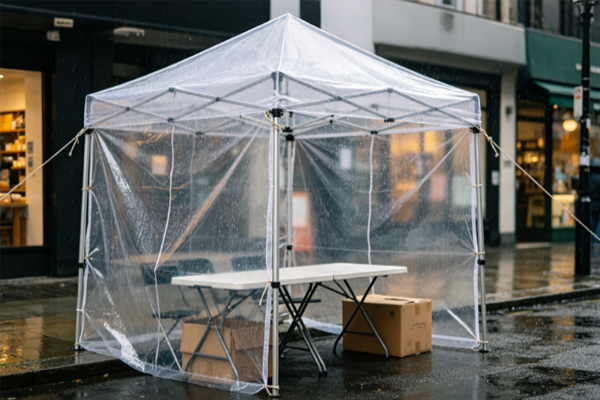
Clear waterproof tarps look simple, but there is one issue many people notice after putting them into real use. The tarp is not leaking, yet the surface suddenly looks covered with a layer of white fog. This is especially common when the temperature changes between day and night or the air is humid. Many people immediately think the tarp has a quality problem, but fogging and water leakage are two different things. A clear PVC tarp does not necessarily fog easily. Humidity, temperature changes, ventilation, and installation all affect how clear the tarp remains.
When a clear waterproof tarp becomes foggy, the moisture usually does not come from rain passing through the material. Instead, water vapor in the air meets a cooler tarp surface and condenses into tiny droplets. This is more noticeable when a clear tarp is used to seal an area tightly and the humid air inside has nowhere to escape.
In actual use, these situations are more likely to cause fogging:
High indoor humidity: People, wet floors, plants, and damp items can all increase moisture in the air.
Large temperature differences: The air may be warm during the day, while the tarp surface becomes much cooler at night, making condensation more likely.
Poor ventilation: When all sides are tightly sealed, humid air becomes trapped inside and small water droplets can form on the clear tarp.
Cold surfaces nearby: Areas where the tarp is close to cold metal, glass, or other low-temperature surfaces may fog more easily.
So, if you see a layer of white mist on a clear waterproof tarp, do not immediately assume that the tarp is not waterproof. In many cases, it is simply condensation caused by moisture and temperature changes.
One of the main advantages of clear PVC tarps is their strong waterproof performance while still allowing light and visibility through the material. However, PVC is a non-breathable waterproof material, so moisture inside a covered space cannot escape as easily as it would through ordinary fabric. When humidity is high and the tarp surface becomes cooler, condensation can appear.
A few details are worth paying attention to when using clear PVC tarps:
Avoid sealing the space completely. Leave suitable openings on the top or sides to allow air to circulate.
Keep the tarp properly tensioned. An overly loose tarp can collect water and make moisture harder to move away.
Consider UV resistance for long-term outdoor use. Apart from temporary fogging, prolonged sunlight can gradually affect a clear material, causing yellowing or a hazier appearance.
Keep the surface clean. Dust, oil, and dried water marks can reduce transparency and make the tarp look increasingly cloudy.
If the goal is to maintain good visibility over a long period, purchasing decisions should not focus only on waterproofing. Material quality, transparency, UV treatment, and the actual installation environment are all worth checking before placing an order.
If a clear tarp has already started fogging, the solution is usually not complicated. The key is to reduce moisture inside the covered space and prevent the tarp surface from staying humid for too long. Since condensation is closely related to humidity and temperature differences, improving ventilation is often more useful than repeatedly wiping the surface.
Here are a few practical things you can do:
Improve ventilation so humid air has somewhere to escape.
Reduce sources of moisture, including wet materials, standing water, plants, and heavy activity inside an enclosed space.
Watch what happens during temperature changes. If the fog naturally disappears after the weather becomes warmer, it is usually condensation rather than permanent damage.
Wipe gently with a soft cloth. Avoid rough brushes or aggressive scrubbing that could scratch the transparent surface.
If the tarp remains permanently white or yellow after drying, and better ventilation or cleaning does not help, the problem may be related to material aging, surface damage, or prolonged UV exposure. That is different from short-term fogging caused by condensation.
When buying a clear waterproof tarp, many people focus heavily on two words: “clear” and “waterproof.” After installation, however, the actual environment often has a bigger impact on performance. This is particularly important when the tarp is used for temporary rain shelters, outdoor enclosures, side panels, or spaces where clear visibility needs to be maintained for a long time.
For enclosed spaces, leave enough room for ventilation.
In humid environments, avoid completely sealing every side.
For areas exposed to strong sunlight, check UV resistance.
If visibility matters, pay attention to transparency and how the material performs after extended outdoor use.
If the tarp is frequently folded and unfolded, use suitable cleaning and storage methods to reduce scratches and surface wear.
For bulk orders, testing a sample before purchasing a large quantity is a practical move. Check transparency during the day, look for condensation in the evening or early morning, and observe drainage during rainy weather. A few days of real use can tell you much more about whether a clear waterproof tarp suits the application than simply looking at a specification sheet.
Clear waterproof tarps are not necessarily products that “fog easily.” Humidity, temperature differences, ventilation, and material quality all play a role. For outdoor applications that require rain protection, natural light, and clear visibility, choosing the right material and installing it properly can greatly reduce the impact of condensation. NEWSTAR PLASTIC INDUSTRY CO.,LTD. supplies PVC and Canvas tarps for different outdoor covering and protection needs.
