
Hot Keywords:
- All
- Product Name
- Product Keyword
- Product Model
- Product Summary
- Product Description
- Multi Field Search

Customizing the color of tarpaulin can have an impact on the price, but the extent of the impact is not fixed. Standard colors usually have established formulations and production arrangements, while specified color codes or physical samples may increase color matching, sampling, color change, and production preparation costs. For procurement teams, the key consideration is the overall quotation formed by combining color requirements with specifications such as GSM, base fabric, dimensions, and order quantity.
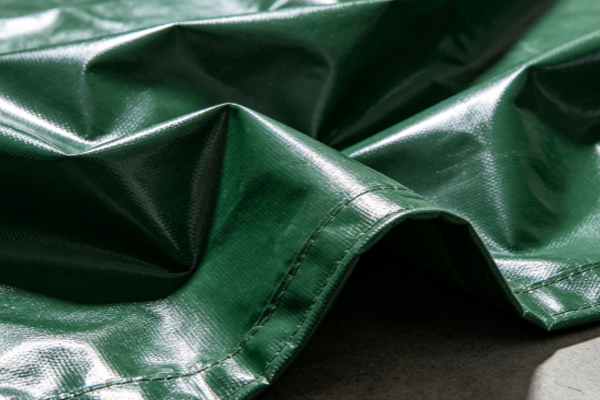
Color is more than a simple appearance choice. During PVC tarpaulin production, pigments and manufacturing processes are used to achieve the target color, and different colors may require different material inputs and production arrangements. Industry procurement information also identifies color requirements as one of the factors affecting PVC tarpaulin quotations.
Common colors such as blue, green, and gray usually have established formulations, making continuous batch production easier to arrange. Special colors may require new material formulations.
Specified color codes require color matching.
Some bright colors may have higher requirements for pigment systems.
Small-batch special colors may increase color change and equipment cleaning costs.
It is not unusual for suppliers to quote different prices for tarpaulins with the same specifications but different colors.
When customers require matching with a corporate standard color, equipment color, or specified color card, color confirmation is usually required before production. Procurement documents can provide:
Standard color code;
Physical color sample;
Acceptable color deviation;
Sample retention standard for batch production.
The clearer the color standard, the easier it is to manage subsequent batch production and inspection.
There is no universal surcharge standard for custom colors. The actual impact needs to be evaluated according to the color type, order quantity, color matching difficulty, and production method.
If a project does not have strict color identification requirements, customers can choose an established color from the supplier’s existing color range. This type of solution usually reduces additional color matching and makes batch production easier to arrange.
Production formulations are relatively stable;
The number of color changes can be reduced;
Large-scale continuous production makes it easier to spread preparation costs.
For applications such as general transportation covering and industrial protection, established color ranges can often meet basic visual requirements.
If tarpaulin needs to match a corporate visual identity, vehicle, building, or equipment color, it needs to be formulated according to the specified standard. The main factors affecting cost include:
Color matching difficulty;
Degree of color specialization;
Color deviation control requirements;
Order area;
Whether an independent production batch is required.
For these projects, it is more appropriate to complete color sample confirmation before formal batch production.
The preparation costs for custom color matching, equipment adjustment, and cleaning need to be distributed across the actual production area, making the unit cost more noticeable when the order area is small. During procurement, customers can ask about sample or trial-order quantities, small-batch prices, volume prices, and repeat-order prices to better understand the impact of custom colors on the budget.
Providing only a color name makes it difficult for a supplier to accurately calculate the price of the complete tarpaulin. Color requirements should be specified together with the material structure, performance, and finished-product specifications to establish a comparable quotation basis.
Descriptions such as “dark blue,” “military green,” and “light gray” can involve considerable subjective differences. A clear color code or physical sample is more suitable as a production reference. Procurement documents are recommended to specify:
Color code or physical sample;
Whether color sampling is required;
Color consistency requirements between batches;
Color comparison standard for final inspection.
Once this information is confirmed, suppliers can quote and produce according to the same color requirements.
Color alone does not determine the price of tarpaulin. When the same color is applied to different GSM levels, base fabrics, and PVC coating structures, raw material consumption and production costs will still differ. The following information is recommended for quotation requests:
Base fabric specifications;
Target GSM;
PVC coating requirements;
Finished-product dimensions or roll width;
Functions such as UV resistance, mildew resistance, and flame retardancy;
Estimated purchase quantity.
The more complete the specifications, the easier it is to compare quotations from different suppliers under the same conditions.
If the same project requires continuous purchasing, it is recommended to retain an approved physical sample and record the corresponding color code and inspection requirements. Subsequent batches can then use the same reference for production, reducing the time and communication costs associated with reconfirming colors. With a fixed color standard, procurement teams can also compare color consistency between different batches more easily, making long-term purchasing management clearer.
Color customization can support corporate identification, visual consistency across projects, and long-term purchasing consistency, but not every application requires complex color matching. During procurement, the required color accuracy should be determined according to the intended use, followed by production planning based on order volume.
If tarpaulin is mainly used for rain protection, sun protection, and covering, and no specific color code is mandatory, a similar option from the supplier’s existing standard color range can be selected. This can reduce:
Separate color matching;
Additional sampling;
Small-batch color changes;
Special production arrangements.
For functional procurement projects, this approach generally makes it easier to control the overall budget.
Projects involving corporate visual identity, vehicle fleets, and outdoor facilities may require consistent colors over the long term. After a custom color is determined, the estimated annual purchase volume or future order plan can be provided during quotation so that the supplier can evaluate costs according to production batches. Bulk and repeat purchasing may improve unit efficiency, but pricing still depends on specifications and commercial conditions. Planning colors and purchase quantities in advance can reduce communication costs caused by repeated sampling.
The final performance of tarpaulin also depends on base fabric strength, GSM, PVC coating, weather resistance, and post-processing quality. Color is one part of the customization requirements and cannot replace the product’s functional specifications. For long-term outdoor applications, core parameters such as waterproof performance, UV resistance, and mechanical strength should be established, followed by the color scheme according to visual requirements. This approach makes it easier to balance performance and procurement budget.
The value of custom tarpaulin colors is not limited to visual consistency. It can also support corporate identification, project management, and consistency in long-term purchasing. Newstar Plastic Industry Co.,Ltd. can provide PVC tarpaulin customization solutions according to application scenarios, color standards, GSM, dimensions, and functional requirements, helping customers plan everything from color matching to finished-product specifications. The solutions are suitable for transportation covering, industrial protection, outdoor facilities, and various other applications.
