
Hot Keywords:
- All
- Product Name
- Product Keyword
- Product Model
- Product Summary
- Product Description
- Multi Field Search
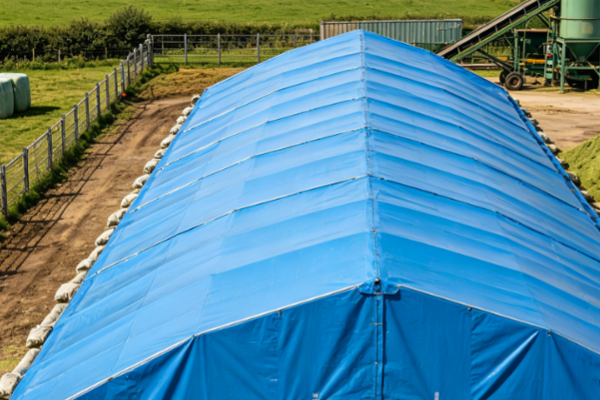
For farm operators, feed storage is not simply about placing supplies in a certain area. As farms and livestock operations continue to expand, the amount of feed purchased and stored has increased significantly, while storage space is often limited. As a result, some feed must be temporarily stored outdoors. Once continuous rainfall, strong sunlight, or windy weather occurs, feed packaging may become damaged, and the feed itself may suffer from moisture exposure or quality deterioration. Many farm owners only realize the importance of storage protection after experiencing losses. By using professional rain protection tarpaulins, agricultural users can reduce weather-related risks and create a more stable feed storage environment. PVC tarpaulin and Canvas tarpaulin, with their excellent protective performance, have become common solutions for farm feed covering and agricultural storage applications.
Farm environments are usually open and exposed, meaning feed storage areas often lack the stable temperature and humidity conditions found in professional warehouses. Seasonal changes, rainfall, sunlight, dust, and moisture can all affect feed quality. Especially for large-scale farms, where large amounts of feed are consumed daily, problems in the storage process can increase costs and even affect normal feeding schedules. Therefore, proper protection after feed delivery is an important part of agricultural management.
Many farms purchase feed in advance to ensure sufficient supply during daily operations. However, during actual storage, sudden rainfall can cause problems if the feed is not properly covered and protected.
Feed may absorb moisture and become hardened;
Packaging bags may become damaged after long-term exposure to humidity;
Feed quality may be affected;
Additional cleaning and handling costs may occur.
Using rainproof covering tarpaulins can reduce direct contact between rainwater and feed piles, helping maintain a relatively dry storage environment. For farms in areas with frequent rainfall or those relying heavily on outdoor storage, proper covering preparation can prevent many unexpected losses.
For agricultural operators, the investment in tarpaulin protection is relatively small compared with potential feed losses, but it provides long-term protection. Proper covering not only protects feed but also makes daily management easier.
Besides rainfall, continuous sunlight exposure can also affect outdoor feed storage. During hot summer conditions, uncovered feed piles may experience temperature changes, while packaging materials may age faster.
Reduce direct ultraviolet exposure;
Lower temperature changes around feed piles;
Extend packaging material service life.
Choosing tarpaulins with sun protection capabilities helps farms reduce the impact of high temperatures and maintain more stable feed storage conditions.
Farm operations often involve transportation vehicles and machinery, which can generate dust. If feed remains uncovered for long periods, it can affect cleanliness and increase management difficulty.
Reduce dust entering storage areas;
Keep the storage environment cleaner;
Make inventory inspections easier.
After implementing proper covering management, farms can organize feed more efficiently and improve overall storage control.
Different farms use different storage methods. Some have dedicated warehouses, some build temporary storage areas, while others need temporary outdoor feed storage. Therefore, tarpaulin selection should not focus only on price but should consider the actual environment, storage duration, and coverage area. A suitable tarpaulin solution can help farms reduce losses while improving storage flexibility.
For farms requiring long-term outdoor feed storage, tarpaulins need to provide strong waterproof performance, durability, and resistance to environmental changes. Compared with ordinary covering materials, PVC tarpaulin offers better stability in outdoor applications and is suitable for long-term agricultural protection needs.
Provides good waterproof performance and reduces water penetration;
Durable material suitable for repeated use;
Easy-to-clean surface for daily maintenance;
Suitable for covering large feed storage piles.
For large-scale livestock farms, feed storage volumes are usually considerable. Frequently replacing covering materials not only increases costs but also affects management efficiency. PVC tarpaulin provides more continuous and reliable protection.
Different storage locations on farms face different risks. Selecting suitable covering methods according to actual conditions can avoid resource waste and improve protection performance.
Storage Location | Common Risks | Recommended Solution |
Large feed storage piles | Long-term exposure to rain and sunlight | Use PVC tarpaulin for full coverage |
Temporary storage areas | Frequent weather changes | Choose easy-to-install and removable tarpaulins |
Hay and agricultural material areas | Moisture and dust issues | Use Canvas tarpaulin for additional protection |
Transportation waiting areas | Exposure during handling | Apply durable covering materials |
Storage areas near farm equipment | Dust and debris contamination | Add overhead protection |
Developing different covering solutions for different areas allows tarpaulins to perform more effectively instead of applying the same method to every situation.
In addition to PVC tarpaulin, Canvas tarpaulin is also commonly used in agricultural protection applications. For areas requiring frequent movement, temporary covering, or seasonal use, Canvas tarpaulin provides greater flexibility.
Easy to fold and transport;
Suitable for short-term covering;
Flexible adjustment of covering locations;
Applicable to various agricultural scenarios.
For small and medium-sized farms or users with changing storage requirements, Canvas tarpaulin provides a more flexible protection option.Choosing PVC tarpaulin and Canvas tarpaulin according to different agricultural environments allows more precise protection. Long-term storage focuses on durability, while temporary applications require flexibility. Both materials can meet different usage requirements.
There are many types of tarpaulin products available, and they differ in thickness, waterproof performance, and service life. When purchasing, farm users should not only consider price. Tarpaulins suitable for agricultural storage need to match local climate conditions, storage methods, and usage frequency. Understanding these factors in advance can help avoid purchasing products that do not meet actual needs.
Feed storage volumes vary greatly between farms. Small storage areas and large feed piles require different tarpaulin specifications.
Determine size based on storage area;
Consider feed pile height;
Reserve space for fixing and edge protection.
A properly sized tarpaulin provides more complete coverage and reduces the possibility of rain entering from uncovered edges.
Agricultural environments are constantly changing. Tarpaulins need to withstand wind, sunlight, and handling friction. If material quality is insufficient, service life may be reduced.
Consider material thickness;
Check tensile and wear resistance;
Choose products suitable for outdoor environments;
Consider long-term repeated use requirements.
Durable tarpaulins reduce replacement frequency and help farms lower long-term management costs.
Many users focus only on purchasing tarpaulins but overlook installation and maintenance. In reality, proper fixing methods directly affect protection performance.
Use suitable fixing tools;
Prevent tarpaulins from being lifted by strong winds;
Regularly inspect tarpaulin conditions.
Proper maintenance extends service life and ensures more stable feed protection.
Feed protection is not simply about placing a tarpaulin over supplies. It requires planning based on farm conditions, storage methods, and usage cycles. From storage location selection to tarpaulin installation and maintenance, every step affects the final protection result. For long-term agricultural businesses, a complete storage protection solution can reduce repeated investments and ensure a more stable feed supply.
Different seasons bring different storage challenges, and farms should prepare accordingly.
Strengthen waterproof protection during rainy seasons;
Increase sun protection during summer;
Focus on moisture control in humid regions.
Adjusting storage methods according to weather conditions allows tarpaulins to provide better performance.
Every farm has different layouts and operating models, so tarpaulin solutions should also be adjusted accordingly.
Plan feed storage areas properly;
Keep feed separated from direct ground contact;
Make daily inspections easier.
Scientific management reduces feed waste and creates a more organized storage process.
For farms with long-term usage requirements, supply stability is also important.
Support customized sizes;
Meet agricultural application requirements;
Provide convenient future replacement and purchasing.
Reliable products and supply capabilities help agricultural businesses establish a long-term protection system.
Farm feed storage rain protection covering solutions help agricultural users reduce feed losses caused by rainfall, sunlight, and environmental factors while improving daily storage efficiency. Whether for large livestock farms, agricultural storage areas, or temporary feed storage needs, selecting suitable PVC tarpaulin and Canvas tarpaulin can provide more reliable protection. NEWSTAR PLASTIC INDUSTRY CO.,LTD. provides high-quality PVC and Canvas material tarpaulin products, offering professional solutions for agriculture, aquaculture, ventilation engineering, and outdoor protection applications.
