
Hot Keywords:
- All
- Product Name
- Product Keyword
- Product Model
- Product Summary
- Product Description
- Multi Field Search

When grains are stored in open-air environments, they are highly susceptible to rainwater and humidity fluctuations, which can lead to mold growth, germination, and quality degradation. For grain depots, farms, and temporary storage yards, achieving effective protection without relying on enclosed warehouses is key to reducing losses. The use of waterproof and moisture-resistant covering materials can further block external moisture penetration. At the same time, a certain level of breathability helps reduce internal condensation and heat accumulation.
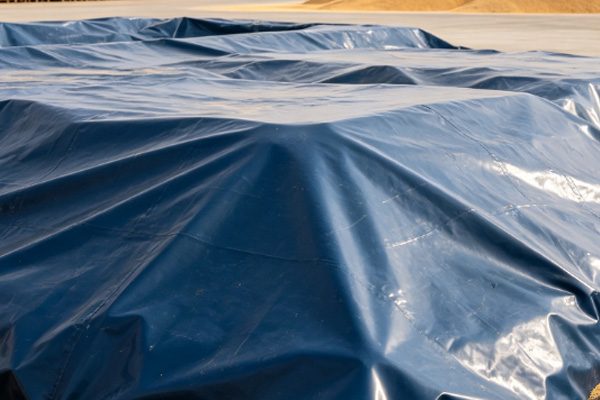
Under open-air storage conditions, grains are directly exposed to the natural environment, and the risk factors are complex.
Rainwater is one of the most destructive factors in open-air storage.
Sudden rainfall can directly wet the surface of grain piles and penetrate inward.
Once moisture enters, it is difficult to dry in time due to insufficient ventilation.
Long-term damp conditions accelerate mold growth and reduce quality.
Rainwater control is the primary link in the protection system.
Changes in air humidity have a continuous impact on grain safety.
Condensation easily forms on the surface of grain piles at night and in the early morning.
Poor ventilation can create a humid and stuffy internal environment.
High humidity conditions accelerate microbial reproduction.
Humidity management is the core of the moisture-proof system.
Ground conditions have a direct impact on the bottom layer of grain.
Soil or ground moisture can seep upward due to humidity changes.
Poor drainage can easily cause localized water accumulation.
The bottom layer is most prone to mold due to long-term dampness.
Ground isolation and drainage optimization are fundamental measures.
Proper selection of covering materials is a key method to improve the safety of open-air storage.
Waterproof tarpaulin is the most widely used basic protection method.
PVC-coated structure effectively blocks rainwater penetration.
Can quickly cover large grain piles.
Suitable for short-term and medium-to-long-term open-air storage.
The covering system forms the first protective barrier.
A single material is often insufficient for complex environments, so structural optimization is required to enhance overall protection. A multi-layer structure can effectively reduce internal condensation and lower the risk of moisture return. Through layered design, overall moisture stability and durability can be significantly improved. In long-term storage scenarios, multi-layer composite structures greatly enhance system reliability.
In long-term use, durability and cost efficiency are important.
PVC waterproof fabric is flexible, tear-resistant, and can be folded and reused multiple times.
Stable structure, not prone to rapid aging in outdoor conditions.
Reduces replacement frequency and lowers storage costs.
Reusable materials have cost advantages in large-scale agricultural storage.
Different grain storage methods have significantly different protection requirements.
Storage Scenario | Main Risk | Protection Focus | Recommended Solution |
Temporary field stacking | Sudden rainfall | Quick covering, waterproofing | PVC waterproof tarpaulin quick-cover system |
Grain depot surrounding yard | Long-term humidity changes | Moisture-proof + ventilation | Multi-layer moisture-proof cover + bottom isolation pad |
Large-scale open-air storage | Ground moisture return + water accumulation | Drainage + overall sealing | Waterproof fabric + drainage system combined solution |
Developing differentiated protection strategies for different scenarios can effectively reduce grain storage loss risks.
In addition to material selection, systematic management and engineering optimization also determine the final protection performance.
Controlling moisture entry paths from the source is a key step in improving overall protection capability. By using moisture-proof mats, pallets, or isolation layers to separate grain from the ground, and by setting drainage channels around storage yards to prevent long-term rainwater retention, while elevating the storage structure to reduce bottom dampness risk, the optimization of the basic environment is a core prerequisite for long-term stable protection.
Outdoor protection systems must have wind resistance stability.
Use battens, sandbags, or anchoring devices to secure tarpaulins.
Prevent displacement or lifting caused by strong winds.
Maintain overall sealing performance.
Structural stability determines protection effectiveness.
Continuous maintenance is key to ensuring protection performance.
Regularly check whether the tarpaulin is damaged, aged, or loose.
Repair or replace damaged areas in time.
Monitor grain pile humidity and adjust protection measures.
A well-established maintenance mechanism can extend system service life.
The core of open-air grain storage is achieving stable protection in an open environment. By properly using PVC waterproof covering materials, optimizing multi-layer structural design, and combining ground isolation and drainage systems, loss risks can be significantly reduced. Newstar Plastic Industry Co.,Ltd. specializes in high-strength PVC waterproof materials and customized covering solutions, providing reliable support for agricultural storage and yard projects, thereby improving storage safety and economic efficiency.
