
Hot Keywords:
- All
- Product Name
- Product Keyword
- Product Model
- Product Summary
- Product Description
- Multi Field Search

When grain is temporarily stored outdoors, tarpaulin covering cannot focus only on rainfall protection. Newly harvested grain or grain with relatively high moisture content continues to respire, which can cause changes in temperature and humidity inside the pile. If a PVC tarpaulin is placed tightly against the grain pile and creates an enclosed environment, warm and humid air can easily condense when it contacts the cooler inner surface of the tarpaulin, increasing the risk of localized moisture, heating, and mold growth. When planning the covering method, grain conditions, pile structure, and outdoor environment should be considered so that waterproof materials work together with ventilation, elevation, and drainage measures.
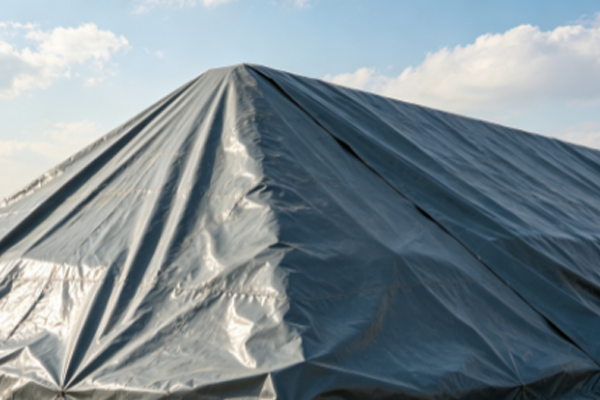
Outdoor grain piles need to withstand rain, sunlight, and windblown dust while also accounting for temperature and humidity changes after covering. Waterproof tarpaulins are more suitable as an external protective layer, with the specific application method adjusted according to the condition of the grain itself.
Outdoor piles are easily affected by weather conditions. PVC tarpaulins can reduce the direct impact of rain, sunlight, and windblown dust on grain and packaging materials:
Reduce Rainwater Contact: Reduce the chance of rainfall directly washing grain bags and the surface of the grain pile.
Reduce Sun Exposure: Tarpaulins with UV resistance are more suitable for outdoor use.
Reduce Windblown Dust: Proper covering can reduce the attachment of dust and debris.
Protect Packaging Materials: Reduce long-term exposure of woven bags to rain and direct sunlight.
PVC tarpaulins mainly provide protection against external environmental conditions, while the temperature, moisture, and airflow inside the grain pile still require appropriate management.
Grain continues to respire and exchange heat during storage, and newly harvested grain with higher moisture content is more sensitive to these changes. When warm and humid air inside the pile cannot escape, it may condense into water droplets on the cooler tarpaulin surface, leaving localized areas of grain damp for extended periods.
Maintain Air Space: Leave an appropriate distance between the tarpaulin and grain pile.
Provide Ventilation Areas: Arrange ventilation or rain-protected ventilation openings at the top according to the pile structure.
Maintain Side Gaps: Avoid having the tarpaulin tightly contact large areas of grain bags.
Reduce Enclosed Areas: Do not completely block ventilation openings simply to improve rain protection.
Consider Rainy Conditions: Ventilation structures should also provide rain protection to prevent rainwater from entering the grain pile directly.
A properly designed covering structure allows the tarpaulin to provide protection while reducing prolonged moisture accumulation.
Tarpaulins used for outdoor grain piles need to withstand external conditions such as sunlight, rainfall, and wind. PVC tarpaulins can provide different levels of waterproofing, tear resistance, mildew resistance, abrasion resistance, and UV resistance through the combination of fabric base and PVC coating. Material selection should be based on the actual environment and storage period.
During long-term outdoor use, materials are repeatedly exposed to sunlight, rain, and pulling forces. Therefore, the following properties should be considered when purchasing:
Tarpaulin Property | Role in Grain Pile Covering | Suitable Requirements |
Waterproof Performance | Reduces rainwater penetration and lowers the risk of surface moisture | Rainy and outdoor environments |
Tear Resistance | Withstands wind loads and tension generated by fixing | Large grain piles and windy environments |
Mildew Resistance | Reduces the possibility of tarpaulin mildew in humid conditions | High-humidity and rainy areas |
Abrasion Resistance | Reduces wear caused by installation, folding, rolling, and handling | Frequent repeated use |
UV Resistance | Reduces material damage caused by long-term ultraviolet exposure | Long-term outdoor covering |
Aging Resistance | Slows performance degradation during extended use | Long-term outdoor storage |
Tarpaulin specifications should not be judged only by thickness or weight. Climate conditions, frequency of use, and expected storage duration should also be considered for a comprehensive selection.
Tarpaulin selection needs to consider area, height, handling frequency, and fixing method. Small temporary piles can use materials that are easy to unfold and roll up, while large grain piles should pay greater attention to base fabric strength, tear resistance, and edge reinforcement. The tarpaulin should cover the top of the grain pile and extend toward the sides to provide sufficient rain protection while avoiding large areas of material directly contacting the grain bags. Appropriate weight and dimensions can reduce material waste while making installation, fixing, and inspection easier.
A tarpaulin is only one part of an outdoor grain storage system. The way the grain pile is elevated, airflow, and temperature and humidity monitoring should also be incorporated into the covering plan. Grain with higher moisture content requires particular attention to changes during storage.
Reasonable air passages should be maintained between the grain pile and the tarpaulin. The ventilation layout can be adjusted according to the pile height, area, and local climate.
Elevate the Bottom: Use pallets, wooden supports, or suitable elevated structures to reduce the influence of ground moisture.
Leave Space at the Top: Create an air layer between the top of the grain pile and the tarpaulin.
Provide Side Ventilation: Leave appropriate gaps to provide an escape path for warm and humid air.
Install Ventilation Structures: Large grain piles can use rain-protected ventilation caps or similar structures according to site conditions.
Use Mechanical Ventilation Properly: When mechanical ventilation is required, schedule it according to grain temperature and outdoor air conditions.
Multiple airflow paths can reduce moisture retention and help maintain a relatively stable air environment between the covering layer and grain pile.
Condensation is closely related to changes in temperature and humidity, and the inner surface of the tarpaulin requires particular attention when day-night temperature differences are large. Management should focus on both the conditions before piling and inspections after covering. Grain should be piled only after reaching suitable storage moisture conditions. Newly harvested or higher-moisture grain requires more frequent temperature monitoring. At the same time, check for water droplets or damp marks on the inner surface of the tarpaulin, and inspect the grain surface for moisture, unusual odors, or localized temperature increases. When abnormalities occur, increase inspections and improve airflow instead of continuing to increase enclosure. Reducing condensation risk requires coordinated control of grain moisture, temperature monitoring, and air exchange rather than simply increasing tarpaulin thickness.
When outdoor grain piles have large covering areas, tarpaulins are exposed to continuous wind and changing weather conditions while also needing to allow workers to carry out inspections, ventilation, and handling. Therefore, fixing structures and daily operation should be planned in advance.
The larger the tarpaulin area, the greater the pulling force caused by wind. Edges, corners, and eyelet areas are more likely to experience concentrated loads. Fixing points should be arranged according to the grain pile dimensions, with additional reinforcement provided in high-stress areas:
Reinforce the Edges: Improve the overall load-bearing capacity of the edge areas.
Secure Corners and Eyelets: Use reliable ropes, straps, or anchoring methods according to site conditions.
Distribute Loads: Avoid concentrating pulling forces on individual eyelets.
Maintain Appropriate Tension: Reduce large areas of slack that may cause water accumulation.
Inspect Fixing Components: Check ropes, fasteners, and anchor points before and after strong winds or heavy rain.
Proper fixing can reduce tarpaulin movement, lifting, and tearing while also making subsequent inspections easier.
Before purchasing, assess the actual grain pile and site requirements, then determine the specifications and processing options:
Grain Condition: Newly harvested grain, dry grain, or grain for short-term turnover.
Pile Dimensions: Measure length, width, and height.
Storage Period: Temporary use or long-term outdoor storage.
Environmental Conditions: Rainfall, sunlight, wind, and humidity.
Tarpaulin Performance: Waterproofing, mildew resistance, tear resistance, and abrasion resistance requirements.
Outdoor Requirements: Pay attention to UV resistance and aging resistance for long-term use.
Covering Method: Top covering, side extension, and other methods.
Ventilation Design: Reserve space at the top, sides, and between the tarpaulin and grain pile.
Moisture Protection: Use pallets, wooden supports, or other elevated structures.
Processing Requirements: Heat sealing, edge reinforcement, eyelets, and connection structures.
The clearer the parameters are, the easier it is to match the specifications, fixing method, and grain pile conditions, reducing the need for adjustments later.
The effectiveness of outdoor grain storage depends on the coordination of tarpaulin materials, grain pile arrangements, and on-site management. Proper PVC tarpaulins can provide rain protection, resistance to sunlight, and outdoor environmental protection, while grain moisture control, temperature monitoring, elevation, and ventilation also need to be implemented together. Newstar Plastic Industry Co.,Ltd. can provide PVC waterproof tarpaulins with different weights, widths, thicknesses, and functional configurations, as well as edge reinforcement, eyelets, heat sealing, and size customization, providing suitable tarpaulin material solutions for different outdoor grain storage applications.
