
Hot Keywords:
- All
- Product Name
- Product Keyword
- Product Model
- Product Summary
- Product Description
- Multi Field Search
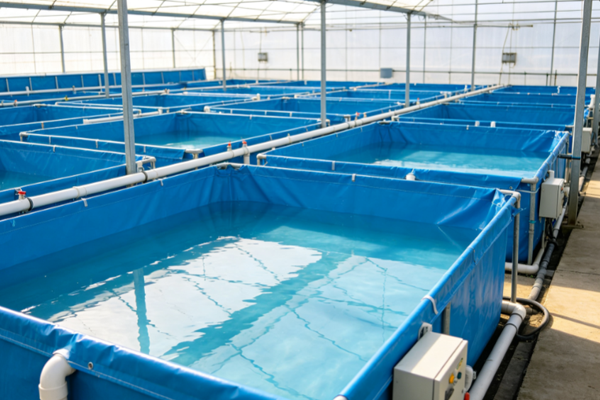
With the continuous development of aquaculture, high-density farming has become an important method for many farmers to increase production capacity. However, as stocking density increases, the requirements for pond conditions also become higher. Pond waterproofing, durability, and daily maintenance directly affect farming results. Many aquaculture farms face problems such as pond leakage, unstable water conditions, and frequent repairs, especially during long-term operation. Choosing suitable PVC waterproof tarpaulins as a pond protection solution can effectively improve pond durability and reduce maintenance costs. PVC and Canvas tarpaulins offer excellent waterproof, tensile, and weather-resistant properties, making them suitable for various aquaculture protection applications.
Compared with traditional farming methods, high-density aquaculture requires more stable water conditions because more aquatic products are raised within the same area. Aquaculture ponds need not only reliable water storage performance but also protection against external environmental impacts. If cracks or leakage occur, it can increase water replacement costs and may affect the entire farming cycle. Therefore, selecting reliable waterproof materials is essential when building or upgrading aquaculture ponds.
After long-term water storage, pond bottoms and walls continuously experience water pressure. Even small structural problems may eventually lead to leakage. Installing PVC waterproof tarpaulins creates a continuous protective layer that helps reduce water loss.
Reduce pond leakage and maintain stable water levels;
Lower management pressure caused by frequent water replenishment;
Protect pond structures and extend service life;
Reduce farming risks caused by water loss.
For high-density aquaculture, stable water conditions are extremely important. PVC tarpaulins with reliable waterproof performance help farmers better control the pond environment.
During aquaculture operations, leftover feed, waste, and other impurities can accumulate at the bottom of ponds. If the pond surface is uneven, cleaning becomes more difficult. PVC tarpaulins have a relatively smooth surface, making daily maintenance more convenient.
Reduce waste accumulation;
Improve pond cleaning efficiency;
Make regular disinfection easier.
Simpler pond maintenance allows workers to save time and focus more on farming management.
Compared with traditional concrete or soil ponds, PVC tarpaulin pond solutions provide greater adaptability. Whether building new aquaculture areas or upgrading existing ponds, the design can be adjusted according to actual requirements.
Suitable for ponds of different sizes;
Adjustable according to site conditions;
Reduce construction complexity.
This flexibility makes PVC tarpaulin solutions suitable for various aquaculture projects.
High-density aquaculture requires waterproof materials that provide more than simple leak prevention. The materials must also offer long-term durability. Aquaculture ponds are exposed to water, sunlight, and changing environmental conditions every day. If the material lacks durability, replacement costs may increase over time. PVC tarpaulins are becoming increasingly popular in aquaculture due to their stable performance, while Canvas tarpaulins can be used for additional protection needs.
High-density aquaculture operations usually run continuously, meaning ponds require materials that can withstand long-term water exposure. PVC tarpaulins provide good waterproof performance and resistance to aging.
Stable waterproof performance;
Suitable for long-term water contact environments;
Good tensile strength;
Reduce frequent maintenance requirements.
Stable material performance helps aquaculture ponds maintain better operating conditions for longer periods.
Aquaculture includes many different farming types, and each has different pond requirements. PVC tarpaulins can be applied in various scenarios according to farming needs.
High-density fish farming ponds;
Shrimp farming ponds;
Temporary nursery ponds;
Recirculating aquaculture systems.
Selecting suitable specifications according to farming scale and environment can improve protection performance.
Besides pond waterproofing, aquaculture farms also need to protect feed storage areas, equipment, and temporary facilities. Canvas tarpaulins offer good wear resistance and flexibility, making them suitable as auxiliary protection materials.
Application Area | Main Problems | Recommended Solution |
Pond bottom | Water leakage issues | PVC waterproof tarpaulin installation |
Feed storage area | Moisture and rain protection | Canvas tarpaulin covering |
Aquaculture equipment area | Sun and rain exposure | Weather-resistant tarpaulin protection |
Temporary farming area | Quick setup requirements | PVC tarpaulin construction |
Combining different materials allows aquaculture farms to create a more complete protection system.
When selecting pond waterproof tarpaulins, many users focus mainly on price. However, actual performance also depends on material thickness, size design, and application conditions. For high-density aquaculture projects, pond protection problems may affect the entire farming cycle, making proper product selection especially important.
Aquaculture ponds remain in contact with water for long periods, so material stability is essential. High-quality PVC tarpaulins can reduce wear during long-term use.
Pay attention to waterproof performance;
Check tensile strength;
Understand weather resistance.
Choosing durable materials can reduce future repair and replacement costs.
Aquaculture ponds vary in size, and standard products may not always meet actual requirements. Proper size planning can reduce installation and connection problems.
Measure pond length and width;
Confirm required covering area;
Reserve fixing positions.
Suitable sizing allows PVC tarpaulins to provide more complete coverage and better protection.
Although PVC tarpaulins provide strong protection, correct installation also affects service life. During installation, sharp objects should be avoided and proper fixing should be completed.
Remove debris from the pond bottom;
Prevent sharp objects from damaging the surface;
Check edge fixing conditions.
Proper installation details help maintain stable pond protection performance.
A PVC tarpaulin pond solution is not only about construction but also requires proper maintenance after installation. High-density aquaculture ponds are used frequently and require regular inspection and management to maintain good farming conditions.
During long-term use, water flow, equipment movement, and environmental changes may affect the tarpaulin condition. Regular inspections help identify problems early.
Check whether the surface is damaged;
Inspect whether connection areas remain secure;
Repair abnormal areas promptly.
Early maintenance prevents small problems from becoming larger issues and reduces repair costs.
A clean pond environment is essential for aquaculture. PVC tarpaulins are easier to clean and can support daily pond management.
Remove accumulated waste regularly;
Control leftover feed buildup;
Carry out proper disinfection.
Maintaining pond cleanliness helps improve environmental stability for aquatic farming.
Different farming stages have different pond management requirements. Adjusting maintenance methods according to actual conditions helps improve efficiency.
Strengthen observation during nursery stages;
Monitor water quality during growth periods;
Inspect pond conditions after harvesting.
Proper management can extend PVC tarpaulin service life and improve overall farming efficiency.
High-density aquaculture pond PVC tarpaulin solutions help aquaculture operators improve pond protection, reduce leakage risks, and lower long-term maintenance costs. By selecting suitable PVC and Canvas tarpaulins, farmers can meet various needs including pond construction, equipment protection, and auxiliary covering applications. NEWSTAR PLASTIC INDUSTRY CO., LTD. provides high-quality PVC and Canvas tarpaulin products, offering professional protection solutions for aquaculture, agriculture, construction engineering, and ventilation engineering applications.
