
Hot Keywords:
- All
- Product Name
- Product Keyword
- Product Model
- Product Summary
- Product Description
- Multi Field Search

The raw material cost of a tarpaulin needs to be calculated based on the base fabric, PVC materials, production process, material consumption per unit area, and actual production losses. Different products may use different GSM, base fabric specifications, PVC formulations, and coating or lamination processes, resulting in different material inputs. Understanding these calculation factors helps purchasing personnel break down supplier quotations more accurately and evaluate how different specifications affect the budget.
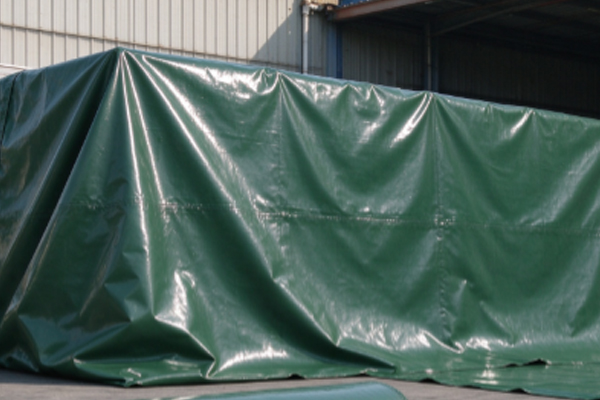
PVC tarpaulins are generally composed of polyester base fabric and flexible PVC materials, but the form of raw materials used varies according to the manufacturing process. Before calculating costs, the product structure and production method should be clearly identified.
The base fabric provides the main mechanical reinforcement for the tarpaulin. Its cost is related to yarn specifications, weaving density, unit weight, and fabric quality. Actual calculations can be based on the following parameters:
Polyester yarn specifications;
Warp and weft density;
Base fabric weight per unit area;
Base fabric purchase price;
Reasonable production losses.
If the base fabric is purchased by weight, the actual amount used per square meter can be multiplied by the purchase price per kilogram to obtain the corresponding base fabric cost per unit area. When the base fabric specification changes, the material input per unit area will also change.
In direct knife-coating processes, the PVC coating is formed by mixing PVC paste resin with plasticizers and other components to create a plasticized PVC paste, followed by coating and heat treatment. Plasticizers are an important component, while stabilizers, pigments, UV-resistant materials, mold-resistant or flame-retardant materials may also be added according to requirements. The raw material cost should be calculated based on the overall formulation cost of the plasticized PVC paste, rather than the price of PVC resin alone.
Even when products are all classified as PVC tarpaulins, different manufacturing routes can result in different raw material purchasing forms and cost calculation methods. Purchasing personnel should determine whether the product uses direct coating or a PVC film lamination structure.
The knife-coating process applies prepared plasticized PVC paste onto the polyester base fabric and then forms a continuous PVC layer by controlling coating quantity and heat treatment. In this case, the material cost per unit area can be calculated using the following approach:Base fabric cost + plasticized PVC paste cost + functional formulation material cost + reasonable production loss.The actual amount of plasticized PVC paste used is related to coating thickness, finished GSM, base fabric structure, and production process. As the coating amount increases, the material input per unit area generally increases accordingly.
The lamination process uses a pre-produced PVC film and combines it with the base fabric through heat pressing or another suitable lamination method. Depending on the product structure, bonding or other interface treatments may also be involved. The raw material cost should include:
Polyester base fabric cost;
PVC film purchase or manufacturing cost;
Material losses during lamination;
Bonding or interface treatment materials;
Heat pressing, lamination, and other manufacturing processes.
In this case, directly applying the “PVC paste consumption per square meter” calculation used for knife-coating processes is not appropriate.
In addition to the main materials, knife-coating and lamination processes differ in equipment, production speed, heat treatment conditions, and production preparation. Even products with the same GSM may have different unit costs when different manufacturing routes are used. Cost calculations should therefore begin by confirming the product structure and production route before applying the corresponding material consumption and cost calculation method.
Theoretical material consumption can be estimated based on specifications per unit area, but actual production also generates material losses. Customized tarpaulins require particular attention to cutting, nesting, and material utilization during production.
For rolls with stable specifications, raw material costs can be calculated according to unit area. The basic approach is as follows:
Basic Calculation Steps: Calculate the amount of base fabric and PVC materials required per square meter, then multiply them by the corresponding purchase prices.
Cost Calculation Formula: Unit-area raw material cost = base fabric cost per unit area + PVC material cost per unit area + other formulation material costs.
Lamination Process: If a lamination process is used, PVC film and related composite materials need to be included in the calculation.
Cost Scope: This result represents the basic raw material cost and does not include labor, equipment, packaging, transportation, or other expenses.
This method can be used to estimate the basic raw material cost of rolls with stable specifications, while the complete cost requires additional production and distribution expenses.
Plasticized PVC paste consumption during knife-coating production is affected by mixing, equipment operation, and heat treatment. Actual consumption should not be calculated simply by applying a uniform loss rate based on finished product area. Production losses may occur through:
Residual material during batching and mixing;
Material remaining in equipment, pipelines, or coating areas;
Losses caused by material and color changes;
Volatile losses within the formulation system during heat treatment.
Actual loss levels need to be tracked according to the formulation, equipment, and production management conditions to establish the company’s own consumption data.
When tarpaulins are processed into customer-specified dimensions, nesting and cutting losses occur. Standard large-size products generally achieve higher material utilization, while small-size, multi-specification, and irregular products may generate more edge waste. Purchasing calculations should take the following factors into account:
Finished product dimensions;
Roll width;
Quantity per production batch;
Nesting method;
Number of irregular edges.
These factors can be used to estimate actual material consumption. The more complex the finished product structure, the greater the potential difference between theoretical area and actual material usage.
Raw materials are only one component of the finished product quotation. Purchasing personnel should separately review material specifications, production losses, and subsequent processing costs to better understand the specific reasons for differences between supplier quotations.
Different quotations should be based on comparable product structures. When requesting quotations, it is recommended to clearly specify:
Base fabric specifications and density;
Finished GSM;
PVC coating or PVC film structure;
Production process;
Color;
UV resistance, mold resistance, flame retardancy, and other functional requirements;
Finished product dimensions and purchase quantity.
After specifications are standardized, comparing prices per square meter or per roll can reduce price differences caused by different product configurations.
The final selling price of a tarpaulin also includes manufacturing and finished-product processing costs, such as coating, lamination, cutting, welding, edge binding, punching, packaging, equipment, and labor. The overall cost can be understood as:
Finished product cost = raw material cost + manufacturing and processing cost + post-processing cost + packaging and related expenses.Based on these costs, companies can determine the final purchasing price according to order quantity, delivery method, and specific commercial conditions.
For long-term purchasing of the same tarpaulin product, it is recommended to maintain consistent base fabric, GSM, color, process, and functional requirements. When quotations change, purchasing personnel can separately review raw material prices, material consumption, production losses, and manufacturing conditions. Maintaining relatively stable purchasing specifications makes cost changes easier to track and also helps companies manage long-term purchasing budgets.
The key to tarpaulin cost calculation is to connect the material structure, manufacturing route, and actual consumption. During procurement, buyers can determine the base fabric and PVC configuration according to the intended application, review supplier quotations together with process losses, processing requirements, and order volume to keep the selected materials aligned with the actual project requirements.
