
Hot Keywords:
- All
- Product Name
- Product Keyword
- Product Model
- Product Summary
- Product Description
- Multi Field Search
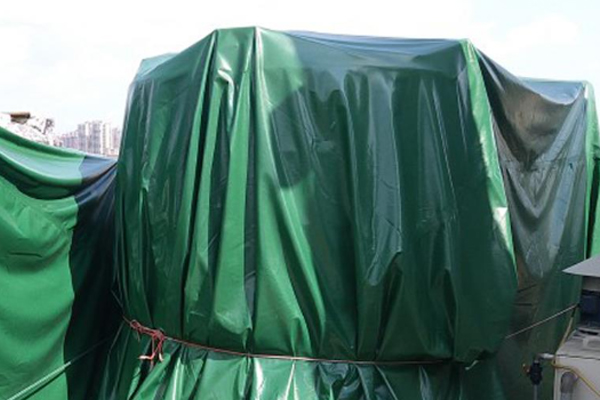
During long-term use, the edges of PVC tarpaulins frequently come into contact with ropes, fasteners, support frames, and the ground. They also need to withstand wind loads, pulling forces, friction, and repeated folding. Without proper edge treatment, the PVC coating may experience wear, cracking, tearing, or localized delamination, which can reduce the overall protective performance of the tarpaulin. A well-designed hem creates an additional protective layer around the perimeter, providing stronger support for the edge material and reducing direct impact at fastening points. Appropriate hem width, heat-welding methods, reinforcement materials, and fastening structures can work together to improve abrasion resistance and tensile strength, allowing PVC tarpaulins to maintain longer service life in cargo covering, warehouse protection, outdoor applications, construction projects, and other demanding environments.
The edges of PVC tarpaulins are often exposed to concentrated loads during installation and use. Tightening ropes, fastening hardware, unfolding the tarpaulin, and wind pressure can all create different levels of mechanical stress along the edge. If a single layer of PVC-coated fabric has to withstand all these forces directly, the material may gradually develop enlarged eyelet holes, edge tearing, or localized deformation. A reinforced hem increases the thickness of the edge and changes the way tension is transferred through the material, helping distribute pressure more evenly.
A reinforced hem can also reduce direct friction between the tarpaulin edge and hard objects. Vehicle cargo bed edges, metal frames, warehouse structures, and construction components may repeatedly rub against the fabric during use. A reinforced edge creates a buffer zone between the main fabric and these structures, providing additional protection. For PVC tarpaulins that are frequently installed and removed, proper hem design becomes even more important because repeated handling can significantly increase friction and mechanical stress around the perimeter.
A PVC tarpaulin hem is not necessarily more durable simply because it is thicker or wider. The design should match the product dimensions, installation method, and expected load conditions. If a small tarpaulin has an excessively wide hem, folding and storage may become less convenient. If a large tarpaulin has an overly narrow hem, the edge may not distribute tension effectively. The design should take into account the weight of the tarpaulin, fastening method, and repeated tension that may occur during long-term use.
Common reinforcement materials and structures include:
PVC material reinforcement: Using PVC material similar to the main fabric provides material consistency and is suitable for general rain protection, sun protection, and cargo covering applications.
High-strength webbing reinforcement: Suitable for tarpaulins exposed to higher tensile forces, providing continuous support along the edge.
Thickened PVC strips: Increasing the material thickness around the edge can improve abrasion resistance and tensile strength, making this option suitable for frequently used covers.
Localized reinforcement patches: Additional reinforcement around eyelets, D-rings, hooks, and other connection points can reduce the risk of tearing around individual fastening positions.
Multi-layer reinforced hems: Suitable for large industrial tarpaulins and products designed for long-term outdoor use, where multiple material layers can provide additional structural strength.
A properly selected combination of materials can reinforce key areas without unnecessarily increasing the thickness of the entire tarpaulin, helping control overall product weight.
After selecting suitable hem materials, the joining process also has a direct influence on PVC tarpaulin service life. PVC materials can commonly be joined through high-frequency welding, hot-air welding, or other compatible processing methods. During production, appropriate temperature, pressure, and welding speed must be maintained to create a stable connection between the hem and the main fabric. Insufficient welding may cause edge separation during use, while improper processing parameters may affect the surface condition of the PVC material.
For PVC tarpaulins used outdoors for extended periods, the connection area should also be designed to accommodate material expansion and contraction caused by temperature changes. Repeated exposure to high daytime temperatures and lower nighttime temperatures can cause small dimensional changes in the fabric. If the hem connection is not strong enough, repeated thermal cycles may eventually create localized openings. A stable welded structure helps reduce this risk and allows the hem and main tarpaulin to function as an integrated structure.
During manufacturing, it is also important to inspect hem width, welding continuity, and corner areas. The four corners are particularly important because they are frequently connected to ropes or fasteners while being exposed to pulling forces from multiple directions. Additional localized reinforcement can therefore be applied to these areas. With consistent processing quality, the hem can provide genuine protection rather than becoming another weak point in the tarpaulin structure.
PVC tarpaulin hems usually work together with eyelets, D-rings, rope loops, and other fastening structures. If an eyelet is installed directly into a single layer of fabric, tension may become concentrated around the opening, gradually causing deformation. Installing the eyelet in a reinforced hem area can distribute the load across a larger section of material and improve fastening stability.
The spacing between eyelets also affects the stress distribution along the tarpaulin edge. If the spacing is too large, individual sections may experience greater movement and tension under windy conditions. If the spacing is too small, the number of processing points and production costs will increase. For large tarpaulins, fastening points can be arranged according to the dimensions and installation structure, with additional reinforcement at the four corners and other high-load positions.
When the hem and fastening structures are designed as an integrated system, installation tension can be transferred more evenly across the edge. Whether the tarpaulin is secured with ropes, bungee cords, or metal frames, a coordinated design can reduce excessive pressure on individual connection points. This is particularly useful for truck covers, cargo tarpaulins, and outdoor covers that are frequently installed and removed.
PVC tarpaulins are used in different environments, and the demands placed on their edges can vary considerably. A warehouse cover may remain installed for extended periods and therefore require strong tensile and weather resistance. A truck tarpaulin may need to be unfolded, folded, and secured frequently, making both abrasion resistance and handling convenience important. A construction tarpaulin may need to connect to scaffolding or temporary frames, requiring fastening points and reinforcement zones to be planned in advance.
For products exposed to outdoor conditions for long periods, hem materials should provide suitable weather resistance to reduce deterioration caused by ultraviolet radiation, rain, temperature fluctuations, and dust. For tarpaulins that frequently contact the ground, the lower edge can be reinforced to reduce wear caused by dragging. For products that are frequently rolled and stored, the thickness and stiffness of the hem should be controlled so that the tarpaulin retains sufficient flexibility.
For large PVC tarpaulins, different reinforcement levels can also be designed according to actual load locations. For example, thicker reinforcement can be used at the four corners, while continuous webbing or thickened PVC strips can be used along the intermediate sections. This concentrates additional material in areas that experience greater tension while avoiding unnecessary reinforcement across the entire product. The result can be a practical balance between durability, weight, and ease of handling.
PVC tarpaulin edge design is more than simply adding an extra layer of material around the perimeter. It combines hem width, reinforcement materials, heat-welding technology, and fastening structures to improve the edge’s ability to withstand tension, friction, and environmental changes. For tarpaulins intended for long-term use, a well-designed edge can reduce tearing, abrasion, and connection failure. Selecting an appropriate hem structure according to transportation, warehousing, construction, outdoor covering, and other applications can help PVC tarpaulins maintain reliable protective performance and achieve a longer service life under frequent handling and demanding environmental conditions.
