
Hot Keywords:
- All
- Product Name
- Product Keyword
- Product Model
- Product Summary
- Product Description
- Multi Field Search
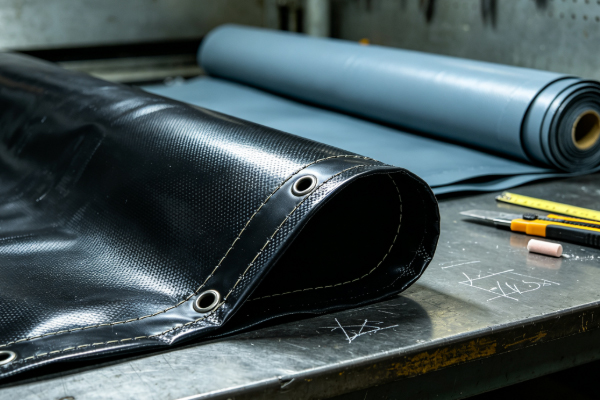
Tarpaulins are widely used for cargo transportation, outdoor covering, warehouse protection, vehicle protection, construction projects, and temporary structures. In these applications, products often need to balance low weight with strong load-bearing performance. Excessive weight can increase handling, installation, folding, and transportation costs, while insufficient strength may cause tearing, deformation, or structural damage under tension, wind pressure, friction, or long-term use. Lightweight tarpaulin design does not simply mean reducing material thickness. Instead, it uses suitable base fabrics, fiber structures, coating configurations, cutting methods, load paths, and localized reinforcement to achieve greater structural efficiency with controlled material consumption. A properly designed lightweight tarpaulin can reduce overall weight while maintaining good tensile strength, tear resistance, waterproofing, and weather resistance, making it more suitable for frequent installation and long-term use.
High-strength tarpaulin design begins with the base fabric. A traditional approach may increase material thickness to improve tensile strength, but this can also increase product weight, reduce flexibility, and make rolling and storage more difficult. Modern tarpaulin design places greater emphasis on fiber strength, fabric density, and warp-and-weft structure. These elements can be carefully matched to improve overall strength without simply increasing material thickness. For PVC tarpaulins, the base fabric serves as the main structural framework, while the PVC coating provides waterproofing, weather resistance, and surface protection. Both components need to form a stable composite structure.
High-strength polyester fabric offers good tensile performance and dimensional stability, making it suitable for many lightweight tarpaulin applications. During design, fabric density and construction can be adjusted according to the intended use instead of increasing the thickness of the entire product. Transportation tarpaulins that require frequent unfolding and rolling can use base fabrics that balance strength with flexibility. Outdoor tarpaulins intended for long-term fixed use may place greater emphasis on weather resistance and tear resistance. Properly matching base fabric specifications allows the tarpaulin to maintain stable structural strength while keeping overall weight under control.
PVC coating provides more than waterproofing. It also affects the weight, flexibility, weather resistance, and service life of a tarpaulin. Lightweight design does not mean simply reducing the PVC coating. Instead, coating thickness and composite construction should be selected according to the actual operating environment. For standard cargo-covering products, the coating can be configured to meet essential waterproofing and weather-resistance requirements. For tarpaulins exposed to strong sunlight, rainfall, or demanding outdoor conditions for extended periods, stronger surface protection may be required.
A uniform and stable coating process can reduce unnecessary weight caused by excessive local coating thickness while avoiding areas that are too thin to provide sufficient waterproofing and weather resistance. For products that are frequently folded, the coating should also maintain suitable flexibility to reduce cracking caused by repeated bending. The bonding condition between the base fabric and PVC coating also affects overall performance. When the composite structure is stable, the tarpaulin can maintain good tensile and protective performance even with controlled material usage. Precise control of the composite material ratio can create a more practical balance between lightweight construction, waterproofing, and mechanical strength.
Not every part of a tarpaulin carries the same amount of force during actual use. Fastening points, corners, edges, connection areas, and locations that contact supporting frames often experience higher localized stress. If the entire product uses the same thickness and reinforcement method, some low-stress areas may contain more material than necessary, while high-stress areas may still require additional reinforcement. Lightweight design can therefore use differentiated structural reinforcement, placing more material where it is actually needed.
The following methods can improve material efficiency while maintaining structural strength:
Reinforcing corner areas: Corners often receive concentrated tension from ropes, fasteners, and support frames. Reinforcement patches or high-strength webbing can improve local load-bearing capacity.
Optimizing fastening holes: Areas around eyelets are susceptible to tearing. Local reinforcement layers can distribute tension over a larger area without increasing the thickness of the entire tarpaulin.
Improving edge construction: Reinforced hems, webbing, or composite reinforcement strips can improve edge strength and allow the tarpaulin to withstand continuous tension without requiring additional material throughout the main body.
Reducing unnecessary cutting waste: Appropriate cutting lines based on the coverage area can reduce excess material while minimizing stress concentration around irregular corners.
Adjusting fastening-point spacing: Eyelets, D-rings, and other connection points should be positioned according to tarpaulin size and load conditions so that tension can be distributed more evenly and individual fastening points do not carry excessive loads.
Localized reinforcement makes material usage more precise. Instead of making the entire tarpaulin thicker, designers can use an optimized structural layout to achieve strong overall performance while controlling product weight.
Lightweight tarpaulin performance is influenced not only by material selection but also by the geometric structure of the product after installation. Proper cutting can reduce unnecessary material and create a more stable load-bearing condition. For example, when a transportation tarpaulin is designed to cover a vehicle cargo area, its dimensions should correspond to the length, width, height, and fastening structure of the cargo space. This helps prevent excessive slack while avoiding excessive stretching during installation. For irregularly shaped tarpaulins, cutting lines should follow the actual coverage profile to reduce unnecessary material and minimize stress concentration around sharp transitions.
Connection design can also contribute to lightweight construction. Large tarpaulins that require joining can use heat welding to create continuous connection areas, reducing the need for numerous mechanical connectors and their additional weight. Hot-air welding or high-frequency welding can create stable connections between PVC tarpaulin sections while maintaining good waterproofing performance. For products that require frequent removal, webbing, fasteners, D-rings, or quick-release buckles can be selected according to actual load requirements, while the number of connection components can be controlled to avoid unnecessary weight.
Large tarpaulins can also use reinforcement lines designed according to the primary load directions. This allows tension to follow more stable paths and prevents excessive stress from concentrating in specific areas. It can also reduce the need for additional material used solely to compensate for structural weaknesses. Through integrated cutting, joining, and load-path design, lightweight tarpaulins can maintain good strength while offering flexible installation and handling performance.
Different applications have different requirements for tarpaulin weight and strength. Transportation tarpaulins require frequent installation, rolling, and removal, so they should not be unnecessarily heavy while still being able to withstand wind loads and cargo friction during vehicle operation. Warehouse covers generally remain installed for longer periods and place greater emphasis on waterproofing, weather resistance, and dimensional stability. Outdoor shelters and temporary structures need to balance structural support, wind resistance, and convenient installation. Construction tarpaulins may come into contact with steel, gravel, and other hard materials, creating higher requirements for localized tear resistance and abrasion resistance.
Lightweight design can be adjusted according to actual operating frequency and load conditions.
Application | Lightweight Design Focus | Strength Design Focus |
Cargo transportation | Control overall weight and facilitate rolling | Tensile strength, tear resistance, wind resistance |
Vehicle covering | Optimize cutting dimensions and reduce excess material | Reinforced edges and fastening holes |
Warehouse covering | Control material thickness appropriately | Waterproofing, weather resistance, dimensional stability |
Outdoor structures | Easy installation and removal | Wind resistance, tensile strength, connection stability |
Construction protection | Control product weight | Abrasion resistance, tear resistance, localized reinforcement |
For products that require frequent manual handling, high-strength lightweight base fabrics can be prioritized while unnecessary metal connectors are minimized. For products intended for long-term fixed installation, material can be concentrated around edges, connection points, and high-load areas. Adjusting the structure according to the application avoids relying on a uniformly heavy construction and allows the tarpaulin to meet actual performance requirements while maintaining a lower overall weight.
Lightweight construction and high strength are not conflicting design goals. Effective tarpaulin design requires coordinated consideration of materials, coatings, cutting methods, load paths, connection structures, and localized reinforcement. For PVC tarpaulins, high-strength base fabrics, appropriate coating configurations, targeted reinforcement, and precise cutting can reduce unnecessary weight while maintaining strong tensile, waterproof, abrasion-resistant, and tear-resistant performance. By adjusting the product structure for transportation, warehousing, outdoor protection, construction, and other applications, manufacturers can further improve material efficiency and create tarpaulins that provide a practical balance between easy handling and high-strength performance.
