
Hot Keywords:
- All
- Product Name
- Product Keyword
- Product Model
- Product Summary
- Product Description
- Multi Field Search
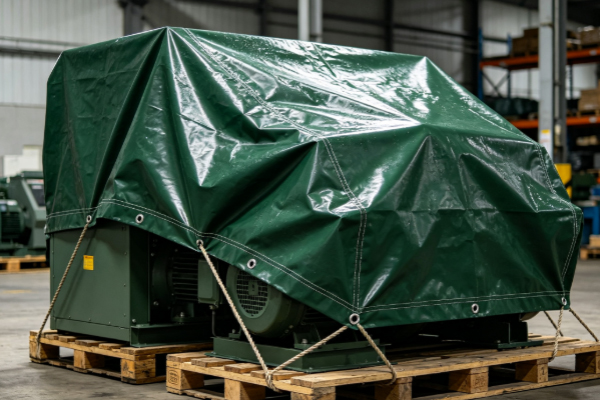
Tarpaulins are rarely installed under exactly the same conditions. Different applications may involve vehicle cargo areas, warehouse roofs, steel structures, open outdoor spaces, construction facilities, or temporary support frames. The size, shape, height, support method, and surrounding conditions of an installation site can all affect the final performance of a tarpaulin after installation. If the product design focuses only on the tarpaulin itself without considering the actual installation conditions, problems such as size mismatch, difficult fastening, poor drainage, uneven tension, or inefficient removal may occur. Tarpaulin design therefore needs to consider the installation base and practical requirements in advance. By adjusting dimensions, edge structures, fastening components, opening designs, and drainage configurations, products can adapt to different installation environments. For PVC tarpaulins, proper structural planning can also make better use of waterproofing, weather resistance, tensile strength, and abrasion resistance, helping the product maintain reliable covering performance in different applications.
The installation base is an important factor in determining the structure of a tarpaulin. Different support structures require different fastening solutions. Vehicle tarpaulins may rely on cargo-bed edges and support frames, warehouse covers may need to connect to steel structures or walls, while temporary outdoor tarpaulins may be installed on metal supports, wooden frames, or independent posts. Before production, the dimensions, shape, load-bearing positions, and available fastening points of the installation base should be confirmed so that the tarpaulin dimensions and connection structure can be properly designed.
For flat and regular installation areas, rectangular or square tarpaulins can be used with evenly distributed eyelets, webbing, or other fastening components along the edges. For curved roofs or sloped support structures, the tarpaulin dimensions should follow the actual profile to prevent excessive wrinkles after installation. If the installation base contains columns, pipes, or equipment, corresponding areas can be reserved in advance so that the tarpaulin can fit around the structure without excessive pulling or localized stress. Matching the tarpaulin structure to the installation base can improve installation efficiency while reducing loosening during use.
Different installation environments have different spatial dimensions, so tarpaulin coverage needs to be determined according to actual measurements. If the tarpaulin is too small, the edges may fail to cover the target area and excessive stretching may be required during installation. If it is too large, excessive loose areas may form and repeatedly move under wind pressure. Proper dimension design improves coverage performance while reducing material waste and unnecessary stress during installation.
The following design factors should be considered when determining dimensions:
Length and width of the installation area: Measure the actual coverage area and determine the finished size while allowing sufficient space for fastening.
Height differences: For vehicles, roof structures, and three-dimensional frames, differences in height should be included in the measurements to ensure proper coverage.
Edge allowance: Since tarpaulins are secured using eyelets, webbing, ropes, or other connectors, sufficient edge space should be reserved for installation.
Structural corners: When columns, frame corners, or irregular structures are present, cutting lines should be adjusted to reduce wrinkles and gaps after installation.
Drainage slope: Outdoor roof coverings should incorporate suitable height differences and slopes so that rainwater can drain in a controlled direction rather than accumulating on the tarpaulin.
Accurate measurement and proper allowances help the tarpaulin maintain a good fit in different spaces. For large PVC tarpaulins in particular, dimensional design directly affects stability after installation, making accurate site measurements important before production.
The fastening method should be selected according to the installation location and frequency of removal. Different applications require different connection components. Transportation tarpaulins may use ropes, eyelets, and elastic cords, while warehouse covers may use webbing, D-rings, or specialized fasteners. Temporary structures may benefit from quick-installation and quick-release connection systems. If the fastening method does not match the installation environment, even a high-strength tarpaulin may experience poor overall performance because of unstable connection points.
For long-term fixed installations, eyelets, webbing, and metal fastening components can be arranged at suitable intervals to keep the tarpaulin properly tensioned. Products that need to be opened frequently can use zippers, quick-release buckles, hook-and-loop fasteners, or other quick connection systems to improve operating efficiency. For large tarpaulins, additional intermediate fastening points can be added to prevent the central area from sagging or moving excessively under wind loads.
The position of fastening components should also correspond to the installation base. If support frames have large spacing, additional connection points may be required. If certain areas do not provide suitable fastening structures, extended webbing, D-rings, or auxiliary straps can create additional fastening paths. A properly designed fastening system creates a stable connection between the tarpaulin and installation base while making future maintenance and replacement easier.
Outdoor installation environments are generally more demanding than indoor conditions. Tarpaulins may be exposed to sunlight, rainfall, wind, temperature changes, and dust. PVC tarpaulins intended for long-term outdoor installation need good waterproofing and weather resistance, while the structural design should also consider drainage and wind loads. For roof areas that are prone to water accumulation, the supporting structure can be designed with height differences or slopes so that rainwater flows toward designated drainage areas, reducing the additional load caused by standing water.
In strong wind environments, the distribution of fastening points and overall tension should receive particular attention. Too few connection points can cause excessive localized loads, while an overly loose tarpaulin may repeatedly flap against the support structure. Edge reinforcement can be strengthened and intermediate fastening points added according to the coverage area. For areas subject to frequent friction, additional wear-resistant layers or reinforcement strips can also be incorporated.
If a tarpaulin is installed around construction zones, logistics loading areas, or equipment, it may come into contact with sharp objects, metal edges, and machinery. Protective layers can be added to areas likely to touch hard structures, while edge treatments can be optimized to reduce damage. Considering environmental changes during the design stage allows the product to better withstand long-term installation and continuous use.
Standard-size tarpaulins are suitable for regular structures with clearly defined dimensions, but many specialized projects require customized designs. Vehicle cargo areas may have different dimensions, warehouse roofs may contain ventilation openings and equipment, and outdoor frames may have different heights and spans. These conditions require adjustments to the tarpaulin structure according to the actual site. Customized tarpaulins can be modified in terms of dimensions, shape, openings, fastening points, and connection methods to achieve a closer fit with the installation location.
For vehicle applications, eyelets, webbing, and quick-release connectors can be positioned according to cargo-bed dimensions and frame spacing, making covering and removal more efficient. For warehouse environments, the coverage area can be designed according to storage zones, with openings added around ventilation systems and equipment outlets. For temporary buildings and outdoor facilities, irregular tarpaulins can be produced according to support-frame dimensions, with fastening holes and connection straps reserved in suitable locations. For large-scale covering projects, sectional designs can also be used, combining several tarpaulin units to reduce the difficulty of installation.
Customized design should also consider future maintenance and replacement. If the tarpaulin needs frequent cleaning, removable fastening components can be selected. If fastening accessories are likely to wear out, accessible maintenance points can be reserved. If the product needs to be rolled and stored for extended periods, folding lines and reinforcement zones should be planned appropriately. Incorporating installation, operation, and maintenance requirements into the design can make the tarpaulin more suitable for real working environments.
Tarpaulin design must integrate the installation base, available space, fastening method, environmental conditions, and actual application requirements to adapt to different installation environments. Accurate site measurements, optimized cutting dimensions, suitable connection components, improved drainage and wind-resistance structures, and customized solutions for special conditions can help PVC tarpaulins maintain reliable coverage in vehicles, warehouses, outdoor facilities, construction sites, and temporary structures. Proper installation-adaptive design not only improves installation efficiency but also helps reduce problems such as looseness, water accumulation, friction, and unstable connections, allowing tarpaulins to provide more consistent protective performance across different applications.
