
Hot Keywords:
- All
- Product Name
- Product Keyword
- Product Model
- Product Summary
- Product Description
- Multi Field Search
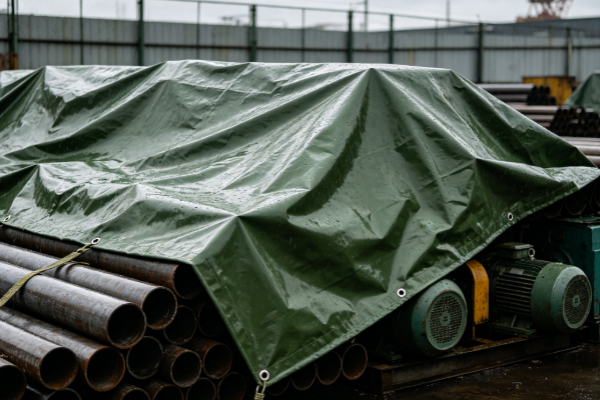
Tarpaulins are widely used for cargo transportation, warehouse covering, outdoor protection, construction sites, equipment protection, and temporary space structures. During long-term use, they are continuously exposed to sunlight, rain, wind, friction, tension, and repeated folding. If a product focuses only on the main tarpaulin material without considering dimensions, structural design, edges, connection points, and the actual operating environment, problems such as abrasion, tearing, deformation, or loose fastening points may occur. Proper tarpaulin design allows the material to perform more effectively while reducing structural wear during long-term use. By selecting suitable base fabrics and coatings, optimizing cutting dimensions, reinforcing high-stress areas, designing practical fastening systems, and adapting the structure to specific applications, tarpaulins can maintain stable protection in demanding environments and achieve a longer service life.
Tarpaulin material is one of the key factors determining basic product durability. Different applications require different thicknesses, fiber structures, and surface treatments. For example, transportation tarpaulins are frequently exposed to pulling and friction, so the material needs good tear resistance. Tarpaulins used outdoors for extended periods require good weather resistance to reduce aging caused by sunlight and rain. Industrial protective tarpaulins may also require specific abrasion resistance depending on the objects they contact and the working environment.
PVC tarpaulins are typically made from a base fabric combined with a PVC coating. The base fabric provides structural support, while the PVC coating offers waterproofing, weather resistance, and surface protection. During product design, these two components need to work together as a stable structure rather than simply increasing material thickness. A suitable balance between base fabric strength and coating thickness can provide a practical combination of weight, flexibility, and durability. For tarpaulins that are frequently rolled, unfolded, or folded, overly rigid materials may increase stress around folding areas. Material selection should therefore also take actual handling methods into consideration.
Tarpaulin dimensions directly affect the stress condition after installation. If the tarpaulin is too small, it may not completely cover the target area and may need to be excessively stretched during installation. If it is too large, excessive loose areas may form and repeatedly move or flap under wind pressure. These conditions can increase material fatigue and edge wear, so the finished size should be determined according to the actual coverage requirements before production.
Cutting design also deserves careful consideration. For rectangular tarpaulins, appropriate installation allowances can be reserved according to the dimensions of the cargo or supporting frame. For circular, trapezoidal, or other irregular shapes, the cutting lines and fastening positions should be determined according to the expanded structure. Avoiding overly complicated cutting corners in high-stress areas can help reduce stress concentration.
For large-area coverage, zoned structural design can also be used to improve overall performance. A large tarpaulin can be divided into different load-bearing zones, with additional reinforcement added around edges and connection points so that tension can be distributed more evenly. Proper dimensions and cutting can reduce material waste while also minimizing unnecessary stretching and friction during installation.
During long-term use, not every part of a tarpaulin experiences the same level of wear. Corners, edges, eyelets, folding lines, and areas that come into contact with support structures are generally more vulnerable to abrasion and tearing. Identifying these areas during the design stage and adding targeted reinforcement can reduce the impact of localized damage on the entire tarpaulin.
Corner areas: Corners often receive tension from different directions during installation. Additional layers of material or webbing can be added to improve strength.
Areas around eyelets: Eyelets are repeatedly pulled by ropes and hooks during use, so localized reinforcement layers can be added around fastening holes.
Edge areas: Edges may frequently rub against the ground, vehicles, or frames. Reinforced hems or continuous webbing can improve abrasion resistance.
Folding areas: Frequent storage and unfolding create repeated bending stress. Materials with good flexibility can help reduce damage caused by repeated folding.
Structural contact areas: Locations that touch metal frames, vehicle structures, or other hard components can be equipped with wear-resistant pads or reinforcement strips.
These areas do not necessarily require the entire tarpaulin to be made thicker. Localized reinforcement can improve durability at critical points while avoiding excessive product weight, allowing the tarpaulin to remain practical and easy to handle.
The fastening system has a direct influence on tarpaulin durability. Ropes, eyelets, D-rings, webbing, quick-release buckles, and other connectors transfer external forces to the edges of the tarpaulin. If there are too few fastening points, individual points may need to withstand excessive tension. If fastening points are poorly distributed, the tarpaulin may become loose in certain areas and experience uneven stress after installation.
When designing the fastening system, the positions of fastening points should be planned according to the tarpaulin dimensions and supporting frame. Large tarpaulins can use additional intermediate fastening points to provide more uniform support across the edges and main body. Products that require frequent installation and removal can use quick-release buckles, elastic cords, or webbing to simplify operation and reduce repeated pulling during installation.
The fastening structure should also work together with edge reinforcement. If eyelets or D-rings are installed directly on a single layer of low-strength material, the material may still fail under concentrated loads even when the connectors themselves are high quality. Installing fastening components within reinforced hems, webbing, or reinforcement patches can distribute the load over a larger area and transfer external tension more evenly into the main tarpaulin structure.
Different working environments create different types of wear. During transportation, tarpaulins are exposed to wind resistance, cargo friction, and frequent installation and removal. Warehouse applications place greater emphasis on long-term covering, waterproofing, and weather resistance. Construction environments may involve friction against gravel, steel materials, and sharp objects. Outdoor temporary structures must cope with sunlight, rainfall, and changing wind conditions. Tarpaulin design should therefore be adapted to the specific application rather than using exactly the same structure for every situation.
Products intended for long-term outdoor use can use weather-resistant materials and strengthen their edges and fastening areas. Vehicle tarpaulins can improve tensile and abrasion resistance while incorporating quick-release connection systems for efficient installation and removal. Construction protection tarpaulins can add wear-resistant layers to areas that are likely to contact hard objects. For warehouse covering products, optimizing dimensions and drainage conditions can help reduce additional loads caused by long-term water accumulation.
Maintenance requirements should also be considered when customizing tarpaulins. Tarpaulins that are frequently cleaned should have surfaces that are easy to wash. Products that are repeatedly folded should avoid overly rigid reinforcement structures. Tarpaulins that require frequent replacement of fastening accessories should provide convenient access for maintenance and component replacement. Incorporating actual operating habits into the design can reduce maintenance-related wear and help the product maintain stable performance for a longer period.
Tarpaulin durability is not determined only by material thickness. It is closely related to material structure, dimensions and cutting, reinforcement of critical areas, fastening systems, and the actual operating environment. A well-designed tarpaulin can remain stable under wind, tension, friction, and repeated handling while reducing the risk of localized damage spreading across the product. For PVC tarpaulins, transportation tarpaulins, warehouse covers, and outdoor protective tarpaulins, selecting suitable materials and structures for the intended application and reinforcing vulnerable areas can extend product service life while maintaining convenient handling and reliable protection.
