
Hot Keywords:
- All
- Product Name
- Product Keyword
- Product Model
- Product Summary
- Product Description
- Multi Field Search
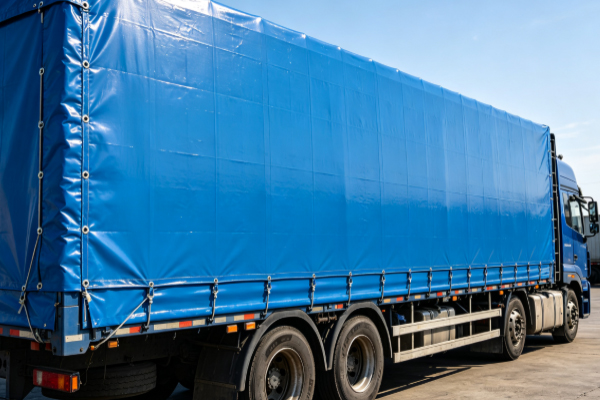
PVC tarpaulins are widely used for logistics transportation, warehouse covering, agricultural production, industrial equipment protection, outdoor facilities, and temporary structures. As application requirements become more specialized, waterproofing and wear resistance alone may no longer meet every practical need. The functional design of a tarpaulin can also affect protection, operating efficiency, service life, and maintenance. By adding suitable fastening systems, drainage structures, opening mechanisms, reinforced areas, and storage features, tarpaulins can better match real working procedures. Functional design is not simply about adding more accessories. It is about optimizing the structure according to the intended use so that the tarpaulin becomes more stable, convenient, and durable during daily operation.
Tarpaulins are designed to protect cargo, equipment, and outdoor spaces from rain, dust, sunlight, and external debris. Therefore, functional design should be closely connected with the actual protection requirements. During PVC tarpaulin production, manufacturers can add reinforced edges, waterproof seams, fastening holes, lifting rings, and support areas according to the intended application. These features can work together to create a more complete protective system. Tarpaulins used for logistics transportation need to handle vibration and wind during vehicle movement, while warehouse tarpaulins may need to withstand long-term exposure to rain, dust, and changing airflow. Industrial equipment covers may also need openings for inspection and maintenance. Application-specific functional design can reduce common problems such as loosening, leakage, wear, and incomplete coverage.
Functional design should also take the stress distribution of the tarpaulin into account. Large PVC tarpaulins without appropriate tension distribution may place excessive pressure on certain fastening points. Long-term use can then result in deformed holes, cracked edges, or localized wear. Reinforcement straps, double-layer hems, and localized reinforcement areas can help distribute the load and improve structural stability during repeated stretching and fastening. For tarpaulins intended for long-term outdoor use, weather-resistant PVC materials and suitable surface treatments can also improve resistance to sunlight, rain, and temperature changes.
Many tarpaulins are not permanently fixed after installation. They may need to be opened and closed frequently for cargo loading and unloading, equipment inspection, vehicle operation, or personnel access. If every operation requires workers to untie numerous ropes or remove complicated accessories, working time increases and repeated handling may accelerate wear on the tarpaulin and fastening components. Therefore, functional design should consider the actual frequency of operation and incorporate quick-opening and connection systems when appropriate.
Common convenient features can include the following:
Quick-release buckles: Suitable for tarpaulins that need to be opened and closed frequently, helping reduce installation and removal time.
Zipper systems: Suitable for warehouse partitions, equipment protection, and temporary enclosed spaces where partial access is required.
Hook-and-loop or buckle systems: Suitable for lightweight tarpaulins and applications requiring quick positioning and simple operation.
Lifting rings and reinforcement straps: Provide stable connection points for ropes, elastic straps, or hooks while reducing localized stress on the fabric.
Roll-up structures: Suitable for vehicle side curtains, warehouse entrances, and other applications where large sections need to be opened quickly, reducing manual folding work.
A practical opening system can transform a tarpaulin from a simple covering material into a more convenient protective product. During design, the connection between accessories and PVC fabric must also provide sufficient strength. Operating speed should not be improved at the expense of overall durability. For applications involving multiple opening and closing operations every day, wear-resistant, tensile-resistant, and easy-to-maintain components should be prioritized.
When tarpaulins are used outdoors for extended periods, rainwater and airflow can have a significant impact on their performance. If water accumulates on the surface, its weight can increase the load on the fabric and supporting structure. If a covered area is completely sealed, moisture may also accumulate inside. Therefore, appropriate drainage and ventilation functions can improve the actual operating environment of a PVC tarpaulin.
Drainage features can be designed according to the installation method. For example, large covering tarpaulins can be installed with supporting frames that create a suitable slope, allowing rainwater to flow toward designated drainage areas. Cargo tarpaulins used during transportation should maintain sufficient surface tension to reduce depressions where water can collect. For warehouse and outdoor equipment protection, drainage channels or directional slopes can be incorporated into the design so that water does not remain on the fabric for extended periods.
Ventilation functions are useful in applications where reducing internal moisture is important. For agricultural storage, equipment protection, and temporary storage areas, ventilation windows, breathable sections, or adjustable openings can be designed according to actual requirements. Ventilation openings should be positioned away from key waterproofing areas and combined with rain protection structures so that airflow does not compromise overall coverage. Proper drainage and ventilation features can reduce moisture, water accumulation, and excessive heat, helping PVC tarpaulins perform more reliably under changing weather conditions.
The performance of a tarpaulin depends not only on its installation condition but also on subsequent cleaning, maintenance, and storage. PVC tarpaulins may come into contact with soil, dust, oil, and other contaminants during transportation and use. If these substances remain on the surface for long periods, they may affect the material condition. Frequent folding and dragging can also cause wear around edges, seams, and fastening points. Therefore, incorporating maintenance and storage features into the functional design can help users manage the product more effectively.
For frequently used products, lifting straps can be added to make handling easier and reduce the need to drag the fabric directly across the ground. Large tarpaulins can use sectional folding or roll-up methods to reduce the difficulty of transportation. For long-term storage, designers should consider the folded volume and securing method to prevent excessive compression caused by random bundling. Storage straps, carrying bags, or roll-up mechanisms can be selected according to the product's intended use.
Maintenance convenience is also important. Tarpaulin edges, seams, fastening holes, and accessory connection points are key areas for regular inspection. These areas should remain accessible so users can identify and address problems efficiently. If minor wear can be repaired quickly, the damage can be prevented from spreading. For commercial transportation and industrial applications, establishing a simple cleaning and inspection routine can help reduce product deterioration caused by delayed maintenance. Good storage and maintenance functions allow PVC tarpaulins to maintain reliable performance after repeated use.
Different applications require different tarpaulin functions, so a completely standardized configuration may not be suitable for every situation. Logistics transportation requires quick fastening, wind resistance, and waterproofing. Warehouse applications may place greater emphasis on opening systems, ventilation, and drainage. Agricultural applications may require sunlight protection, rain protection, and airflow. Industrial equipment protection may need to accommodate equipment dimensions, maintenance access, and long-term covering. Functional customization based on actual workflows allows each structural feature to serve a practical purpose while avoiding unnecessary weight and cost.
When developing a customized PVC tarpaulin solution, the following factors can be considered:
Define the primary purpose: Determine whether the tarpaulin is mainly required for rain protection, dust protection, sun protection, separation, or equipment protection, and select the basic functions accordingly.
Determine operating frequency: Frequently opened products can be equipped with zippers, quick-release buckles, or roll-up systems, while permanently installed products can focus more on reinforced edges and connection areas.
Plan the fastening system: Select lifting rings, ropes, elastic straps, hooks, or other connection components according to the coverage area and supporting structure.
Develop a drainage solution: Determine the drainage direction according to the supporting structure and tarpaulin dimensions to reduce prolonged water accumulation.
Add auxiliary functions: Observation windows, ventilation openings, inspection openings, lifting straps, and storage systems can be incorporated when required.
Match the material to the application: Select an appropriate PVC fabric thickness and performance according to outdoor exposure, friction, weather conditions, and operating environment.
Reserve maintenance access: Seams, fastening points, and high-wear areas should remain accessible for inspection, cleaning, and repair.
The purpose of functional design is not to add as many accessories as possible. Instead, each feature should help the tarpaulin adapt to real operating procedures. A suitable functional configuration can reduce installation time, improve waterproofing, drainage, and ventilation, and reduce material wear caused by frequent handling. For PVC tarpaulin suppliers, customized solutions can be developed according to the customer's environment, covered object, dimensions, and operating habits. By adjusting fastening structures, opening systems, reinforcement areas, drainage features, and storage methods, tarpaulins can become more stable, efficient, and durable in practical applications.
A well-designed PVC tarpaulin can provide reliable covering protection while also delivering greater convenience in logistics, warehousing, agriculture, industrial applications, and outdoor facilities. By combining suitable PVC fabric with practical functional design, users can achieve better long-term performance and a more efficient operating experience.
