
Hot Keywords:
- All
- Product Name
- Product Keyword
- Product Model
- Product Summary
- Product Description
- Multi Field Search

Color consistency is often more important in tarpaulin printing than in ordinary text marking. Once advertising images, brand graphics, or large areas of color show obvious deviations, the overall visual effect may be affected and rework costs may also increase. To make finished colors closer to expectations, the printing material, file preparation, equipment parameters, and inspection methods need to be incorporated into a unified production process.
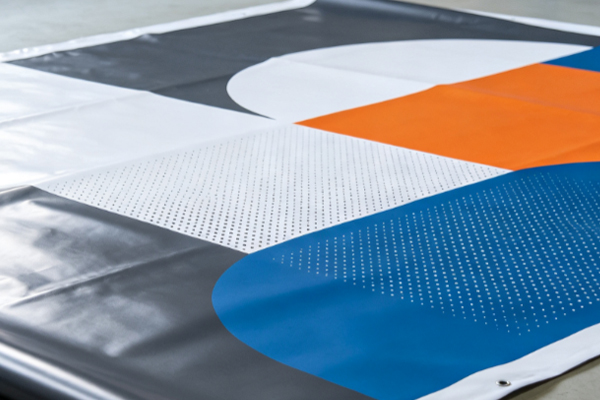
PVC tarpaulin itself is an important factor in color formation. When the base color, gloss, or coating condition changes, the same printing data may produce different results. Clearly defining material specifications during procurement can help reduce subsequent adjustments.
The basic condition of the printing surface directly contributes to the final visual appearance, with light colors and large-area graphics being particularly sensitive to material changes.
Unify the base material color: White or light-colored tarpaulin is generally more suitable for printing colorful graphics, and different base colors should not be mixed within the same batch.
Confirm the surface gloss: Glossy and matte surfaces reflect light differently, so the same color may appear different in brightness and vividness.
Keep material specifications consistent: The same project should maintain consistent GSM, coating structure, and surface treatment as much as possible.
Keeping material conditions consistent provides a relatively stable foundation for subsequent color adjustments.
Ink spreading and adhesion on the tarpaulin surface can affect color uniformity and the final appearance. The actual material surface should be checked before production.
Remove dust, oil, and other contaminants that may affect printing.
Conduct compatibility tests separately for tarpaulins with different surface treatments.
Reconfirm printing conditions after changing the material type.
For long-term outdoor use, also pay attention to ink adhesion and weather resistance.
When the material and printing process are properly matched, color performance becomes more stable and the probability of production abnormalities can be reduced.
The design displayed on a screen can only serve as a visual reference. The final appearance of actual tarpaulin is affected by the material and lighting conditions, so some differences may occur. For orders with strict color requirements, physical proofing is an important step for confirming the finished effect.
The smaller the difference between the sample and mass-production conditions, the more useful the sample is as a color reference.
Use the actual production tarpaulin: The proof should use the same material specifications and surface finish as the bulk order.
Maintain equipment conditions: Use the production equipment and corresponding printing mode whenever possible.
Use the same ink system: Avoid color changes caused by using different inks for samples and mass production.
Check representative areas: Pay particular attention to solid colors, gradients, fine lines, and graphic details.
Producing samples under actual production conditions can reveal differences between the printed colors and the design expectations before mass production begins.
Color confirmation requires a clear reference. Descriptions such as “slightly darker” or “brighter” can easily lead to different interpretations during actual production.
A physical sample approved by the customer can serve as the reference for mass production.
Projects with higher requirements can be managed using specified color cards or color data.
Long-term repeat orders should retain approved samples for comparison during subsequent orders.
A clear color standard allows design, production, and procurement teams to use the same basis for evaluation.
Different projects may have different acceptable levels of color variation. During procurement, the inspection method, viewing environment, and comparison standard can be defined in advance. For large advertising tarpaulins, requirements for color uniformity across the entire graphic should also be specified to avoid inspecting only local areas. Establishing standards in advance makes production and inspection procedures clearer.
After sample approval, equipment and operating conditions still need to be controlled during formal production. This is particularly important for continuous printing of long tarpaulin rolls, where output conditions need to remain relatively consistent from beginning to end.
Changes in printing mode, ink volume, and operating speed can affect color density and graphic appearance. During mass production, printing settings should remain consistent, ink volume should be controlled, and material feeding should remain stable to reduce color differences between different sections of the same order. Stable production parameters help maintain consistent colors throughout the batch.
Equipment operating conditions may change during continuous production, so production personnel should identify abnormalities through process inspections.
Check whether the printheads have ink interruption, missing lines, or uneven inkjet output.
Monitor the ink supply to prevent abnormal ink delivery from affecting color output.
Keep ink usage conditions stable within the same order whenever possible.
Conduct appropriate spot checks during long production runs and investigate abnormal areas promptly.
Continuous process monitoring can prevent small-scale abnormalities from developing into problems affecting an entire batch.
Finished-product inspection needs to consider overall color tone, local uniformity, and actual application conditions. For large-format tarpaulins, checking a single small color block cannot fully represent the performance of the entire graphic.
Lighting, background, and viewing angle can all affect how people perceive color. Inspection should minimize interference from environmental factors as much as possible.
Compare products under relatively stable lighting conditions.
Keep the sample and finished product at similar viewing distances and angles whenever possible.
Avoid making direct judgments under intense sunlight or complex reflective conditions.
Consistent viewing conditions make visual differences between samples and finished products easier to identify accurately.
Large-area tarpaulin graphics need to be inspected from both overall and local perspectives, with particular attention to noticeable variations between different areas.
Check the color at the beginning and end of the same material roll.
Compare color tones between different spliced areas.
Observe whether large solid-color areas contain noticeable variations in shade.
Check whether gradients, text, and detailed graphics show abnormalities.
A complete inspection of the graphic can help identify problems caused by localized printing, material variations, or production parameter changes.
When tarpaulin is used for outdoor advertising, vehicle covers, or event displays, it may be exposed to sunlight, rain, friction, and repeated folding or rolling during long-term use. For projects with longer service cycles, inspection can also include weather resistance, rub resistance, and ink adhesion tests to ensure that product performance matches the actual application requirements.
Color accuracy in tarpaulin printing needs to extend from procurement through production and final inspection. Relying solely on design files or printing equipment parameters cannot address every possible color deviation. For customers with long-term procurement needs, establishing fixed material specifications, approved samples, production records, and inspection standards can make subsequent orders easier to keep consistent and help identify problems more quickly. Newstar Plastic Industry Co.,Ltd. provides PVC tarpaulin, printed tarpaulin, and customized covering materials, matching material specifications, surface effects, and processing solutions according to different requirements to provide tarpaulin products suited to actual project needs.
