
Hot Keywords:
- All
- Product Name
- Product Keyword
- Product Model
- Product Summary
- Product Description
- Multi Field Search

PVC tarpaulin is a flexible roll material that can be affected by dimensional stability, feeding tension, flatness, printing parameters, and post-processing during printing. Distortion becomes particularly noticeable when large text, logos, or regular graphics are stretched, compressed, or locally misaligned. To keep printed graphics consistent with the original design proportions, control is needed across material preparation, environmental conditioning, feeding, printing parameters, and subsequent processing.
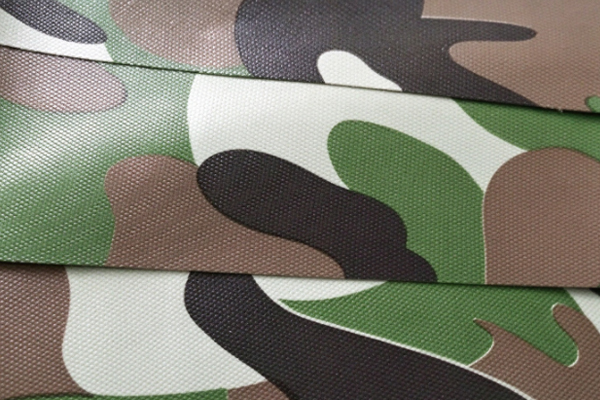
Graphic distortion is usually not caused by a single factor. Changes in the material itself, feeding conditions, and processing can all affect the final proportions of the printed image. Identifying the source of distortion before production can reduce repeated adjustments later.
PVC tarpaulin is generally composed of a woven fabric base and PVC coating. The base fabric structure, coating configuration, and thermal treatment during production can all affect dimensional stability.
Unstable tension in the base fabric may cause changes in the transverse or longitudinal dimensions.
Uneven material edges can cause deviation during feeding.
Dimensional stability may vary between different material batches.
Some materials may experience dimensional changes after heating or other processing.
If the material changes significantly before or after printing, the final graphics may deviate from the original design proportions even when the equipment output dimensions are accurate.
Roll-to-roll printing requires continuous material feeding, and changes in tension directly affect the material as it passes through the printing area.
Excessive tension may stretch the flexible tarpaulin.
Insufficient tension may cause wrinkles or movement on the printing platform.
Uneven tension between the left and right sides may cause diagonal deviation.
Changes in winding pressure may also affect the printed graphics.
Keeping the feeding system stable can reduce the impact of material movement on graphic proportions and positioning.
When PVC tarpaulin is moved from a low-temperature warehouse or a high-temperature transportation environment into the printing workshop, the difference in material and workshop temperature can affect its dimensional condition. Before production, the roll can be placed under conditions close to the actual printing environment so that the material can gradually adapt to the workshop temperature.
Avoid loading material onto the machine immediately after it has been removed from an extremely cold or hot environment.
Large rolls should be kept under relatively stable ambient temperatures whenever possible.
When workshop temperatures fluctuate significantly, pay attention to material dimensions and flatness.
Humidity control is mainly used to maintain a stable production environment and reduce abnormal conditions such as condensation.
Allowing the material to adapt to the production environment before processing can help reduce dimensional fluctuations caused by temperature changes.
The substrate and equipment parameters need to be properly matched. Simply adjusting the artwork cannot solve dimensional changes caused by the material itself. Specific specifications should be confirmed during both purchasing and production.
Different PVC tarpaulins have different base fabric structures, coating configurations, and surface treatments. For printing applications, it is important to confirm in advance that the material can meet subsequent processing requirements.
Confirm the finished width, GSM, and other basic specifications.
Pay attention to the base fabric structure and overall dimensional stability.
For large-format graphics, confirm the material’s flatness during feeding.
For long-term batch production, maintain relatively consistent material specifications whenever possible.
Printed tarpaulin needs to meet more than waterproofing requirements; its dimensional stability and processing performance can also affect the final graphic quality.
Different printing processes require different equipment parameters. When heating or UV curing is involved, thermal input should be controlled carefully to avoid unnecessary heat effects on the material.
Printing speed should match the ink volume and equipment output mode.
When heating is used, settings should be adjusted according to the heat resistance of the tarpaulin material.
UV curing conditions should match the ink and material characteristics.
High-ink-volume areas and long periods of continuous production require particular attention to material condition.
Parameter adjustment should focus on maintaining material stability and proper ink-layer formation rather than simply increasing temperature or ink volume.
The operating condition of the equipment directly affects the position of graphics on large-format tarpaulin. For advertising graphics, truck tarpaulins, and outdoor enclosures, small positioning deviations may gradually accumulate over long printing distances.
Before printing begins, make sure the material enters the printing area smoothly and avoid uneven tension between the two sides from affecting graphic positioning.
Check whether the tarpaulin edges are straight.
Confirm that feeding rollers, pressure rollers, and other components are operating properly.
Keep the material tension relatively even on both sides.
If wrinkles, skewing, or lifted areas appear, correct them before continuing production.
Stable material movement can reduce transverse misalignment and localized stretching.
Extra-wide or extra-long tarpaulin may require multiple-panel printing, joining, or heat welding. During heat welding, the PVC coating and base fabric are exposed to localized heat, which may cause dimensional changes after cooling. The printing dimensions and final product dimensions therefore need to be coordinated in advance.
Keep important logos and text away from heat-welded areas whenever possible.
Determine the joining direction and welding positions before preparing the panel layout.
Reserve appropriate processing allowances according to the actual heat-welding process.
Confirm dimensional changes after welding through sample testing using the same material and equipment.
Coordinate positioning holes, edge cutting lines, and other structures with the welding allowance.
Heat-welding allowances should not simply use a fixed value. They should be determined according to the material, equipment, temperature, pressure, speed, and cooling conditions.
Before formal production, a test graphic containing horizontal lines, vertical lines, circles, rectangles, and text can be used to verify dimensional performance in different directions.
Key items to check include:
Whether horizontal lengths are noticeably stretched.
Whether vertical dimensions are compressed.
Whether circular graphics become elliptical.
Whether straight lines and text edges become tilted.
Whether continuous graphics become misaligned.
A test graphic can reveal feeding, positioning, and dimensional problems relatively quickly and is suitable for inspection before mass production.
A single sample can confirm basic printing results, but batch production also involves continuous feeding, long operating periods, cutting, heat welding, and installation. A complete production verification process makes it easier to identify dimensional changes in advance.
Sampling should use the same tarpaulin specification as mass production whenever possible rather than replacing it with a visually similar material.
Confirm the actual tarpaulin model, GSM, and material specifications.
Allow the material to adapt to the actual production environment in advance.
Use the production equipment and corresponding printing parameters.
Check graphic proportions and edge positioning.
Observe whether the printed material shows noticeable shrinkage or distortion.
Inspect the graphics again after cutting, heat welding, and other post-processing.
Completing the full printing and post-processing workflow provides a more accurate basis for evaluating the final dimensions and graphic condition.
When tarpaulin dimensions, thickness, surface condition, or printing methods change, existing parameters may not be directly applicable. Independent production records can be established for commonly used materials.
Save the corresponding tarpaulin specifications and material batch information.
Record feeding, printing speed, and other relevant equipment parameters.
Record the ambient temperature and material conditioning status during sampling.
Save confirmed test graphic results.
Record actual dimensional changes and processing allowances after heat welding.
Keep approved samples as references for subsequent orders.
Conduct new sample verification before introducing new materials or specifications into production.
Complete process documentation makes it easier to reuse verified production conditions for subsequent orders with the same specifications.
Preventing graphic distortion in tarpaulin printing requires coordinated control of material condition, ambient temperature, feeding tension, printing parameters, and post-processing such as cutting and heat welding. For large-format advertising, truck tarpaulins, outdoor enclosures, and similar products, manufacturers should complete printing and post-processing tests with the actual production material before mass production, then establish production parameters and processing allowances based on the test results. Newstar Plastic Industry Co.,Ltd. provides PVC tarpaulin, printed tarpaulin, and customized covering materials, and can match product solutions according to customer requirements for dimensions, GSM, base fabric structure, surface treatment, and printing, supporting large-format printing, heat-welding processing, and outdoor applications.
