
Hot Keywords:
- All
- Product Name
- Product Keyword
- Product Model
- Product Summary
- Product Description
- Multi Field Search
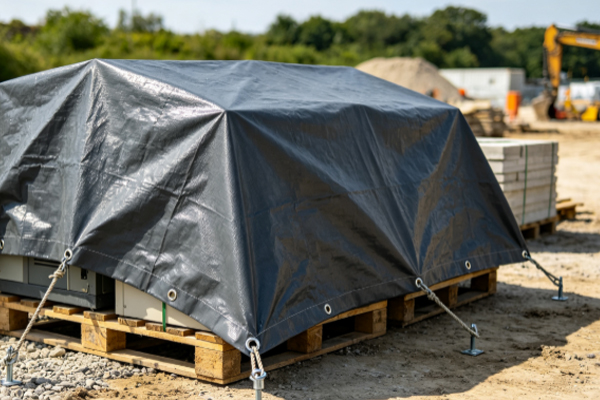
PVC tarpaulins are widely used for logistics transportation, cargo covering, warehouse protection, agricultural production, industrial equipment protection, and outdoor facilities. When choosing a tarpaulin, many users focus on material thickness, waterproof performance, and wear resistance, while the influence of shape design on actual performance is often overlooked. The length, width, edge shape, curves, corners, and connection positions of a tarpaulin can all affect installation efficiency, coverage, drainage, and maintenance. A suitable tarpaulin shape can better match the object being covered while reducing material waste and operating difficulties. For PVC tarpaulin manufacturers and buyers, developing the right shape according to the application scenario can improve both protection and long-term usability.
The shape of a tarpaulin is not simply an appearance feature. It is closely related to the dimensions and structure of the object being covered. Different cargo, equipment, and outdoor structures have different profiles. If the tarpaulin does not match the shape of the covered object, exposed edges, incomplete coverage, excessive folds, or fastening difficulties may occur. When designing PVC tarpaulins, manufacturers should measure the length, width, height, and special structural areas of the covered object before determining the final dimensions and shape.
For objects with regular shapes, rectangular or square tarpaulins are generally practical because they are easy to manufacture, cut, fold, and use in large quantities. For vehicles, machinery, or structures with curved surfaces, curved edges, corner sections, or specially cut panels can be designed according to the actual profile. This allows the tarpaulin to fit the covered object more closely, reducing gaps through which rainwater, dust, or sunlight could enter. It can also reduce excessive overlapping material, which may otherwise increase product weight and storage difficulty.
During purchasing, users should also consider the movement and installation space required after the tarpaulin is placed over the object. The final dimensions should not be calculated only according to the surface dimensions of the covered item. Additional space may be required for fastening, tensioning, overlapping, and edge extension. If the dimensions are too tight, excessive tension may occur during installation, increasing stress on fasteners and potentially causing edge damage. If the tarpaulin is too large, it may increase wind resistance, water accumulation, and handling difficulty. Therefore, the shape and dimensions should be designed to provide complete coverage while remaining practical to operate.
The edges of a tarpaulin are exposed to considerable tension, friction, and external impact during use. Poor edge design can lead to concentrated stress, deformed fastening holes, worn hems, or localized tearing. By optimizing the edge shape and reinforcement structure, PVC tarpaulins can maintain better stability during stretching, folding, and fastening.
Common edge designs and treatment methods include the following:
Straight-edge design: Suitable for cargo stacking, warehouse covering, and conventional equipment protection. It is easy to cut and allows fastening holes to be arranged evenly.
Curved-edge design: Suitable for vehicle roofs, cylindrical equipment, or curved structures. It can reduce excessive folding and material accumulation.
Corner-section design: Suitable for covering three-dimensional cargo or equipment with prominent corners. It can improve coverage around edges and reduce exposed areas.
Reinforced hem design: A wider hem or reinforcement strap can increase the tensile strength around fastening holes and reduce damage caused by repeated use.
Custom-shaped cutting: Special equipment, pipes, and irregular areas can be covered with custom-cut tarpaulins, reducing unnecessary material and improving overall fit.
Edge structure also affects how the tarpaulin can be folded and stored. Overly complicated shapes may increase organization time, so the design should be based on the actual frequency of use. For tarpaulins that are frequently installed and removed, the edge structure should remain simple and easy to handle, avoiding sharp corners or connection areas that can easily become difficult to operate. For permanently installed tarpaulins, stronger edge reinforcement can be added to improve tensile and wind resistance. Combining the appropriate shape with suitable processing technology can extend service life and reduce maintenance requirements.
The shape of a tarpaulin is directly connected to its outdoor protection performance. If the surface forms obvious depressions after installation, rainwater may accumulate in low areas, increasing the load on the fabric and potentially creating water leakage or structural deformation. A suitable shape should work together with the support structure, coverage span, and drainage conditions to guide rainwater toward the edges or designated drainage areas.
For warehouse covers, outdoor equipment protection, and temporary structures, PVC tarpaulins can be designed with suitable slopes or drainage contours according to the support system. The tarpaulin should not remain excessively loose for long periods. Tensioning straps, support poles, ropes, or frame structures can be used when necessary to improve surface tension. For large tarpaulins, the effect of wind on the edges and connection points should also be considered. Excessively long edges, insufficient fastening points, or loose shapes may increase movement and localized wear caused by wind.
Shape design should also take seasonal and weather changes into consideration. In cold environments, some materials may become less flexible. High temperatures and prolonged sunlight exposure can accelerate material aging, while strong winds can increase tensile forces across the tarpaulin. Therefore, the PVC fabric thickness, edge structure, and fastening method should be selected according to the actual climate and application location. For outdoor tarpaulins intended for long-term use, a suitable shape can help reduce water accumulation and wind impact, allowing the protective properties of the product to remain more stable.
The shape of a tarpaulin affects more than its covering performance. It can also influence the entire process from transportation and installation to removal and storage. For logistics tarpaulins, agricultural covers, and equipment protection covers that need to be moved frequently, the ability to unfold, position, fold, and transport the product efficiently can directly affect work efficiency. An overly complicated shape may make it difficult for workers to identify the installation direction, while an unsuitable length-to-width ratio can make folding and storage more difficult.
Designers can adjust folding lines, connection positions, and operating areas according to the intended use. This makes repeated installation and removal easier. For example, rectangular tarpaulins are generally easier to fold and roll in a standardized manner, making them suitable for transportation and warehouse storage. Custom-shaped tarpaulins with clear directional marks or sectional structures can help workers identify the correct installation position more quickly and reduce repeated adjustments. For large tarpaulins, lifting straps, folding assistance straps, or sectional connection structures can also be added to reduce the difficulty of handling and teamwork.
During transportation and storage, the tarpaulin shape should avoid unnecessary protruding sections that are difficult to organize. The positions of fastening holes, buckles, and reinforcement straps should be coordinated with the folding method to prevent accessories from pressing against each other or damaging the fabric during storage. For PVC tarpaulins intended for international transportation, reasonable dimensions can also help suppliers optimize packaging volume, reduce warehouse space requirements, and lower transportation costs. Coordinating shape design with storage methods can improve efficiency throughout the product's service life.
Different applications have different requirements for tarpaulin shapes. Logistics transportation places greater emphasis on complete coverage, convenient fastening, and wind resistance. Industrial equipment protection requires attention to equipment contours, maintenance access, and localized sealing. Agricultural applications may place greater importance on coverage area, drainage, and repeated installation. Outdoor facilities need to consider supporting frames, user activity areas, and long-term weather resistance. When purchasing PVC tarpaulins, users should select the shape according to actual application conditions rather than relying only on standard dimensions.
The following steps can be used when selecting a tarpaulin shape solution:
Measure the covered object: Record the length, width, height, and protruding structures of the object to determine the required coverage area and additional space.
Determine the installation direction: Based on vehicle movement, equipment openings, or supporting structures, establish the front and back sides and fastening edges of the tarpaulin.
Select an appropriate profile: Rectangular designs are suitable for regular objects, while curved, cornered, or custom-cut designs can be used for curved equipment and irregular structures.
Plan fastening positions: Arrange fastening holes, rings, buckles, and reinforcement straps according to the tarpaulin size, stress distribution, and installation conditions.
Evaluate usage frequency: Frequently removed tarpaulins should emphasize folding, transportation, and storage convenience, while permanently installed products should focus more on reinforced edges and connection areas.
Confirm materials and processing methods: Select suitable PVC fabric according to waterproofing, wear resistance, weather resistance, and tensile requirements, and determine suitable hemming, heat sealing, or stitching methods.
Consider maintenance requirements: The shape should make cleaning, inspection, and repair convenient while avoiding areas that are difficult to access or likely to collect dirt.
For customers with special requirements, PVC tarpaulin suppliers can provide customized dimensions, shape cutting, edge reinforcement, fastening-hole adjustments, and accessory configurations. Customization should be based on actual application conditions to ensure that the tarpaulin performs well during covering, protection, installation, and storage.
A well-designed tarpaulin shape can improve much more than the visual appearance of the product. It can influence waterproofing, wind resistance, material durability, and on-site operating efficiency. By selecting suitable PVC fabric and developing an appropriate structural design, users can obtain tarpaulin products that are stable, practical, and convenient for long-term management. Such solutions can provide reliable covering and protection for logistics transportation, industrial applications, agricultural production, and outdoor facilities.
