
Hot Keywords:
- All
- Product Name
- Product Keyword
- Product Model
- Product Summary
- Product Description
- Multi Field Search
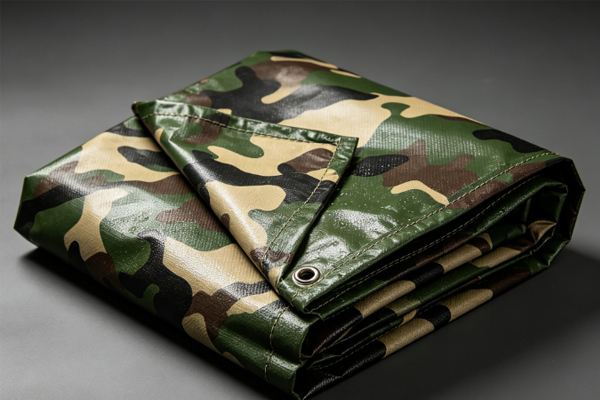
When buying a Camo Tarp, one of the biggest concerns is how long it can actually last outdoors. Nobody wants to buy a new tarp only to find it leaking, cracking, or becoming unusable after a short time. But there is no single number that applies to every tarp. PVC, Canvas, PE, polyester, and Oxford fabric have different characteristics, while sunlight, rain, strong winds, frequent folding, and storage conditions can all affect service life. Choosing the right material for the job can save a lot of trouble later.
There is no fixed lifespan for every Camo Tarp. A quality tarp can normally provide several years of service, but its actual lifespan depends on the material, thickness, manufacturing quality, and environment. A tarp that is only used occasionally and stored properly will generally last longer than one that stays outdoors throughout the year.
PVC Camo Tarps: PVC offers strong water and moisture resistance, making it suitable for long-term outdoor covering. Base fabric strength, PVC coating quality, and material thickness all have an impact on durability. A well-made PVC Camo Tarp can remain useful for years.
Canvas Camo Tarps: Canvas is a traditional tarp material known for its flexibility and breathability. With proper maintenance, it can also provide a long service life. Constant moisture or storing the tarp before it has completely dried can shorten its lifespan.
PE Camo Tarps: PE tarps are generally lightweight and offer good waterproofing, making them practical for temporary outdoor coverage. However, quality can vary depending on the woven structure and coating.
Polyester Camo Tarps: Polyester is relatively lightweight and offers good tensile strength and abrasion resistance. It is often suitable for applications where the tarp needs to be opened and folded frequently.
Oxford Fabric Camo Tarps: Oxford fabric has a relatively dense construction and good wear resistance, making it useful for portable covers and similar applications. Its actual lifespan still depends on fabric density and surface treatment.
For tarps that will remain outdoors for long periods, PVC and Canvas are two materials worth paying particular attention to. For temporary use, a lightweight material may be a more practical choice.
The lifespan of a tarp is not determined by the material name alone. How the material is manufactured also makes a difference. Two products may both be described as PVC tarps, yet their performance can vary because of differences in base fabric strength, coating formulation, thickness, edge reinforcement, and workmanship.
PVC offers strong water resistance and good outdoor performance, making it suitable for applications where protection from rain is needed for extended periods.
Canvas depends heavily on fabric quality and maintenance, while its flexible and breathable construction makes it suitable for users who prefer a traditional tarp material.
PE focuses on lightweight and economical use, making it easy to carry, install, and use for temporary coverage.
Polyester and Oxford fabric are convenient for frequent handling, especially when a tarp needs to be folded, moved, or carried regularly.
If a Camo Tarp will stay outdoors for a long time, PVC is worth considering for its waterproofing and weather resistance. If breathability, flexibility, and the feel of traditional canvas are more important, Canvas may be a better fit. There is no single material that is suitable for every application, so the intended use should guide the choice.
When a tarp starts to deteriorate sooner than expected, many people immediately wonder whether the product quality was poor. Sometimes that can be a factor, but the environment and daily use can also have a major impact. A tarp exposed to strong sunlight every day will naturally experience more stress than one stored indoors.
Long-term exposure to sunlight can gradually age some materials, causing fading, hardening, and eventually cracking. Strong winds can also increase wear, especially when the tarp is not properly tensioned or has too few fixing points. Constant flapping against supports can put extra stress on grommets, seams, and reinforced edges.
Storage is another issue that is easy to overlook. Rolling up a wet tarp and leaving it in a closed space for an extended period can cause problems. Canvas is particularly susceptible to mildew when it remains damp, while prolonged moisture can also affect other materials. Repeated dragging, contact with sharp objects, and constant stress around folding areas can turn small signs of damage into larger tears.
A Camo Tarp does not have to be completely torn before it needs to be replaced. Spotting serious signs of aging early can help prevent unexpected leaks and reduce the risk of damage to the items underneath.
The surface develops numerous cracks, especially when the cracks become larger after the tarp is gently bent.
Water resistance has noticeably decreased, with moisture penetrating areas that previously stayed dry.
Grommets or reinforced edges become badly deformed, with tearing appearing when the tarp is secured.
Canvas develops persistent mildew or visibly weakened fibers, even after cleaning and drying.
A small hole or loose grommet can often be repaired, allowing the tarp to continue being used. However, if the entire tarp has become brittle or a large section of its waterproof coating has deteriorated, repeated repairs may not restore its original protective performance.
Getting more years from a Camo Tarp starts with choosing the right material, but proper use and storage matter just as much. Avoid putting excessive tension on a single fixing point, clean the tarp after use, allow it to dry completely, and store it in a dry, well-ventilated place when it is not needed. These simple habits can reduce unnecessary wear. For long-term outdoor applications, PVC and Canvas are two key materials worth considering, while the right specifications should be selected based on the actual environment rather than simply choosing the thickest or cheapest option. NEWSTAR PLASTIC INDUSTRY CO.,LTD. supplies PVC and Canvas tarps for a range of outdoor covering and protection needs.
