
Hot Keywords:
- All
- Product Name
- Product Keyword
- Product Model
- Product Summary
- Product Description
- Multi Field Search
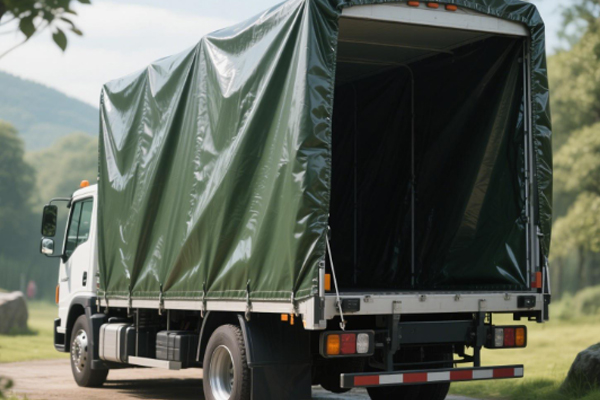
PVC tarpaulins are commonly connected to ropes, bungee cords, hooks, frames, and other fastening systems through metal eyelets. They are widely used for cargo covering, vehicle transportation, warehouse protection, outdoor shading, construction projects, and temporary structures. Although eyelets may seem like a small detail in tarpaulin manufacturing, their positions can directly affect installation efficiency, fastening stability, and the long-term integrity of the fabric. If eyelets are distributed incorrectly, the tarpaulin may become loose in certain areas, experience concentrated tension, or develop tearing along the edges. If too many eyelets are installed, manufacturing costs may increase and folding or storage may become less convenient. Therefore, PVC tarpaulin eyelet placement should be planned according to the tarpaulin dimensions, shape, fastening method, application environment, and expected load conditions, ensuring that each eyelet provides useful support while keeping the entire cover stable.
PVC tarpaulin eyelets are generally positioned along the outer edges and used to secure the fabric at multiple points. During design, the eyelets should be distributed at relatively consistent intervals instead of being concentrated in certain areas while leaving other sections with insufficient support. An even distribution allows tension to transfer more smoothly along the edge and makes installation easier because workers can follow the regular fastening points.
The distance between the eyelet and the fabric edge also needs to be properly controlled. If the eyelet is positioned too close to the edge, there may not be enough material surrounding the opening, increasing the risk of tearing when the rope is pulled continuously. If it is positioned too far from the edge, a larger unsupported section may remain along the perimeter, which can affect the covering effect. During production, the ideal position should be determined according to the PVC fabric thickness, hem structure, and eyelet size.
For rectangular tarpaulins, eyelet spacing can be planned separately along the long and short edges. Large tarpaulins may require additional fastening points along the intermediate sections to maintain stability when exposed to wind. Smaller tarpaulins can use a simpler arrangement to avoid unnecessary processing and excessive fastening points.
The dimensions of a PVC tarpaulin are an important factor in determining eyelet quantity and spacing. Products with different dimensions should not automatically use exactly the same eyelet arrangement. Small tarpaulins have a limited covering area and may require only a few strategically positioned fastening points. Large tarpaulins cover greater areas, and if the eyelet spacing is too wide, the fabric may experience significant movement or sagging under wind or pulling forces.
For large PVC tarpaulins, additional fastening points can be added according to the actual installation span. Long edges generally require more eyelets to reduce free movement in the center, while short edges can be designed according to the width and supporting structure. For oversized industrial tarpaulins, eyelet positions can also be customized according to the locations of support frames, posts, ropes, or other fixing points.
Key considerations include:
Tarpaulin length: As the length increases, more eyelets may be needed along the long edges to prevent excessive movement in the middle sections.
Tarpaulin width: Wider products may require additional fastening points according to the overall covering span.
Material thickness: Thicker PVC tarpaulins generally have stronger structures, but the areas around the eyelets still require appropriate reinforcement.
Frequency of use: Frequently installed and removed tarpaulins should have reinforced eyelet areas to reduce wear caused by repeated pulling.
Installation structure: If the tarpaulin needs to connect to frames, vehicle attachment points, or other structures, these positions should be determined in advance.
Wind conditions: Tarpaulins used outdoors for extended periods may require additional fastening points to reduce movement caused by wind.
Considering these conditions together helps prevent manufacturers from simply applying a standard eyelet spacing to every product and allows the fastening layout to better match actual installation requirements.
The four corners of a PVC tarpaulin are particularly important when designing eyelet positions. During installation, the corners are often secured first before the remaining edges are tightened. As a result, corner eyelets may experience pulling forces from multiple directions. If the corner structure is weak, the tarpaulin may deform or tear from the corners even when the other eyelet positions have been properly designed.
To improve corner stability, reinforcement patches, thicker PVC material, or webbing can be added around the eyelets. For large tarpaulins exposed to high tensile forces, heavy-duty eyelets may also be selected according to the application requirements to improve connection durability.
In addition to the four corners, other connection points that directly interact with ropes, frames, vehicle attachment points, or other structures may become high-load areas. For example, truck tarpaulins can experience continuous changes in wind resistance while vehicles are moving, placing repeated stress on the fastening points. Outdoor warehouse covers may also be exposed to sudden gusts, requiring stable edge connections. Therefore, eyelet design should not focus only on quantity. Actual load locations should also be identified so that critical areas can receive appropriate reinforcement.
Different fastening methods require different PVC tarpaulin eyelet arrangements. When ropes are used, the eyelets should provide sufficient space for easy rope insertion and handling. When bungee cords are used, the design should account for elastic tension and movement. If the tarpaulin is connected to a metal frame, the eyelet positions should correspond as closely as possible to the frame structure to minimize unnecessary pulling forces during installation.
Truck tarpaulins often need to be removed quickly, so their eyelet layouts should remain regular and easy to follow, allowing workers to complete installation according to a consistent fastening sequence. Warehouse tarpaulins that remain installed for long periods may place greater emphasis on uniform load distribution and wind stability. Construction tarpaulins may need to connect with scaffolding, barriers, or temporary support structures, making it important to coordinate eyelet positions with the spacing of the supporting framework.
If a PVC tarpaulin needs to be opened frequently in a particular area, the eyelet density can be adjusted or quick-release fastening components can be introduced. This allows the overall cover to remain securely fixed while enabling workers to open a specific section when accessing cargo or inspecting equipment. A well-planned eyelet layout should not only support the tarpaulin itself but also make the entire installation process more efficient.
Not all PVC tarpaulins are rectangular. Circular, trapezoidal, triangular, notched, and other irregularly shaped tarpaulins require customized eyelet layouts rather than a simple standard spacing arrangement. Differences in edge length, curves, and installation structures can affect the actual load distribution, so eyelet positions should be redesigned according to the specific shape.
For circular PVC tarpaulins, eyelets are generally distributed evenly around the perimeter to create a stable covering structure when tension is applied. For trapezoidal or triangular tarpaulins, eyelet quantities can be adjusted according to the length of each edge, with longer edges receiving additional fastening points when necessary. For tarpaulins with openings, corners, or specialized connection zones, eyelets should be positioned away from structurally weak areas, while reinforcement can be added where higher loads are expected.
Special-shaped tarpaulins also need to be evaluated according to their final installed shape. If eyelets are positioned only according to the cutting outline without considering the direction of installation tension, localized wrinkles or uneven loading may occur. When customizing PVC tarpaulins, the eyelet layout should ideally be determined according to the actual frame dimensions, fastening locations, and fully deployed condition. Careful planning can reduce adjustment work during installation and improve the overall stability of the finished tarpaulin.
PVC tarpaulin eyelet placement is not simply a matter of punching holes at equal intervals along the edge. The design should take into account tarpaulin dimensions, material structure, fastening methods, and operating conditions. Proper eyelet spacing helps distribute tension more evenly, while reinforced corners reduce the risk of damage in high-load areas. Matching eyelet positions with vehicle frames, support structures, and ropes can improve installation efficiency. Special-shaped PVC tarpaulins require customized layouts based on their contours and expected load directions. By carefully determining eyelet quantity, position, spacing, and reinforcement structures, PVC tarpaulins can achieve more reliable fastening and longer service life in transportation, warehousing, outdoor covering, and industrial protection applications.
