
Hot Keywords:
- All
- Product Name
- Product Keyword
- Product Model
- Product Summary
- Product Description
- Multi Field Search
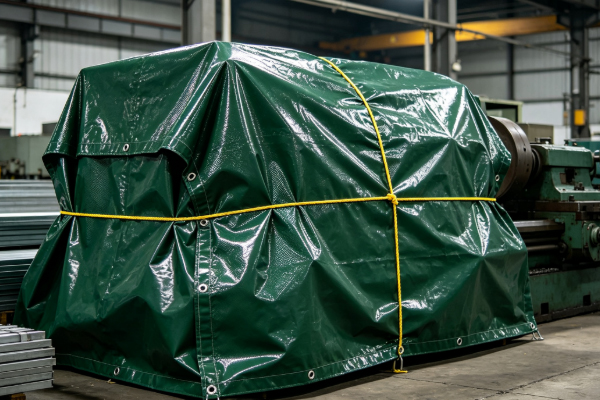
PVC tarpaulins are widely used for cargo covering, vehicle transportation, warehouse protection, outdoor facilities, and temporary protection projects. In addition to waterproofing, abrasion resistance, and tensile strength, the folding structure also affects handling convenience and long-term usability. If the folding layout is poorly designed, the tarpaulin may become difficult to organize, occupy excessive storage space, or develop concentrated stress in certain areas. Repeated folding can also place additional mechanical stress on fastening points and bending areas. For this reason, PVC tarpaulin manufacturers should consider dimensions, material thickness, folding frequency, storage conditions, and application environments when planning the folding structure. A suitable design allows the tarpaulin to remain easy to deploy while making it more convenient to fold, store, and transport.
The larger the PVC tarpaulin, the greater the change in overall dimensions after folding. Simply folding a large tarpaulin randomly can result in uneven edges and excessive material accumulation in certain areas. During the design stage, folding units can be planned according to the length, width, and available storage space so that each folding step follows a relatively consistent direction. For rectangular tarpaulins, the length and width can be considered separately when establishing the folding sequence, allowing the final package to have a more regular shape. If the tarpaulin needs to fit into a vehicle, storage box, or designated rack, the target storage dimensions should be determined in advance and used to plan the number of folds. Large PVC tarpaulins can also be designed with clear folding zones, making it easier for workers to follow a consistent folding sequence during field operations. Proper dimensional planning reduces unnecessary material compression and improves handling and transportation efficiency.
PVC tarpaulins are generally manufactured using woven base fabrics with PVC coating or composite structures. Different thicknesses, fabric constructions, and surface treatments can affect flexibility and bending performance. Folding design should not focus only on the final storage dimensions but should also consider how the material behaves under repeated bending. For thicker and stronger tarpaulins, excessive folding density can be avoided by using wider and more natural bending zones. For lightweight and flexible tarpaulins, a more compact folding arrangement may be practical.
The following methods can be considered when designing the folding structure:
Avoid high-load areas: Eyelets, D-rings, and webbing connection points can experience significant tension during use. Folding lines should avoid placing repeated pressure directly on these locations.
Control folding width: The folding width should be matched to the thickness and stiffness of the tarpaulin to prevent excessive material stacking.
Reduce sharp bends: For thicker PVC tarpaulins, wider folding zones can help reduce concentrated stress caused by overly sharp creases.
Maintain a consistent folding direction: For tarpaulins that are frequently stored and reused, a fixed horizontal or vertical folding sequence can make operation more consistent.
Combine folding with rolling: For large tarpaulins that are not suitable for frequent sharp folding, some sections can be folded before the entire tarpaulin is rolled for storage.
When the folding structure is properly matched with the material characteristics, the tarpaulin can maintain a more stable condition during repeated use while becoming easier to organize and store.
PVC tarpaulins often feature reinforced hems, webbing, eyelets, D-rings, or other connection components along their edges. These components provide secure fastening when the tarpaulin is deployed, but they can also affect the overall thickness when the product is folded. If a folding line passes directly through numerous metal eyelets or connection points, the folded package may develop uneven raised areas, making it difficult to flatten and potentially increasing friction between adjacent layers. A better design approach is to coordinate the folding lines with reinforced edge structures and keep the main folding zones in relatively flat material areas whenever possible.
For large vehicle tarpaulins and warehouse covers, the folding sequence can be planned according to the edge reinforcement structure so that the reinforced sections remain organized after storage. If one side of the tarpaulin includes zippers, quick-release buckles, or specialized connectors, their folded thickness and position should also be considered. When too many connection components are stacked in the same area, storage volume can increase and localized wear may occur. Coordinating the edges, connectors, and folding lines helps create a smoother workflow for deployment, folding, and reinstallation.
PVC tarpaulins used for different applications do not necessarily require the same folding structure. A tarpaulin permanently installed on a warehouse or outdoor facility may only be folded during seasonal replacement or maintenance, so the number of folding cycles may be relatively low. Vehicle covers and movable protection tarpaulins, however, may need to be opened, organized, and reinstalled frequently. These products require folding structures that prioritize speed and repeated handling convenience. Different folding sequences and storage methods can be developed according to actual usage habits.
Application | Recommended Folding Method | Key Design Focus |
Cargo transportation tarpaulin | Fold into sections before final storage | Easy handling and quick deployment |
Vehicle cover tarpaulin | Regular horizontal or vertical folding | Reduce on-site organization time |
Warehouse protection tarpaulin | Large-unit folding | Reduce storage volume |
Outdoor covering tarpaulin | Sectional folding or folding followed by rolling | Suitable for large-area structures |
Temporary construction tarpaulin | Quick folding structure | Convenient removal, relocation, and reuse |
For tarpaulins that are used repeatedly every day, standardized folding units can allow workers to complete storage according to a fixed sequence. For large-area products, sectional storage can reduce the weight and size of each individual package, making transportation and handling easier. Matching the folding structure to the frequency of use allows the product to better fit real working conditions.
The storage condition after folding is also an important part of PVC tarpaulin design. When folded tarpaulins are stored for long periods in humid, hot, dusty, or exposed environments, moisture and dirt may accumulate on the material surface if ventilation is inadequate. Before storage, the tarpaulin should be properly cleaned and dried, while the storage method should minimize unnecessary compression. Large tarpaulins can be combined with storage bags, tie-down straps, or dedicated racks to keep the folded material stable and organized.
The folding structure should also make the next deployment easier. If workers have to repeatedly search for the correct edges and orientation when unfolding a tarpaulin, installation time will increase, and dragging the material across the ground can cause unnecessary abrasion. A consistent folding sequence makes edges, connection components, and the main deployment direction easier to identify. For PVC tarpaulins that are repeatedly used over long periods, the folding width and storage dimensions can also be adjusted according to actual operating habits, making the product more convenient for field use.
Planning the folding structure of a PVC tarpaulin requires consideration of product dimensions, material flexibility, reinforced edges, connector positions, usage frequency, and storage conditions. A well-designed folding route can reduce uncontrolled material stacking and make large tarpaulins easier to organize, transport, and reinstall. For PVC tarpaulins intended for repeated use, planning the folding structure in advance can also improve daily handling efficiency and provide greater convenience in cargo transportation, warehousing, vehicle covering, and outdoor protection applications.
