
Hot Keywords:
- All
- Product Name
- Product Keyword
- Product Model
- Product Summary
- Product Description
- Multi Field Search
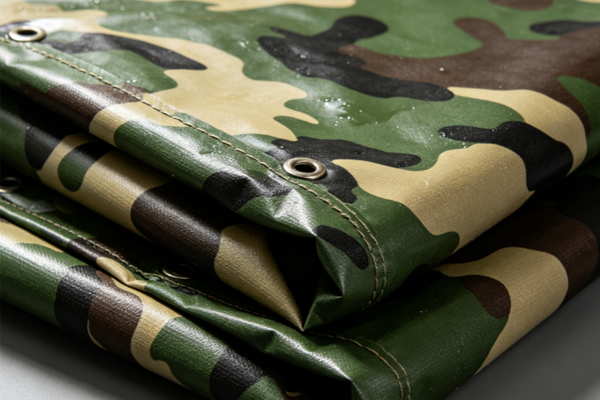
When buying a camouflage tarp, many people look at the pattern and price first. Once the tarp is actually used outdoors, however, waterproofing, UV resistance, and durability become much more important. Whether it is used for vehicle covers, cargo protection, outdoor storage, agriculture, or construction, a tarp may need to stay outside for months while dealing with rain, sunlight, wind, and repeated handling. Common materials include PVC, Canvas, PE, polyester, and Oxford fabric. The right choice depends less on picking the thickest or cheapest option and more on matching the material to the actual application.
Camouflage tarps are available in several materials, including PVC, Canvas, PE, polyester, and Oxford fabric. Each material has different characteristics in terms of waterproofing, abrasion resistance, weight, flexibility, and outdoor durability. Lightweight materials can work well for temporary covering, while PVC and Canvas are worth a closer look when the tarp will be used outdoors for longer periods.
PVC camouflage tarp: Offers strong waterproofing, good abrasion resistance, and weather resistance, making it suitable for vehicle covers, machinery protection, cargo covering, and construction applications.
Canvas camouflage tarp: A fabric-based material with a softer feel and better breathability, suitable for certain outdoor covering, storage, and applications where a fabric texture is preferred.
PE camouflage tarp: Lightweight and relatively cost-effective, making it suitable for temporary covering and short-term rain protection.
Polyester camouflage tarp: Lightweight and easy to fold or carry, making it suitable for applications where portability matters.
Oxford fabric camouflage tarp: Features a relatively dense woven structure and good abrasion resistance, while its waterproof performance depends on the coating and finishing process.
For long-term outdoor rain protection, PVC is often a practical choice. If breathability, softness, and a fabric-like appearance are more important, Canvas is worth considering. PE, polyester, and Oxford fabric can also be useful, particularly for lightweight, temporary, or application-specific needs.
One of the main advantages of PVC tarps is their practicality. With a suitable coating, PVC fabric can provide strong waterproofing while also offering good abrasion and tensile resistance. Outdoor tarps have to deal with more than rain. Prolonged sunlight, wind, friction, and repeated folding can all affect their service life, which is why PVC is commonly used for heavy-duty tarp applications.
Vehicle and cargo covering: Provides rain protection while handling wind and friction during transportation.
Machinery protection: Helps protect equipment stored outdoors from direct exposure to rain, dust, and sunlight.
Construction covering: Useful for covering building materials, tools, machinery, and other items at construction sites.
Agricultural storage: Suitable for covering materials, agricultural equipment, and temporary outdoor storage areas where waterproofing and durability matter.
For bulk PVC camouflage tarp purchases, it is better to ask for more than just a price per square meter. GSM, thickness, base fabric strength, UV resistance, tear resistance, and edge finishing are all worth confirming in advance. For large tarps in particular, the edges and eyelets experience considerable tension, so poor workmanship can lead to tearing over time.
Canvas feels noticeably different from PVC. It retains the natural characteristics of woven fabric, giving it a softer feel rather than the more coated feel of PVC. It also offers a certain level of breathability. With suitable waterproof and mildew-resistant treatment, Canvas can be used for a range of outdoor covering applications. For customers who do not need completely sealed waterproofing but prefer a softer, more breathable material, Canvas can be an attractive option.
Better breathability: Useful in some covering environments where reducing trapped moisture is important.
Natural fabric texture: Its appearance and feel are different from PVC-coated materials and can suit outdoor applications where a fabric look is preferred.
Good flexibility: Convenient for applications involving frequent folding, unfolding, and handling.
Can receive waterproof treatment: Proper finishing can improve its resistance to rain for suitable outdoor applications.
However, seeing the word “waterproof” on a Canvas product is not enough to make a purchase decision. If the tarp will be exposed to heavy rain for long periods, check the specific waterproof treatment, fabric specification, and recommended application. For vehicle, cargo, and equipment covers where stronger waterproofing is required, PVC is usually worth examining more closely.
When choosing a tarp, start with how long it will be used, where it will be installed, and how much stress it will experience. Covering something for a few days is very different from leaving it outdoors for months. A small tarp that is handled by hand also has different requirements from a large tarp used to cover a truck. Providing these details to the supplier can be much more useful than simply giving the required dimensions.
For long-term outdoor use: Focus on PVC or professionally waterproof-treated Canvas, and check UV resistance, weather resistance, and mildew resistance.
For temporary covering: Lightweight materials such as PE can be considered when the tarp only needs to be used for a short period.
For vehicles and cargo: Look beyond waterproofing and check GSM, tensile strength, abrasion resistance, as well as the quality of eyelets and reinforced edges.
For agriculture and construction: These environments can involve frequent friction, pulling, and prolonged exposure to sunlight, so stronger tear and abrasion resistance can be important.
For frequent handling: Weight and flexibility matter. A very heavy tarp may be durable, but it can be inconvenient to unfold, move, and store every day.
For custom tarp production: Confirm the size, camouflage pattern, color, edge finishing, eyelets, and corner reinforcement in advance. For bulk orders, consistency between production batches is also worth checking.
Choosing a waterproof camouflage tarp is not simply about asking which material is the “best.” The right choice depends on where the tarp will be used, what it will cover, and how long it needs to last. PVC is a strong option for customers who prioritize waterproofing, abrasion resistance, and outdoor durability, while Canvas is more suitable for applications where breathability, flexibility, and fabric texture are important. PE, polyester, and Oxford fabric can also meet certain lightweight or temporary covering needs. For PVC or Canvas camouflage tarps, NEWSTAR PLASTIC INDUSTRY CO.,LTD. offers tarp products for different applications, with material and specifications available according to specific usage requirements.
