
Hot Keywords:
- All
- Product Name
- Product Keyword
- Product Model
- Product Summary
- Product Description
- Multi Field Search
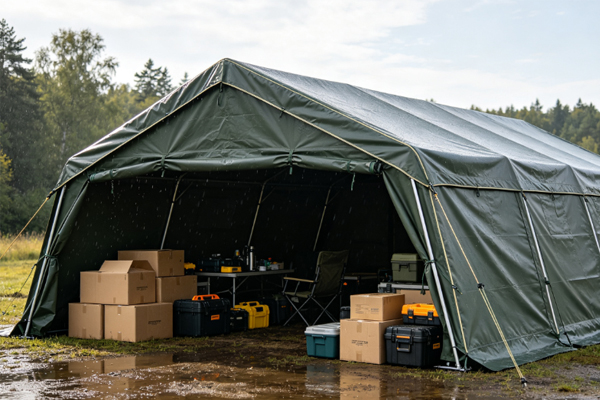
PVC tarpaulins are widely used for logistics transportation, warehouse covering, outdoor facilities, construction projects, agricultural production, and industrial equipment protection. During actual use, a tarpaulin needs to withstand not only rainwater but also prolonged sunlight, wind loads, repeated folding, and different installation conditions. Therefore, waterproof structural design cannot rely solely on the waterproof properties of the PVC material itself. The shape of the tarpaulin, seam treatment, edge fastening, drainage routes, and installation method must also be properly considered. A well-designed waterproof structure can reduce water penetration, minimize the risk of water accumulation, and improve the stability of the tarpaulin in challenging weather conditions. For websites selling PVC tarpaulins, understanding the basic principles of waterproof structural design can help customers select products that better match their application requirements.
Different application environments have different requirements for PVC tarpaulin waterproof structures. A tarpaulin used to cover a truck cargo compartment needs to withstand rainwater during transportation, changing wind pressure, and edge tension. A tarpaulin used for a storage shelter or temporary building needs to handle prolonged rainfall, water drainage, supporting structures, and moisture protection inside the covered space. Only after the application environment is clearly defined can the appropriate tarpaulin shape, dimensions, material thickness, and connection method be selected.
During the design process, the length, width, height, and edge positions of the covered area should be measured in advance. Sufficient overlapping space should also be reserved to prevent the edges from being too short to provide complete coverage. For cargo protection, the tarpaulin edges should extend beyond areas where water could easily enter and should be securely fastened with straps, eyelets, or other fastening components. When the tarpaulin is used to protect equipment, obvious depressions on the surface should be avoided to prevent rainwater from remaining in localized areas.
A practical waterproof structure should match the actual installation conditions, allowing rainwater to flow away efficiently while reducing potential water-entry points around gaps, openings, and connection areas.
When PVC tarpaulins are used outdoors, water accumulation is an important factor affecting waterproof performance. Even when the material itself has excellent waterproof properties, an inappropriate structural design can cause rainwater to form pools on the surface. This increases the load on the tarpaulin and may place additional pressure on fastening points and support frames. Therefore, waterproof structural design should pay close attention to surface slopes and drainage directions.
For permanent tarpaulin shelters, equipment covers, and warehouse protection structures, single-slope, double-slope, or arched drainage designs can be selected according to the available space. A sloped structure allows rainwater to flow toward lower areas, reducing the time that water remains on the tarpaulin. An arched structure allows rainwater to move from the top toward both sides and is suitable for applications requiring larger covered spaces. The location of drainage edges should also be carefully considered to prevent rainwater from flowing toward cargo entrances, walkways, or important equipment.
The following drainage design practices can be considered:
Set an appropriate slope: Determine the slope according to the tarpaulin dimensions, support height, and local rainfall conditions to prevent water accumulation on an overly flat surface.
Plan the drainage direction: Guide rainwater toward designated areas and prevent water from entering cargo storage zones, working paths, or equipment areas.
Reinforce lower edges: Drainage edges may experience water flow and pulling forces, so reinforced hems and reinforcement tapes can improve durability.
Avoid depressions around support points: Support frames and connecting components should be positioned properly to reduce the possibility of water collecting in localized areas.
Reserve drainage space: Appropriate drainage outlets should be provided during installation so that folded edges or excessive fastening do not obstruct water flow.
Effective drainage design can reduce the load placed on the tarpaulin while lowering the risk of water backflow and localized leakage.
The waterproof performance of a PVC tarpaulin depends not only on the quality of the main material but also on seams, joint areas, and openings. When a large tarpaulin is made by combining multiple material sections, connection areas may become potential pathways for water penetration. If the seams are not strong enough or sealing treatment is incomplete, long-term use may result in cracking, separation, or leakage.
During PVC tarpaulin manufacturing, high-frequency welding, heat sealing, or other suitable joining processes can be selected according to the product requirements. These processes can create stable connections between different material sections. Seam width, welding temperature, processing pressure, and production quality can all influence the final connection performance. For tarpaulins designed for long-term outdoor use, the joining process should match the material thickness and operating environment to prevent seam damage caused by repeated stretching.
Eyelets, zippers, ventilation openings, and inspection openings also require waterproof treatment. Reinforced pads, additional reinforcement layers, or optimized installation positions can reduce the risk of tearing around eyelets. For tarpaulins with zippers or opening structures, outdoor-rated waterproof components should be selected, and protective flaps can be added over opening areas to reduce direct exposure to rainwater.
Seam design should also balance flexibility and durability. Overly rigid connection areas can make folding and installation more difficult, while excessively flexible joints may reduce tensile strength. A suitable manufacturing process should balance sealing performance, connection strength, and ease of use.
The edges of PVC tarpaulins are areas that can experience significant external forces. Under wind loads, the tarpaulin may repeatedly pull against its fastening points. If these points are distributed improperly, localized deformation, loose eyelets, or even tearing may occur. Once the edge becomes damaged, rainwater can enter through the damaged section. Therefore, edge reinforcement and fastening methods should receive careful attention during structural design.
For tarpaulins that are frequently installed and removed, eyelet spacing should be selected according to the size and load distribution of the product. Too few fastening points may cause individual locations to carry excessive tension. For large tarpaulins, reinforcement tapes, reinforced hems, and auxiliary fastening components can help distribute pulling forces more evenly. Eyelets should not be positioned too close to the material edge because strong winds or pulling forces may cause tearing.
The fastening method should also match the application environment. Transportation tarpaulins commonly use ropes, hooks, or elastic straps for securing the material. Warehouse and construction tarpaulins may need to connect with steel frames, aluminum profiles, or other support systems. Different fastening methods require different eyelet strengths, edge thicknesses, and sealing treatments. Incompatible fastening tools should be avoided.
During installation, the tarpaulin should not be excessively tight or visibly loose. Excessive tension can increase stress on seams and eyelets, while excessive looseness may cause water accumulation and wind movement. Proper tension helps the tarpaulin maintain a stable shape and reduces the possibility of edge damage.
Waterproof structural design needs to work together with the material properties of PVC tarpaulins. Different material thicknesses, fabric substrates, and coating processes can affect tensile strength, abrasion resistance, weather resistance, and flexibility. For tarpaulins used outdoors for extended periods, the material should be selected according to the local climate, operating duration, and expected loads. Initial waterproof performance should not be the only consideration; long-term material performance is also important.
Ultraviolet radiation, temperature fluctuations, oil stains, dust, and repeated friction can affect the tarpaulin surface and connection areas. Products that remain exposed to sunlight should have suitable aging and weather resistance. Tarpaulins used in transportation and industrial environments may require additional reinforcement in areas that frequently contact vehicle compartments, cargo, or equipment. Adding wear-resistant layers or localized reinforcement can reduce surface damage that could otherwise affect waterproof performance.
Regular maintenance can help PVC tarpaulins maintain their protective properties. During use, mud, sand, leaves, and oil stains should be removed from the surface in a timely manner. This prevents debris from accumulating around seams, folds, and drainage areas. After rainfall, the tarpaulin should be checked for standing water, loosened fastening points, or deformation, and adjustments should be made when necessary. When stored for extended periods, the tarpaulin should be cleaned and completely dried before being placed in a dry, well-ventilated location away from sharp objects.
Regular inspections can help identify potential waterproof structure problems at an early stage. Important inspection items include:
Check the seams: Look for cracking, separation, or localized water leakage.
Check eyelets and reinforcement tapes: Make sure fastening components are not loose, deformed, or torn.
Check the tarpaulin surface: Look for abrasion, scratches, aging, and coating damage.
Check drainage areas: Confirm that rainwater can flow away smoothly and that prolonged water accumulation does not occur.
Check the support structure: Make sure support frames are not tilted, loose, or affecting the overall shape of the tarpaulin.
Timely maintenance can reduce the risk of minor damage becoming more serious and can also help extend the service life of the PVC tarpaulin.
PVC tarpaulin waterproof structural design requires careful consideration of the application environment, drainage slope, seam sealing, edge fastening, material performance, and maintenance requirements. A high-quality waterproof tarpaulin needs not only a reliable PVC coating and fabric substrate but also an appropriate structural design to reduce the risk of water accumulation and penetration. When purchasing PVC tarpaulins, users should consider the coverage dimensions, installation method, frequency of use, and local weather conditions. With proper structural design and correct use, PVC tarpaulins can provide reliable rain protection for logistics transportation, warehouse protection, outdoor covering, and industrial applications.
