
Hot Keywords:
- All
- Product Name
- Product Keyword
- Product Model
- Product Summary
- Product Description
- Multi Field Search
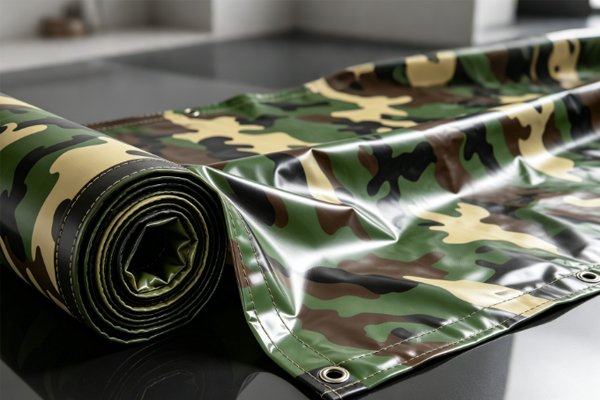
It is hard to judge the real quality of a Camo Tarp just by looking at photos. The colors may look great on a screen, but once you have the tarp in your hands, you can quickly see whether the fabric is strong, the edges are secure, and the grommets are firmly attached. This matters even more when buying in bulk. A tarp that looks good and costs less may not always perform well in actual use. Fortunately, you do not need specialized equipment to make a basic quality check. A few simple details can tell you a lot.
When you receive a Camo Tarp, do not focus only on whether the camouflage pattern looks attractive. Spread the tarp out and inspect the entire surface. A well-made tarp should have a relatively consistent appearance without obvious loose areas or irregular surface treatment.
Check whether the surface is even: Large bubbles, delamination, or unusual wrinkles may cause problems during use.
Feel for consistency: A good PVC Camo Tarp should have relatively consistent thickness and flexibility instead of feeling noticeably hard in some areas and soft in others.
Look at the colors and print: The camouflage pattern should be clear, with smooth color transitions. Noticeable fading, blurred printing, or inconsistent colors deserve closer attention.
Look for small holes and scratches: Pay particular attention to cut edges and the outer areas of the material, where small defects can become more noticeable during repeated use.
For a Canvas Camo Tarp, pay more attention to the fabric texture and fiber condition. A tightly woven surface with minimal loose threads is generally more reassuring than simply having an attractive color.
Many buyers assume that a thicker tarp will automatically be more durable, but it is not quite that simple. Thickness can affect the tarp's feel, strength, and performance, but it cannot determine quality by itself. With a PVC Camo Tarp, you also need to consider the base fabric, coating, and overall manufacturing quality. Hold the material in your hand to feel its flexibility, then bend it gently and check whether obvious white stress marks or tiny cracks appear.
Canvas requires a slightly different check. Look at the fabric density and overall feel. A good-quality Canvas Tarp should not become obviously loose when handled, and the edges should not have large amounts of loose fiber. Do not let the word “thick” make the decision for you. Thickness, strength, flexibility, and workmanship should all fit the intended use.
A tarp can have a perfectly good center and still fail at the edges first. During actual use, grommets, hems, and connection points often take concentrated pulling forces, making these areas important when checking workmanship.
Check the grommets: They should sit firmly and evenly, with no obvious looseness or tearing around the surrounding material.
Give the edge a gentle pull: There is no need to use excessive force. Simply check whether the hem and stitching feel secure and whether any threads are coming loose.
Inspect the stitching: Uneven stitching, broken threads, or excessive loose ends may affect the tarp during continued use.
Pay close attention to the corners: Corners often experience concentrated tension. Poor reinforcement here can make the tarp more vulnerable to tearing.
These details may seem minor, but they can reveal a lot about manufacturing quality. If the Camo Tarp will be installed and used for an extended period, edge construction and reinforced areas are often more important than how attractive the camouflage pattern looks.
If a supplier can provide a sample, do not make a decision after simply opening the package and taking a quick look. Spend a few minutes checking the tarp properly. Spread it out, inspect the seams, edges, and grommets, then apply light pulling and bending to see how the material responds. With PVC products, pay attention to surface condition and flexibility. With Canvas products, check whether the fabric becomes loose or sheds fibers easily.
Perform a simple tension check: Gently pull around the edges and fastening points to see whether the stitching, hems, or grommets loosen.
Check how it handles bending: Fold the material moderately and look for obvious white stress marks, cracks, or unusual deformation.
Carry out a basic waterproofing test: Apply a small amount of water to the surface and see whether it remains on top, while also checking the seams for possible leakage.
Compare samples with bulk production: For large orders, make sure the color, specifications, material, and workmanship of the final shipment remain consistent with the approved sample.
These simple checks cannot replace professional laboratory testing, but they are useful for screening a tarp before purchase. For bulk orders in particular, spending a little time checking the sample can help prevent avoidable quality problems later.
You do not need to judge a Camo Tarp by price or thickness alone. When you have the actual product in front of you, surface condition, flexibility, fabric density, grommets, hems, stitching, and waterproof performance all deserve attention. PVC and Canvas have different characteristics, so the more practical choice is to match the construction and workmanship to the intended use rather than simply looking for the thickest or cheapest option. NEWSTAR PLASTIC INDUSTRY CO.,LTD. supplies PVC and Canvas tarps for different application needs.
