
Hot Keywords:
- All
- Product Name
- Product Keyword
- Product Model
- Product Summary
- Product Description
- Multi Field Search
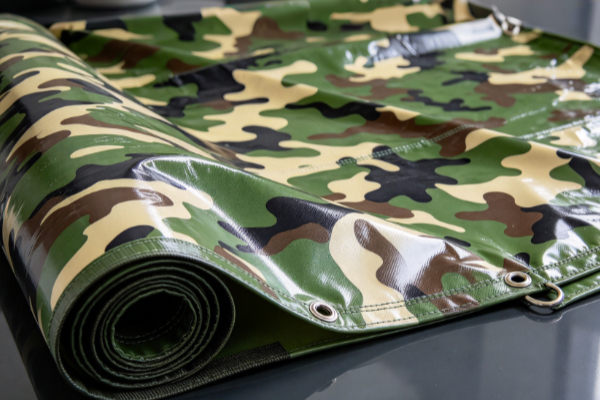
When it rains, a regular plastic sheet can cover a vehicle, equipment, or outdoor items for a while. But after using one repeatedly, the problems become obvious. It can move around in the wind, become stiff after long sun exposure, and be annoying to fold and store. Camo Tarps are not just designed to keep rain out. They can also cover belongings, reduce direct sun exposure, and provide a certain level of visual concealment outdoors. PVC and Canvas are two materials worth paying attention to, and each has its own characteristics.
Camo Tarps designed for outdoor covering generally need to provide good protection against rain. When rain falls on an intact tarp surface, water usually forms droplets and runs toward the lower edge instead of passing directly through the material. Waterproofing is influenced by more than the camouflage pattern. Material, surface treatment, seams, and the actual outdoor conditions all matter. PVC Camo Tarps have clear waterproof properties and are suitable for covering vehicles, equipment, and outdoor items. The surface is also relatively easy to clean after exposure to rain, mud, or dust. Canvas Camo Tarps are made from a woven fabric structure and can also be used outdoors after appropriate water-resistant treatment, although their performance depends on the fabric construction and treatment process. PE Camo Tarps are lighter and can work well for temporary covering, while lightweight Oxford fabrics are more focused on portability.
The appeal of Camo Tarps is not simply their distinctive appearance. Outdoors, a properly sized tarp can quickly cover vehicles, equipment, tools, or other belongings while reducing direct exposure to rain, sunlight, and dust. The camouflage pattern can also provide a degree of visual concealment, making the covered items less noticeable in certain outdoor environments such as wooded areas or campsites. For users who frequently move, install, and store their tarps, the ability to provide large-area coverage without a complicated structure is another practical advantage over disposable plastic sheets.
Some of the more noticeable advantages in everyday use include:
Flexible coverage: Different sizes can be selected for everything from small items to vehicles and larger equipment.
Rain and dust protection: An intact tarp surface helps reduce direct contact between rain, dust, and the items underneath.
Better visual concealment: Camouflage patterns can blend into certain natural surroundings and work well where lower visibility is preferred.
Reusable: After use, the tarp can be folded and stored for the next application instead of being replaced every time.
These benefits become much more noticeable in real outdoor use. For people who regularly move, cover, and store items outdoors, being able to unfold, secure, and remove a tarp quickly can be much more useful than simply choosing a particular camouflage pattern.
PVC is a practical choice for customers who need rain protection and regular outdoor covering. Its surface provides a strong protective barrier, helping prevent rain from passing through an intact tarp surface, while mud and dust can usually be cleaned away with relative ease. PVC Camo Tarps are useful for vehicle covers, equipment protection, and outdoor item coverage. When a tarp needs to be removed and installed repeatedly, the relatively easy cleaning and maintenance of PVC can also make daily use more convenient.
When choosing a PVC Camo Tarp, it is worth checking more than just the material name:
Surface treatment: This has a direct impact on how the tarp performs when exposed to rain.
Reinforced edges: Edges can experience significant stress when the tarp is pulled and secured repeatedly.
Grommet strength: This is especially important when ropes are used to secure the tarp.
Overall flexibility: A tarp that becomes excessively stiff can be harder to fold, install, and reuse.
Not all PVC products perform in exactly the same way. Formulation, thickness, manufacturing methods, edge construction, and grommet quality can all affect the final user experience.
Canvas is a woven tarp material with a noticeably different feel from PVC. Its appearance and texture are closer to traditional fabric, giving it a more natural look that works well in certain outdoor settings. With appropriate water-resistant treatment, Canvas can also be used for rain protection and outdoor covering while retaining its fabric characteristics. For customers who prefer the feel of fabric rather than a coated material, Canvas can be a practical option.
When purchasing a Canvas Camo Tarp, it is useful to confirm:
Fabric density and whether it matches the intended application.
Water-resistant treatment and whether it is suitable for outdoor conditions.
Where it will be used, particularly whether it will be used temporarily or left outdoors for extended periods.
For occasional use, lightweight materials such as PE may also be suitable. Some Oxford products can be considered when portability is a priority. Each material has its own place, so the best choice should be based on the actual application rather than simply choosing one material for every situation.
Choosing a Camo Tarp becomes much easier once the intended use is clear. For temporary covering or short periods of rain protection where weight and cost are important, PE or lightweight Oxford products may be worth considering. For repeated outdoor use, frequent exposure to rain, and easier cleaning and maintenance, PVC Camo Tarps are often a practical choice. Customers who prefer the appearance and feel of woven fabric can look at water-resistant Canvas options for outdoor covering needs.
Before purchasing, it helps to confirm a few basic requirements:
What will it cover? A vehicle, equipment, or general outdoor items.
How long will it be used? Temporary coverage and long-term outdoor use have different requirements.
What weather will it face? Consider rainfall and whether the tarp will remain outdoors for extended periods.
Will it be installed and removed frequently? Repeated folding and pulling place greater demands on the material and reinforced edges.
What type of fastening is needed? Confirm whether grommets, ropes, or other securing structures are required.
For bulk purchases, testing a sample first is a sensible step. Set it up in a way that matches the actual application, then check its rain protection, fastening, folding, and cleaning performance before placing a larger order. This can help reduce the hassle of receiving a product that does not suit the intended use.
Camo Tarps offer more than rain protection. Their ability to provide coverage, reduce dust and sun exposure, offer visual concealment, and support repeated outdoor use makes them practical for many applications. PVC Camo Tarps are well suited to users who prioritize waterproofing, durability, and easy maintenance, while Canvas Camo Tarps provide a fabric-based option for different outdoor covering needs. NEWSTAR PLASTIC INDUSTRY CO.,LTD. supplies PVC and Canvas tarps for vehicle, equipment, and various outdoor covering and protection applications.
