
Hot Keywords:
- All
- Product Name
- Product Keyword
- Product Model
- Product Summary
- Product Description
- Multi Field Search
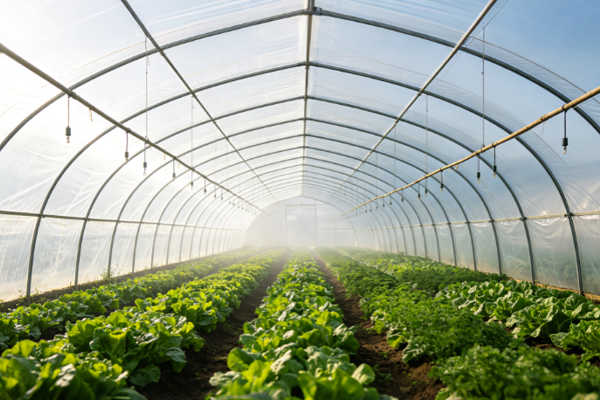
Does an agricultural greenhouse really just need a material that can keep the rain out? Anyone who has used one knows there is more to it. Choose the wrong cover and you may end up with poor daylight inside the greenhouse, loose edges during strong winds, or material that becomes brittle after months of sun exposure. Clear waterproof tarps can work for certain agricultural greenhouses and temporary structures, but their long-term suitability depends on the material structure, light transmission, UV resistance, and local weather conditions. Checking these details before buying is much more reliable than simply looking for a tarp labeled “clear” and “waterproof.”
Yes, but it depends on the application. Clear waterproof tarps provide rain protection while allowing some light to pass through, making them suitable for small agricultural shelters, temporary growing areas, seedling spaces, storage shelters, and some seasonal structures. For greenhouses that do not need to operate throughout the entire year, clear waterproof tarps can offer a flexible covering solution.
Temporary growing shelters: Clear tarps are convenient when the structure needs to be assembled and removed quickly.
Seedling areas: A transparent covering can allow more natural daylight into the growing space.
Small vegetable greenhouses: Clear tarps can be considered when the greenhouse is relatively small and only used for a limited period.
Agricultural storage shelters: They can help keep rain away from stored materials and reduce direct exposure to outdoor conditions.
However, for large modern greenhouses that require consistent control of temperature, humidity, and light throughout the year, an ordinary clear waterproof tarp may not be the most suitable choice. Greenhouse covers have to withstand UV exposure, temperature changes, rain, and wind for extended periods, so weather resistance is an important consideration.
Yes, and it is an easy detail to overlook. A tarp can look transparent without necessarily providing the light transmission needed for plant growth. Material thickness, surface treatment, and construction can all affect how much light passes through the covering. For crops grown inside a greenhouse, sunlight is an important part of the growing environment, so judging the material only by how clear it looks is not enough.
Check actual light transmission: Ask for the product's light transmission specifications instead of relying only on visual inspection.
Check whether the surface collects dust easily: Dust and dirt can build up over time and reduce the amount of light entering the greenhouse.
Check for yellowing: Some materials may discolor or degrade after prolonged exposure to sunlight, which can affect transparency.
Consider the crop: Different crops have different lighting requirements, so the covering should match the intended use.
For greenhouses used for vegetables, flowers, or seedlings, stable light transmission is particularly important. A clear tarp may look bright when it is newly installed, but that does not mean it will maintain the same appearance after months outdoors. UV resistance and overall material quality can make a noticeable difference over time.
How quickly a clear tarp ages depends largely on its material and the environment where it is used. Agricultural greenhouses are often installed in exposed locations, meaning the covering has to deal with strong sunlight, rain, repeated temperature changes, and wind. Without suitable outdoor treatment, some materials may eventually become harder, brittle, cracked, or less transparent.
Clear PVC waterproof tarps are commonly considered for these applications because PVC-coated materials can offer good waterproofing, abrasion resistance, and outdoor weather resistance. When the tarp will remain outdoors for an extended period, it is also worth checking whether UV treatment is included.
Canvas is a different type of material. It is a woven fabric and is generally not transparent, so it is not a direct choice when the main requirement is allowing sunlight to pass through a greenhouse covering. Canvas can still be useful for other agricultural applications, including equipment covers, storage protection, and general outdoor covering.
If the local area experiences strong winds, heavy rain, or intense sunlight, tear resistance and the fixing method also deserve attention. Even a durable material can be damaged if the edges are not secured properly or excessive tension is concentrated around the eyelets.
When buying a clear tarp for a greenhouse, do not simply ask a supplier whether they have a transparent option. Share the greenhouse size, expected service period, and local weather conditions. This makes it much easier to identify a suitable specification. For agricultural projects that need long-term outdoor use, checking a few key details before purchase can save a lot of trouble later.
Determine the service period: Temporary growing structures and long-term greenhouses require different levels of weather resistance.
Check the material structure: For clear PVC waterproof tarps, pay attention to base fabric strength, PVC coating, thickness, and GSM.
Confirm light transmission: If the tarp will cover crops, check its light transmission and whether this performance is expected to remain stable during outdoor use.
Check UV resistance: Greenhouses exposed to strong sunlight should use materials with suitable UV treatment to help reduce premature aging.
Consider local weather: Areas with strong winds require better tensile strength, tear resistance, and edge reinforcement, while rainy areas need reliable waterproofing.
Plan the fixing system: The larger the clear tarp, the more important wind loading becomes. Eyelets, reinforced edges, ropes, and fixing points should all be properly planned.
Clear waterproof tarps can be used for agricultural greenhouses, particularly small, temporary, seasonal growing structures and certain agricultural covering applications. However, choosing one should involve more than checking transparency and price. For long-term outdoor use, waterproofing, light transmission, UV resistance, weather resistance, and tear strength all deserve careful attention. Clear PVC tarps are more suitable when waterproofing and outdoor durability are priorities, while Canvas is better suited to agricultural covering and protection applications where transparency is not required. For PVC or Canvas tarp products, NEWSTAR PLASTIC INDUSTRY CO.,LTD. offers options for different applications, helping agricultural customers select suitable materials and specifications for their actual needs.
