
Hot Keywords:
- All
- Product Name
- Product Keyword
- Product Model
- Product Summary
- Product Description
- Multi Field Search

Custom-shaped tarpaulin is usually more expensive than standard rectangular products, but the actual budget is not determined by shape alone. Cutting difficulty, material structure, number of seams, heat-welding process, edge finishing, eyelets, webbing, and other configurations all contribute to the overall cost. Comparing only the price per square meter can easily overlook processing differences, so it is more practical to evaluate the complete product based on its material, structure, and fabrication requirements.
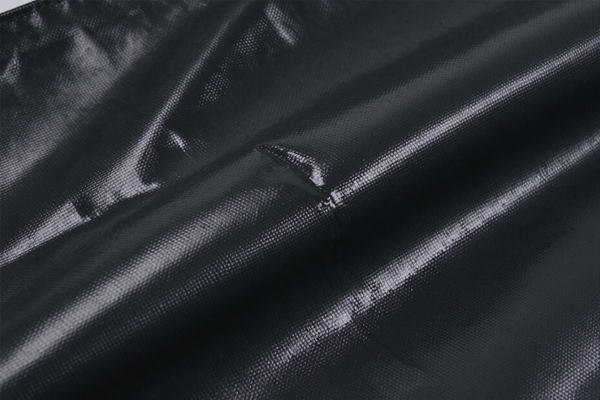
Custom-shaped tarpaulin needs to be designed according to the actual object being covered before cutting, joining, and further fabrication. As the shape becomes more complex, production preparation, material layout, and processing control generally become more demanding.
Rectangular products are relatively easy to arrange during material nesting, while curved, trapezoidal, triangular, and notched structures can generate different amounts of edge waste.
Irregular edges require customized cutting paths.
Producing multiple sizes at the same time makes material nesting more complicated.
Different contours can have different material utilization rates even when the finished areas are the same.
Panel orientation also needs to be planned according to the warp and weft directions of the base fabric to avoid unsuitable stress distribution in key load-bearing areas.
Actual quotations need to account for raw material consumption and cutting plans rather than simply calculating costs based on the finished surface area.
Some custom-shaped tarpaulins require panel cutting, heat welding, hemming, and local reinforcement, which increases equipment usage time and manual processing. For large products or products with multiple load-bearing points, seam quality directly affects finished-product reliability. Processing costs therefore also need to account for the number of seams, welding width, and required joint strength.
Price differences for custom-shaped tarpaulin largely come from specific drawings, material construction, and installation methods. Providing these conditions clearly before purchasing allows suppliers to calculate the quotation according to the actual production requirements.
Custom-shaped products require complete dimensional information. Providing only the maximum length and width is usually not enough for accurate material nesting. Equipment covers, cargo covers, and outdoor structure covers may also require details such as curved edges, corners, height variations, and installation allowances. It is recommended to provide:
Finished length, width, height, and curved dimensions.
Lengths of each edge and corner positions.
Dimensions of openings, cutouts, or sleeves.
The actual area that needs to be covered.
Required slack, dimensional tolerance, or installation allowance.
For custom covers intended for long-term outdoor use, dimensional changes caused by temperature variations in PVC materials should also be considered.
When the finished size exceeds the material width or the shape requires multiple panels, additional joining and heat welding are usually required. Custom-shaped panels should be oriented according to actual load conditions, and diagonal joints require particular attention to the relationship between panel directions to avoid uneven stress after installation. Heat-welding processes also need to consider:
Seam width and joint structure.
Matching of welding temperature, pressure, and speed.
Tensile forces applied to the seam area.
Peel strength and overall joint stability after welding.
For products used outdoors for long periods or frequently installed and removed, the main load-bearing areas and fixing methods should be determined in advance so that the material structure, panel orientation, and welding plan work together properly.
Custom-shaped tarpaulins are often used with specific equipment or installation structures, and accessories such as eyelets, webbing, and D-rings increase the amount of fabrication required.
Accessory specifications: Different sizes and types require different processing methods.
Installation quantity: More eyelets or rings increase punching and installation work.
Spacing arrangement: Fixing points need to be positioned according to load conditions and installation methods.
Local reinforcement: High-load fixing points may require reinforcement patches or straps.
Confirming accessory quantities, installation positions, and local reinforcement requirements in advance helps suppliers prepare more accurate finished-product quotations.
Custom-shaped products should not be compared directly with standard rectangular tarpaulins based only on unit price. Procurement should align the material, strength, and processing conditions before analyzing the differences between quotations.
When purchasing custom-shaped tarpaulin, GSM is only a measurement of weight per unit area and cannot be treated as equivalent to tensile or tear strength. Products with similar GSM can still differ significantly in base fabric construction, PVC coating ratio, and actual strength. Procurement should confirm:
Base fabric material and yarn denier, such as 500D or 1000D.
Warp and weft weaving density.
Finished GSM and thickness.
Warp and weft tensile strength.
Warp and weft tear strength.
PVC coating and coating adhesion strength.
UV resistance, mildew resistance, flame-retardant, or other functional requirements.
Base-fabric denier and weaving density mainly influence the structural performance of the reinforcing layer, while GSM mainly reflects the finished weight per unit area. Comparing these parameters together provides a more accurate assessment than judging material quality based on GSM alone.
A complete quotation can separately list material, cutting, joining, heat welding, hemming, reinforcement, and accessory costs, making it easier to identify whether a price difference comes from materials or fabrication. For custom-shaped products that need to withstand substantial tensile loads, buyers can ask suppliers to specify the performance of welded seams. A material may meet the required strength specification, but that does not automatically mean its seams will meet the same requirements under actual loading. Seam design and fabrication quality need to be evaluated separately. For bulk purchasing, buyers should also compare unit price, finished area, and total order value instead of looking only at the price per square meter.
Before mass production, custom-shaped tarpaulin should be validated through samples to confirm compatibility with the actual installation structure and reduce the risk of later rework.
Avoid discrepancies between drawings and the actual site: Custom-shaped tarpaulin needs to match the installation structure. Differences between drawing dimensions and actual conditions may result in unsuitable contours or fixing positions.
Check key details in advance: A sample can be used to inspect the coverage area, openings, fixing points, seam positions, and installation effect before bulk production.
Verify outdoor performance: For equipment covers, vehicle covers, and other products intended for long-term outdoor use, the sample stage can also be used to observe installation tightness under different temperature conditions.
Adjust dimensions accordingly: Dimensional tolerances and installation allowances can be modified according to actual performance to improve compatibility.
Reduce cost risks: Adjusting the design during the sample stage is generally easier for controlling material and processing costs than reworking completed products.
Completing sample validation before mass production and adjusting dimensions and installation allowances in time can help reduce subsequent rework and installation deviations.
Controlling the budget does not mean simply reducing material or processing requirements. The goal is to keep the material structure, dimensional design, and actual application requirements properly matched.
When installation and coverage performance are not affected, appropriately simplifying the contour can improve material nesting efficiency.
Reduce complex edges: If the application allows, reduce excessive sharp corners, narrow cutouts, and complicated curves.
Optimize nesting: Arrange cutting layouts efficiently for large products to reduce edge waste.
Plan panel orientation properly: Determine panel layouts according to the warp and weft directions of the base fabric and actual load conditions rather than simply pursuing material savings.
Avoid blindly reducing GSM: Select materials according to base fabric structure, denier, weaving density, and actual strength requirements instead of simply reducing finished-product weight.
Reasonable design can improve material utilization while avoiding performance problems caused by excessive reductions in material specifications.
GSM needs to be evaluated together with actual working conditions and cannot independently represent material strength. Wind load, abrasion, installation frequency, outdoor exposure, and load conditions can all affect material selection. For tarpaulins subjected to substantial tensile forces, buyers should pay particular attention to base-fabric denier, weaving density, tensile strength, and tear strength. Long-term outdoor applications also require consideration of PVC coating, UV resistance, and the effect of temperature on dimensional stability. Matching the material structure to actual conditions is more effective for controlling costs and long-term risks than simply choosing a higher GSM.
For projects that require continuous purchasing of the same custom-shaped tarpaulin, maintaining consistent specifications and planning procurement in advance can improve efficiency and production stability.
Fix key specifications: Standardize drawings, material structure, color, accessory layout, and welding methods to reduce repeated confirmation.
Plan procurement in advance: Long-term orders can be planned according to required quantities and delivery schedules, making production arrangements more stable.
Facilitate batch comparisons: Consistent specifications make it easier to compare price, dimensions, strength, and fabrication quality between different production batches.
For recurring custom-shaped tarpaulin projects, maintaining consistent specifications and establishing a long-term purchasing plan can reduce communication costs, stabilize production, and simplify future quotation comparisons.
The cost of custom-shaped tarpaulin is closely related to design complexity, material configuration, and fabrication methods. Buyers can clarify the application, installation conditions, and service period before confirming finished dimensions and processing results through sampling, making it easier to control the budget and reduce rework risks. Newstar Plastic Industry Co.,Ltd. can provide custom PVC tarpaulin solutions based on application scenarios, dimensional drawings, material specifications, and installation requirements. The products can be used for equipment protection, cargo covering, outdoor facilities, and other applications, with cutting, heat welding, reinforcement, and accessory processing planned according to specific structural requirements.
