
Hot Keywords:
- All
- Product Name
- Product Keyword
- Product Model
- Product Summary
- Product Description
- Multi Field Search
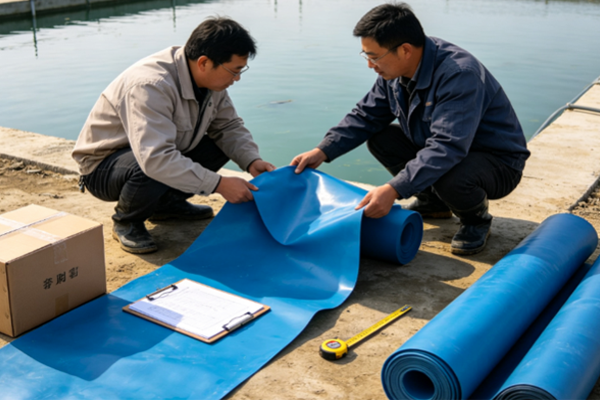
In aquaculture, problems such as pond leakage, rainwater entering ponds, damp feed, and equipment exposed to the weather may seem minor, but they can quickly become costly headaches. Large aquaculture operations often have ponds, temporary tanks, feed storage areas, equipment zones, and working areas spread across a large site. During the rainy season, a sudden storm can disrupt an entire day's work. PVC fabric offers a flexible solution for aquaculture applications, including pond liners, rain covers, equipment protection, and temporary area protection. When purchasing, companies should consider the actual application, dimensions, expected service period, and installation method to make daily use easier and more efficient.
Aquaculture ponds remain in contact with water for long periods, so waterproofing is an important part of daily operation. For temporary fish ponds, holding tanks, or areas that need additional waterproof protection, traditional construction methods can take considerable time. PVC fabric provides a more flexible waterproofing option. For aquaculture companies, the goal is to reduce leakage while keeping the pond easy to clean, adjust, and reuse.
Some aquaculture farms need additional temporary ponds because of expansion, seasonal production, or short-term fish and shrimp holding requirements. PVC fabric can be used as a pond liner to reduce direct contact between water and the ground or pond structure.
Suitable for temporary aquaculture pond liners;
Can be used for water storage and holding ponds;
Can be manufactured according to actual pond dimensions;
Suitable for large-area applications with appropriate joining methods.
For companies that need to increase aquaculture capacity quickly, this approach offers greater flexibility without requiring complicated permanent construction every time additional pond space is needed.
Many aquaculture facilities contain outdoor working areas, including areas around ponds, feed storage zones, and equipment spaces. During continuous rainy weather, rainwater and mud can enter these areas and make daily operations more difficult.
Can be used to create temporary rain shelters;
Can provide additional protection above ponds;
Helps reduce direct exposure of supplies to rainfall;
Suitable for temporary rainy-season protection.
There is no need to cover the entire aquaculture facility. Protecting the areas most vulnerable to rain is usually a more practical approach.
Aquaculture companies use large quantities of feed, nets, transport containers, tools, and other supplies every day. When warehouse space is limited, some items may need to remain outdoors or in semi-open areas. PVC fabric can be used as overhead rain protection to reduce direct exposure to water.
When purchasing PVC fabric, asking only about the price per square meter is not enough. PVC products can differ in thickness, dimensions, manufacturing methods, and suitability for specific environments. For pond liners in particular, an incorrect size can create installation problems later. Clearly communicating the application and site conditions before purchasing is much more useful than simply comparing prices.
Different areas require different specifications. Pond liners focus heavily on waterproofing and dimensions, while feed storage areas need effective rain protection. Equipment covers may require better outdoor durability, while temporary areas may prioritize easy installation and removal.
Pond liners should focus on dimensions and waterproofing requirements;
Feed storage areas need suitable coverage and secure fixing;
Equipment areas should consider outdoor exposure;
Temporary areas should prioritize easy installation and handling.
Once the application is clear, it becomes much easier to determine the appropriate PVC fabric specifications.
Many companies measure only the length and width of the pond. In actual installation, the pond wall height, edge fixing, and folding allowance also need to be considered. If the fabric fits the pond dimensions too tightly, the edges may not be sufficient for proper installation.
Before purchasing, measure the pond length, width, depth, and fixing positions. For irregularly shaped ponds, provide the actual structure details in advance so the fabric can be manufactured more appropriately.
Many aquaculture facilities are partially or completely outdoors. PVC fabric may be exposed not only to water but also to sunlight, wind, and rain for extended periods. For long-term outdoor applications, overall strength and weather resistance can have a major effect on service life.
For a temporary pond used only for a short period, the purchasing requirements may be different. For long-term use, durability deserves greater attention.
Aquaculture companies often compare PVC and Canvas tarpaulins when selecting outdoor protection materials. Both can be used in aquaculture applications, but their practical uses are not exactly the same. There is no need to use one material everywhere. Selecting different materials for different areas can make purchasing more efficient and daily management easier.
When the main purpose is waterproof protection, PVC tarpaulins are often worth considering. They are particularly suitable for aquaculture ponds, water storage areas, and rainy-season supply protection.
Suitable for temporary aquaculture pond liners;
Can be used in water storage and holding areas;
Suitable for long-term outdoor covering;
Can protect feed and supplies from rain;
Relatively easy to clean during regular maintenance.
For aquaculture companies that need long-term waterproof protection, PVC is a practical material to consider.
Not every area of an aquaculture facility needs long-term waterproof protection. Some areas may only require temporary shelters, equipment covers, or working-area protection and may be rearranged later.
Canvas tarpaulins can be used for temporary covering and shading, making them suitable for facilities where workers need to move or reinstall the cover as production requirements change.
For a large aquaculture facility, long-term and temporary areas can be treated separately. There is no need to use the same tarpaulin throughout the entire site.
Application Area | Main Requirement | Recommended Material | Purchasing Focus |
Temporary aquaculture pond | Waterproofing and leak reduction | PVC tarpaulin | Dimensions, strength, fabrication |
Water storage pond | Waterproof covering | PVC tarpaulin | Waterproof performance |
Feed storage area | Rain and moisture protection | PVC tarpaulin | Coverage area, fixing method |
Equipment parking area | Rain and sun protection | PVC / Canvas | Outdoor durability |
Temporary work area | Quick covering | Canvas tarpaulin | Easy installation |
Seasonal aquaculture area | Flexible reuse | PVC / Canvas | Storage and mobility |
Purchasing according to actual application helps avoid buying the highest specification product for every area and makes each tarpaulin more useful.
PVC fabric itself can provide waterproof protection, but installation is equally important. For large aquaculture ponds, the edges, seams, and pond bottom deserve particular attention. Preparing these areas properly can prevent many problems later.
Before installing the PVC liner, remove sharp stones, metal pieces, and other objects that could damage the fabric.
Remove sharp objects;
Keep the pond bottom as smooth as possible;
Treat obvious uneven areas in advance;
Avoid dragging the fabric across rough surfaces during installation.
The cleaner and smoother the pond bottom is, the lower the risk of abrasion and punctures during use.
After the PVC fabric reaches the pond walls, enough material should be left for proper fixing. If the edges are not secure, the weight of the water can create continuous tension and cause the liner to shift.
Fixing points should be arranged according to the pond structure and checked regularly during use. For large ponds, securing only the corners is usually not enough.
Large aquaculture ponds may require multiple pieces of PVC fabric to be joined together. Seams are key areas that need careful inspection. After installation, check whether the connection areas are flat, secure, and free of obvious gaps.
If a problem is found, it is much better to fix it before filling the pond or introducing fish and shrimp. Repairing a liner after the pond is already in operation can be much more difficult.
When purchasing tarpaulins, companies should look beyond the initial price. The real cost also depends on how long the fabric can be used, whether it can be reused, and how much maintenance it requires. If the specification is unsuitable, frequent repairs and replacement can make the overall cost much higher.
A low price does not necessarily mean a low overall cost. If the PVC fabric is the wrong size, lacks sufficient strength, or is unsuitable for long-term outdoor conditions, frequent replacement can quickly increase expenses.
When comparing products, consider the specifications, application, and expected service period together instead of looking only at the unit price.
Large aquaculture companies may prefer standardized sizes because they simplify management, but standardization should not come at the expense of practical installation. Different ponds have different dimensions, and oversized fabric can be difficult to install while undersized fabric cannot provide complete coverage.
Organizing the common pond dimensions in advance and preparing corresponding fabric sizes can make future purchasing and replacement much easier.
PVC fabric used in aquaculture environments can accumulate mud, water deposits, feed residue, and other contaminants. When the fabric is intended for repeated use, timely cleaning can prevent dirt from building up.
Clean surface debris after use;
Allow the fabric to dry completely before storage;
Keep folded fabric away from sharp objects;
Store it in a dry area when not in use for extended periods.
These are simple maintenance steps, but they can help keep tarpaulins in better condition for future use.
For aquaculture companies, purchasing PVC fabric should focus on the actual application, dimensions, installation method, and long-term operating cost rather than simply comparing unit prices. PVC tarpaulins can be prioritized for aquaculture ponds, water storage areas, and feed storage zones, while Canvas tarpaulins can be used for temporary work areas that require greater flexibility. NEWSTAR PLASTIC INDUSTRY CO., LTD. supplies PVC and Canvas tarpaulins for aquaculture, agriculture, construction, ventilation engineering, and other outdoor covering and protection applications.
