
Hot Keywords:
- All
- Product Name
- Product Keyword
- Product Model
- Product Summary
- Product Description
- Multi Field Search
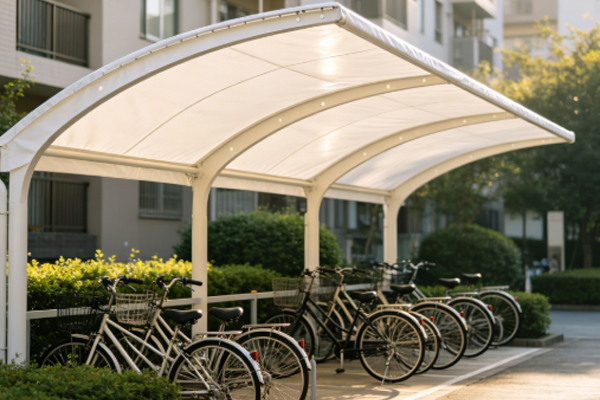
As green transportation and short-distance cycling continue to grow, the demand for organized parking spaces for bicycles, electric bicycles, and shared bicycles is increasing. Schools, residential communities, commercial complexes, industrial parks, office buildings, public transportation stations, and tourist attractions all require suitable bicycle parking facilities. Outdoor parking can leave bicycles exposed to sunlight, rain, dust, fallen leaves, and other environmental conditions. During rainy seasons and hot weather, this can affect both vehicle condition and user experience. PVC tarpaulin membrane structure bicycle shelters combine PVC membrane materials with steel frames, tensioning systems, and connection components to create lightweight covered parking spaces for bicycles and electric bicycles. PVC tarpaulin can be customized according to parking area size, number of spaces, vehicle arrangement, and surrounding architecture. It is suitable for single-row, double-row, and large continuous bicycle shelters. Membrane structures offer flexible shapes, efficient space utilization, and adaptable installation methods, allowing them to fit different site conditions. For projects that need to improve bicycle parking conditions while controlling the occupied space, PVC tarpaulin membrane structure bicycle shelters provide a practical outdoor covering solution.
PVC tarpaulin membrane bicycle shelters generally use PVC-coated fabric as the primary membrane material, combined with steel columns, beams, cables, tensioning components, and fixing fittings to form a complete structure. The fabric substrate provides the required tensile support, while the PVC coating helps improve waterproofing, weather resistance, and surface protection. Compared with traditional rigid roofs, membrane structures can use tensioning to form curved surfaces, creating a lighter architectural appearance. For schools, residential communities, and office parks with high pedestrian traffic, support column locations should be planned according to vehicle access routes to avoid interfering with bicycle movement, walking, or pushing vehicles. The membrane height should also be determined according to the actual requirements of bicycles, electric bicycles, and other small vehicles. By properly designing the span, column spacing, membrane curvature, and drainage route, the PVC tarpaulin can be effectively matched with the bicycle parking area.
Bicycle shelters remain outdoors for extended periods, so PVC membrane materials need to withstand rainfall, sunlight, dust, humidity, and temperature changes. The PVC coating creates a protective layer that provides overhead rain protection and reduces direct rainfall on bicycle seats, baskets, frames, and other exposed components. In areas with strong sunlight, suitable PVC membrane specifications and light transmission levels can be selected according to project requirements, providing shade while maintaining an appropriate amount of natural light. In regions with heavy rainfall, particular attention should be given to membrane slope, seam treatment, and drainage routes. PVC membrane materials can be heat-welded, while reinforced edges can be added to meet tensioning requirements. Material thickness, weight, and weather resistance should be selected according to the actual operating environment to ensure that the bicycle shelter is suitable for long-term outdoor use.
The dimensions of a bicycle shelter should be determined according to the number of vehicles, parking arrangement, access width, and available site area. A single-row bicycle parking area can use a relatively compact membrane structure, while a double-row arrangement may require a wider shelter to provide continuous coverage for vehicles on both sides. Schools, companies, and large residential communities with high parking demand can use continuous PVC membrane structures covering multiple parking units. Shared bicycle parking areas can use longer membrane surfaces according to vehicle density while maintaining sufficient entrance and exit space. Electric bicycle shelters also need to accommodate charging equipment, fire safety routes, and maintenance areas, so their design should not simply follow standard bicycle parking dimensions. Accurate measurement of parking spaces, pedestrian routes, buildings, and surrounding facilities helps determine suitable membrane dimensions and support positions.
Application | Recommended Structure | Main Purpose | Design Focus |
School Bicycle Parking | Continuous Membrane Structure | Student Bicycle Protection | Parking Density and Safe Access |
Residential Community | Modular Membrane Shelter | Bicycle and E-Bike Parking | Space Utilization |
Office Park | Cantilevered Membrane Shelter | Employee Vehicle Protection | Entrance and Exit Design |
Commercial Complex | Large-Span Membrane | Customer Bicycle Parking | Appearance and Pedestrian Flow |
Public Transport Station | Compact Membrane Shelter | Short-Term Bicycle Parking | Occupied Area |
Tourist Attraction | Decorative Membrane Structure | Visitor Bicycle Parking | Environmental Integration |
PVC tarpaulin membrane bicycle shelters can be used for bicycles, electric bicycles, shared bicycles, and other small non-motorized vehicles. Once vehicles enter the designated parking area, they can be arranged according to planned spaces, allowing limited land to be used efficiently. The membrane roof provides continuous overhead coverage, reducing direct exposure to rain and strong sunlight. At schools and office parks, bicycle shelters can be installed near building entrances while keeping fire access routes and pedestrian evacuation paths clear. Residential communities can locate membrane shelters along the edge of the property or within centralized parking zones, combined with ground drainage systems to reduce water accumulation. Commercial areas can arrange temporary bicycle parking according to customer traffic patterns, creating a practical relationship between the shelter, entrances, pedestrian paths, and public facilities.
Bicycle shelter construction needs to coordinate membrane fabrication, steel structure installation, vehicle circulation, and drainage design. A structured installation process helps improve the final performance of the shelter.
Site measurement: Determine the parking area's length, width, number of spaces, pedestrian routes, and surrounding building locations.
Parking layout design: Plan single-row, double-row, or continuous parking areas according to the number of bicycles, electric bicycles, and shared bicycles.
Structural planning: Select cantilevered, curved, continuous, or modular PVC membrane structures according to site dimensions.
Foundation construction: Complete foundations and embedded components according to the structural design to provide stable support.
Steel structure installation: Install columns, beams, support members, and connection components, then inspect the structural joints.
PVC membrane fabrication: Cut, heat-weld, reinforce, and prepare connection points according to the required dimensions.
Membrane installation: Connect the PVC tarpaulin to the steel structure and tensioning system, gradually adjusting the membrane tension and shape.
Drainage installation: Establish rainwater flow paths, gutters, or downpipes according to the membrane slope to reduce water accumulation.
After installation, the membrane tension, steel connections, parking routes, shelter clearance, and drainage performance should be inspected before daily operation begins.
PVC tarpaulin bicycle shelters can be applied in many public and commercial environments. Schools can install continuous shelters near teaching buildings, dormitories, or campus entrances to provide rain protection for large numbers of student bicycles. Residential communities can use modular membrane shelters in centralized parking areas to create organized spaces for bicycles and electric bicycles. Office parks can locate bicycle shelters near employee entrances, making parking convenient for commuters. Commercial complexes, supermarkets, and restaurants can install small or medium-sized membrane shelters according to customer parking requirements. Tourist attractions can use decorative PVC membrane structures for bicycle parking while maintaining visual harmony with the surrounding landscape. Public transportation and subway transfer areas can also use PVC membrane shelters to provide convenient bicycle parking for short-distance transfers.
PVC membrane bicycle shelters require regular maintenance and inspection to preserve their operating condition. Routine checks should look for membrane damage, excessive sagging, abnormal water accumulation, or visible contamination, while heat-welded seams, reinforced edges, and connection points should also be inspected. Steel columns, beams, bolts, and fixing components should be checked periodically, with abnormal looseness, corrosion, or deformation addressed promptly. Before the rainy season, drainage channels and downpipes should be inspected and cleaned of leaves, mud, and other debris to prevent blockages. After strong winds or heavy rainfall, the membrane and structural connection points should be checked. PVC tarpaulin should be cleaned using methods suitable for PVC materials, avoiding sharp tools or unsuitable chemical cleaners that could damage the membrane surface. Proper maintenance helps the shelter retain its rain and sun protection capabilities.
PVC tarpaulin membrane bicycle shelters combine lightweight structures, outdoor protection, and flexible architectural forms, making them suitable for bicycle parking projects of different sizes. The membrane can be customized according to the parking area, while the steel structure can be configured according to the required span and parking layout. Compared with enclosed buildings, membrane structures maintain an open design that supports air circulation and convenient pedestrian access. PVC tarpaulin provides waterproofing and overhead rain protection, while membrane color and light transmission can be selected to improve the visual environment of the parking area. Membrane structures can also use different curved and cantilevered designs, allowing bicycle shelters to coordinate with schools, residential communities, commercial buildings, and landscaped areas. For locations that need additional bicycle parking capacity, modular PVC membrane shelters can be expanded according to future requirements.
When bicycles are stored outdoors for extended periods, seats, baskets, frames, and certain metal components can be directly exposed to rain and sunlight. A PVC membrane structure creates continuous overhead coverage, reducing direct rainfall on parked vehicles. During hot weather, the membrane can also reduce direct solar exposure and create a more comfortable environment when users park or collect their bicycles. The actual protection level depends on membrane width, shelter height, structural configuration, and local weather conditions. These factors should therefore be considered when determining the required coverage area.
PVC tarpaulin combines a woven fabric substrate with a PVC coating to provide properties suitable for tensioned membrane applications. The material can be cut and heat-welded to create large continuous membrane surfaces and can be secured to steel structures using reinforced edges and connection components. Flexible membrane materials can accommodate curved, wave-shaped, and cantilevered structures, providing considerable freedom in bicycle shelter design. Suitable PVC membrane specifications can be selected for different environments, with local rainfall, sunlight, wind conditions, and expected operating periods considered during design. Material performance, structural engineering, installation quality, and maintenance all contribute to the long-term performance of the bicycle shelter.
A bicycle shelter needs to provide overhead protection while maintaining an efficient relationship between parking spaces, vehicle movement, and pedestrian access. PVC membrane structures can use cantilevered designs to reduce the number of support columns occupying the parking area, making it easier for bicycles to enter and leave their spaces. Continuous membrane shelters can cover multiple parking spaces and provide unified protection over a larger area. For space-limited residential communities, schools, and commercial properties, membrane dimensions can be customized according to site boundaries, allowing shelters to be installed beside buildings, along road edges, or in centralized parking zones. Appropriate column spacing and membrane spans can improve the utilization of limited land.
Different projects have different numbers of parking spaces, site dimensions, and architectural styles, so PVC membrane bicycle shelters can be customized according to individual requirements. Membrane materials can be supplied in different thicknesses, weights, colors, and dimensions, with reinforced edges, heat-welded seams, and connection points added as required. Structural configurations can include curved, cantilevered, continuous, and modular designs. Schools can select membrane colors that complement campus architecture, while commercial projects can use distinctive shapes for stronger visual recognition. Residential communities can prioritize compact structures and high parking capacity. Projects expecting future parking expansion can also use modular designs to add new membrane shelter units when needed.
If you are purchasing PVC bicycle shelter membrane materials, PVC membrane structure tarpaulins, bicycle parking shelter PVC tarpaulins, electric bicycle shelter membrane materials, shared bicycle rain shelter materials, PVC membrane sunshade structures, or customized PVC tarpaulins, suitable products can be selected according to parking area dimensions, number of parking spaces, vehicle types, local climate, and construction requirements. PVC tarpaulin can be customized for schools, residential communities, office parks, commercial complexes, industrial parks, tourist attractions, public transportation transfer areas, and other locations, including thickness, weight, color, dimensions, light transmission, reinforced edges, heat-welded seams, and connection structures.
WeChat: 0086-13921439224
Email: tarp@newstarventilation.com
Contact us for PVC tarpaulin membrane structure bicycle shelter products and customized services. By providing parking area dimensions, estimated parking capacity, required membrane coverage, preferred structural configuration, and operating environment, suitable PVC membrane materials and structural solutions can be selected to provide reliable rain protection, sun shading, and outdoor covered parking space for bicycles and electric bicycles.
