
Hot Keywords:
- All
- Product Name
- Product Keyword
- Product Model
- Product Summary
- Product Description
- Multi Field Search
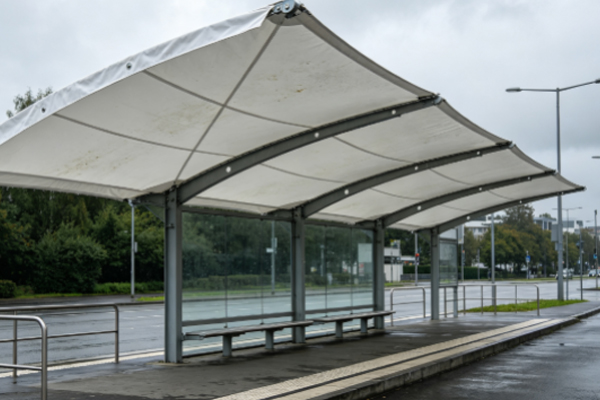
Urban bus stops accommodate large numbers of passengers every day, so bus shelters need to withstand sunlight, rainfall, wind, dust, and seasonal weather changes over long periods. Traditional fixed roofs can provide basic shelter, but they may have limitations in terms of appearance, span, natural lighting, and future modifications. PVC tarpaulin membrane structures use high-strength fabric substrates combined with PVC coatings, supported by steel frames, tensioning components, and connection systems to create lightweight bus shelters. The membrane can be customized according to platform length, road width, passenger volume, and surrounding architectural style, providing passengers with rain and sun protection during waiting periods. By properly designing the membrane curvature, drainage direction, and supporting structure, water accumulation in the waiting area can also be reduced. PVC tarpaulin offers good waterproofing, weather resistance, tensile strength, and flexibility, making it suitable for bus stops, school transportation stations, industrial park shuttle stations, tourist attraction stops, and large transportation hubs. For public transportation facilities that need to combine practical performance, visual appeal, and construction flexibility, PVC membrane structure bus shelters provide an adaptable space solution.
PVC tarpaulin membrane structure bus shelters generally consist of PVC membrane material, steel support structures, tensioning components, connection fittings, and drainage systems. The PVC membrane forms the overhead protective surface, while the steel structure provides the primary support and the tensioning system helps maintain the designed membrane shape. Unlike heavy traditional roofs, membrane structures can use curved, wave-shaped, cantilevered, and other forms to create visually distinctive shelter designs. Bus shelters often need sufficient visual openness, so membrane color, light transmission, and coverage height should be considered together with the waiting area. For high-traffic bus stops, the shelter can be extended to provide more continuous rain protection for passengers. Steel columns should also be positioned carefully to avoid interfering with boarding routes while leaving sufficient space for buses, pedestrians, and accessible facilities. Through coordinated design of membrane materials and structural components, the shelter can provide rain protection, sun shading, and passenger circulation guidance.
PVC tarpaulin is manufactured by combining a fabric substrate with a PVC coating, providing effective waterproofing and reducing direct rainwater entry into the covered area. Bus shelters remain outdoors for extended periods and are exposed to ultraviolet radiation, rainfall, wind, and temperature changes, so the membrane material should be selected according to local climate and expected service conditions. In cities with strong sunlight, PVC membrane materials with suitable weather resistance can be selected according to project requirements. In areas with frequent rainfall, membrane drainage and seam treatment require particular attention. Heat-welding can create continuous membrane seams, while reinforced edges can improve suitability for tensioned structures. Different membrane colors can also be selected according to public transportation branding, surrounding buildings, and urban landscape design, helping the shelter integrate naturally with its surroundings.
Bus shelter dimensions should be determined according to platform length, passenger volume, bus dimensions, and surrounding road conditions. Individual bus stops can use independent membrane structures, while multiple connected stations can use longer-span or modular designs. For high-traffic transfer stations, larger coverage areas can create more continuous rain protection. Membrane height should balance passenger comfort with vehicle clearance, while support columns should be positioned away from boarding routes. Main-road bus stops also need to consider visibility, station signage, and nighttime lighting. PVC tarpaulin can be cut and fabricated according to actual structural dimensions, with reinforced edges, connection holes, and tensioning points added to ensure accurate integration with the steel structure.
Bus Shelter Type | PVC Membrane Structure | Main Function | Design Focus |
Standard Bus Stop | Single Cantilever Membrane | Rain and Sun Protection | Efficient Use of Platform Space |
Transfer Station | Continuous Membrane Structure | Large-Area Passenger Protection | High Passenger Capacity |
School Bus Stop | Compact Membrane Structure | Passenger Rain Protection | Safe Pedestrian Access |
Tourist Attraction Stop | Decorative Membrane Structure | Passenger Protection and Landscaping | Visual Design |
Industrial Park Shuttle Stop | Modular Membrane Shelter | Rain and Sun Protection | Flexible Expansion |
Urban Transport Hub | Large-Span Membrane Structure | Wide Passenger Coverage | Structural Stability |
PVC membrane structure bus shelters can be used as waiting areas, passenger circulation spaces, and visual guides for bus boarding. During daily operation, passengers can wait under the membrane-covered area while benches, station signs, lighting, and information displays can be arranged according to the platform layout. In areas with long rainy seasons, the shelter can be extended longitudinally to provide more continuous protection between the station sign and boarding area. In hot climates, PVC membrane materials with suitable light transmission and shading characteristics can reduce direct solar exposure in the waiting area. The membrane can also be connected to drainage channels, downpipes, and ground drainage systems so that rainwater follows a controlled drainage path. During construction and operation, the membrane, tensioning components, steel connections, and drainage areas should be inspected regularly to maintain the shelter in proper condition.
Bus shelters are public transportation facilities, so construction needs to account for structural safety, pedestrian circulation, and station functionality. A well-organized installation process helps coordinate the PVC membrane, steel structure, and supporting facilities.
Site measurement: Determine platform length, width, road position, passenger waiting area, and bus stopping zone.
Structural planning: Select cantilevered, continuous, curved, or other membrane structures according to station requirements.
Steel fabrication: Manufacture columns, beams, supports, and connection nodes according to the design dimensions.
PVC membrane fabrication: Cut, heat-weld, and reinforce the PVC membrane according to the designed curved shape.
Support system installation: Complete the foundation, steel structure, and tensioning components, then inspect all connection points.
Membrane installation: Connect the PVC tarpaulin to the tensioning system and gradually adjust the membrane tension and overall shape.
Drainage installation: Establish drainage paths according to the membrane slope and connect downpipes or ground drainage systems.
After installation, the membrane tension, steel connections, pedestrian routes, and drainage system should be inspected comprehensively before the shelter is opened for public use.
Bus shelters primarily provide rain and sun protection for passengers. Benches, station signs, lighting, and electronic information equipment can be installed within the covered area according to actual requirements. During rainy weather, passengers can wait under the membrane to reduce direct exposure to rainfall. On sunny days, the membrane can reduce direct solar radiation and create a more comfortable waiting environment. For high-traffic stations, a wider membrane coverage area can provide continuous protection between station signs, seating, and boarding locations. The area around the shelter should also remain clear of advertising boards, miscellaneous objects, and temporary facilities that could obstruct pedestrian movement.
Bus shelters remain outdoors for long periods, so regular maintenance can help extend the service life of the membrane structure. Routine inspections should check the PVC membrane for visible damage, sagging, water accumulation, or contamination, while steel structures, connection fittings, and tensioning components should also be examined. After strong winds, heavy rainfall, or other severe weather, the membrane and fastening points should be inspected promptly. Dust, leaves, and other debris on the membrane can be removed using cleaning methods suitable for PVC materials, avoiding sharp tools that could scratch the surface. Drainage outlets and downpipes should remain unobstructed to prevent prolonged water accumulation around the membrane. Regular maintenance helps preserve the shelter's rain protection, shading performance, and structural condition.
PVC tarpaulin membrane bus shelters offer lightweight construction, flexible shapes, adaptable installation, and effective rain and sun protection. The membrane can be customized according to station conditions and formed into cantilevered, curved, wave-shaped, and other designs, giving public transportation facilities a distinctive visual identity. PVC tarpaulin provides waterproofing and weather resistance, making it suitable for long-term outdoor installation. The membrane structure can also reduce the heavy visual appearance associated with conventional construction materials and maintain a relatively open waiting environment. For existing bus stop renovation projects, the membrane structure can be redesigned according to existing platform dimensions. For newly developed routes, membrane dimensions, drainage, lighting, and seating arrangements can be incorporated into the station planning process. With suitable design, PVC membrane structures can combine rain protection with functional urban public space.
One of the primary functions of a bus shelter is to reduce passenger exposure to rainfall and sunlight. Once the PVC membrane creates continuous overhead coverage, rainwater can be guided toward designated drainage locations, reducing direct rainfall in the waiting area. Membrane color and light transmission can be selected according to local climate requirements, helping improve the lighting conditions within the passenger area. In regions with frequent rainfall, the membrane width and drainage slope can be increased as appropriate. In hot climates, membrane materials with suitable shading properties can be selected. Actual protection also depends on membrane dimensions, structural height, and drainage design, so these factors should be planned according to individual station conditions.
PVC membrane materials combine a fabric substrate with a coated structure to provide suitable tensile strength and outdoor performance. The membrane is tensioned within the structural system to maintain a stable form and reduce excessive sagging across large areas. PVC membrane materials can be cut, heat-welded, and reinforced according to the design, making them suitable for various curved shapes. For long-term bus shelter projects, membrane materials should meet the environmental requirements of the installation location, while structural design should account for local wind, rainfall, and sunlight conditions. Material quality, steel structure design, installation quality, and ongoing maintenance can all influence actual service life.
Traditional shelters may require numerous columns and heavy roof structures, while PVC membrane structures can use cantilevered designs to position some support elements toward the edge of the waiting area. This can provide passengers with a more continuous usable space. For narrow sidewalks and urban road stations, this structural approach can reduce interference with pedestrian circulation. Bus stop signs, benches, lighting, and advertising facilities can also be arranged according to the membrane layout. At transfer stations and large transportation hubs, continuous membrane structures can expand the protected area and provide rain and sun protection for larger passenger volumes.
PVC membrane structures can be customized according to bus stop dimensions, city branding, and functional requirements. Membrane materials can be selected in different colors, thicknesses, and light transmission levels, while structures can use different spans, curved forms, and support configurations. Tourist attractions can use membrane shelters with distinctive regional designs, while industrial parks can select simple and practical modular structures. Main-road urban stations can integrate membrane structures with public transportation visual systems. By customizing membrane dimensions, steel connection points, drainage locations, and areas for auxiliary equipment, the PVC shelter can be adapted more closely to the actual operating environment.
If you are purchasing PVC bus shelter membrane materials, PVC membrane structure tarpaulins, bus stop rain covers, bus shelter membrane materials, PVC membrane sunshade structures, urban bus shelter materials, or customized PVC membrane structure tarpaulins, suitable products can be selected according to platform length, passenger volume, bus stopping arrangements, local climate, and urban planning requirements. For urban bus stops, school transportation stations, industrial park shuttle stations, tourist attraction stops, community bus stops, and major transportation hubs, PVC tarpaulin can also be customized according to project requirements, including membrane thickness, weight, color, dimensions, light transmission, reinforced edges, heat-welded seams, and connection structures.
WeChat: 0086-13921439224
Email: tarp@newstarventilation.com
Contact us for PVC tarpaulin membrane structure bus shelter products and customized services. By providing platform dimensions, coverage area, passenger volume, structural design, and operating environment, suitable PVC membrane materials and structural solutions can be selected to provide reliable rain protection, sun shading, and covered passenger space for public transportation facilities.
