
Hot Keywords:
- All
- Product Name
- Product Keyword
- Product Model
- Product Summary
- Product Description
- Multi Field Search
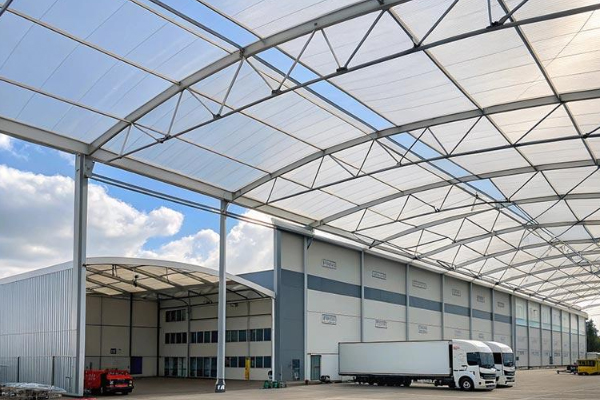
Logistics parks, warehouses, distribution centers, freight terminals, and industrial storage facilities handle large volumes of goods every day. Loading and unloading areas, outdoor storage zones, vehicle waiting areas, and warehouse passages are often exposed to rain, direct sunlight, dust, and changing weather conditions. Traditional permanent buildings can provide strong protection, but they may require considerable construction time and offer limited flexibility when storage layouts need to change. PVC tarpaulin membrane structures combine flexible PVC-coated fabric with steel frames, cables, and fastening systems to create large covered spaces for logistics and warehousing operations. PVC tarpaulin provides waterproofing, weather resistance, tensile strength, and convenient fabrication. It can be cut, heat-welded, reinforced, and customized according to the dimensions of a warehouse or logistics site. For loading platforms, logistics transfer zones, outdoor storage areas, and vehicle waiting spaces, a properly designed PVC membrane structure can reduce the impact of rain, sunlight, and dust on goods and working areas while maintaining convenient access for vehicles and personnel. Different membrane thicknesses, weights, colors, and light transmission levels can also be selected according to the requirements of fixed, semi-open, or modular logistics facilities.
The core of a PVC tarpaulin logistics and warehousing structure is the coordinated application of membrane material, steel structure, and fastening components. PVC tarpaulin generally uses high-strength woven fabric as the base material with a PVC coating applied to the surface, creating a combination of mechanical strength and outdoor protection. Logistics and warehousing areas commonly involve forklift operations, truck parking, pallet movement, and loading activities, so the overhead structure must provide rain protection while maintaining sufficient clearance and unobstructed working routes. PVC membrane material can be tensioned into arched, wave-shaped, saddle-shaped, or other curved forms, allowing rainwater to flow toward designated drainage points. The design should also consider warehouse door dimensions, truck height, loading platform locations, fire lanes, and drainage areas. For large logistics sites, multiple membrane units can be combined to create a continuous covered area that can be expanded according to business requirements.
The woven fabric base of PVC tarpaulin provides the tensile support required by the membrane, while the PVC coating helps improve waterproofing, moisture resistance, and outdoor durability. Logistics facilities are commonly exposed to sunlight, rain, dust, temperature fluctuations, and wind, so the material should be selected according to the local climate and actual application conditions. Waterproof PVC tarpaulin can be used for temporary outdoor storage areas to reduce direct exposure of goods to rainfall. For long-term outdoor warehousing and logistics transfer areas, products with stronger weather resistance and tensile performance can be selected. PVC tarpaulin is also available in different colors and light transmission levels, allowing operators to maintain appropriate natural lighting in covered working areas. Proper coordination between membrane specifications and structural design allows the system to adapt more effectively to daily logistics operations.
The dimensions of a logistics membrane structure should not be determined only by the ground area. Membrane span, vehicle height, support spacing, tensioning method, and drainage design also need to be considered. Truck loading areas usually require substantial clearance, so columns and support components should be positioned away from major vehicle routes. Large logistics parks can use continuous membrane structures to cover several loading stations, while smaller warehouses can use independent modules over designated working areas. PVC tarpaulin can be cut according to the structural curves and heat-welded into large membrane sections, with reinforced edges added for connection to the steel frame. Appropriate dimension planning can reduce wrinkles, localized slackness, and water accumulation while creating a more stable covered warehouse environment.
Logistics and Warehousing Application | Recommended PVC Tarpaulin | Main Function | Design Focus |
Loading and Unloading Area | Waterproof, Weather Resistant | Rain and Sun Protection | High Clearance |
Outdoor Warehouse Area | High Strength, Waterproof | Goods Protection | Large-Area Coverage |
Logistics Transfer Zone | Weather Resistant, Abrasion Resistant | Shading, Rain Protection | Vehicle Access |
Truck Waiting Area | High-Strength Membrane | Rain and Sun Protection | Vehicle Height |
Temporary Storage Area | Waterproof PVC Tarpaulin | Moisture and Sun Protection | Modular Design |
Logistics Park Passage | Weather Resistant Membrane | Shading, Rain Protection | Continuous Coverage |
Installation of a PVC tarpaulin membrane structure in logistics and warehousing facilities needs to be planned according to the site foundation, steel structure, membrane fabrication, and vehicle transportation routes. Before construction, the coverage area and vehicle routes should be determined, followed by the construction of the foundation and support framework according to the design dimensions. PVC tarpaulin is fabricated according to the actual curved surface and heat-welded before being transported to the installation site. During installation, the membrane should be protected from direct contact with sharp metal edges, while edge connectors, cables, and fastening components are used for positioning. Membrane tension should be applied gradually so that the tarpaulin develops the intended curved form. Appropriate drainage points should also be included so that rainwater can be discharged away from goods loading and unloading areas. For facilities frequently used by forklifts and large trucks, sufficient height and turning space should be reserved to prevent structural components from interfering with logistics operations.
Logistics membrane structure construction needs to coordinate building safety, goods handling, and vehicle movement, making an organized installation process important. A practical installation sequence can include the following:
Confirm site dimensions: Determine the membrane coverage according to the warehouse exterior area, loading platform, truck routes, and temporary goods storage zones.
Complete the foundation and steel structure: Install columns, beams, trusses, cables, and other structural components, and inspect all connection nodes.
Verify the PVC tarpaulin: Check membrane dimensions, color, heat-welded seams, reinforced edges, and connection positions to ensure compatibility with the steel structure.
Unfold and position the membrane: Unfold the tarpaulin on a clean, level surface and install it according to the designed orientation before temporary fastening.
Adjust membrane tension: Apply tension gradually through connectors and cables so that the PVC tarpaulin forms a stable curved surface.
Inspect drainage and access areas: Confirm that rainwater drainage paths are clear and that sufficient space remains for trucks, forklifts, and personnel.
After installation, the membrane surface, fastening nodes, drainage areas, and vehicle access routes should be inspected to ensure that the logistics facility is ready for normal operation.
Loading and unloading zones are among the areas in logistics facilities that benefit most from weather protection. A PVC membrane structure can be installed above warehouse entrances, loading platforms, or temporary goods transfer areas, reducing direct exposure to rainfall and sunlight while goods are being moved outdoors. When trucks are parked for loading or unloading, the overhead membrane can provide a shaded and rain-protected working space. Personnel can perform pallet transfer, goods inspection, and loading operations under the covered area. The membrane height should be determined according to the truck types used at the facility, while sufficient clearance must be maintained for forklifts. Large logistics centers can use continuous membrane coverage across several loading stations, improving the convenience of loading and unloading during rainy weather.
Membrane structures in logistics parks are continuously exposed to vehicle exhaust, dust, rainfall, and outdoor pollutants, making regular inspection of the membrane and structural connections necessary. Warehousing operators can schedule cleaning according to local weather conditions and operating frequency, removing leaves, dust, and other debris from the membrane surface. During the rainy season, drainage outlets and low points should be checked carefully to prevent blockage and water accumulation. After strong winds, cables, edge fastening components, and membrane tension should be inspected for abnormal conditions. Localized wear, scratches, or unusual heat-welded seams should be repaired promptly. Cleaning PVC tarpaulin should be performed with tools and methods suitable for membrane materials to avoid coating damage caused by excessive friction. Regular maintenance helps preserve the waterproofing and shading performance of the membrane structure.
PVC membrane structures can be customized according to the operating model of logistics companies and are suitable for different goods handling and warehousing areas:
Warehouse Loading Platforms: Provide a covered space for loading and unloading goods while protecting workers and products from rain and direct sunlight.
Logistics Transfer Areas: Suitable for short-term goods transfer and reducing direct exposure of goods to outdoor conditions.
Truck Waiting Areas: Provide temporary covered parking spaces for transport vehicles and improve working conditions for drivers and loading personnel.
Outdoor Warehouse Areas: Suitable for temporary storage of selected weather-resistant goods, packaging materials, and logistics equipment.
Logistics Park Passages: Continuous membrane structures can cover areas frequently used by personnel or vehicles.
Express Distribution Centers: Suitable for package loading, vehicle transfer, and temporary outdoor sorting or transfer areas.
According to goods types, vehicle dimensions, operating frequency, and site conditions, independent, continuous, or modular membrane structures can be selected to improve the flexible utilization of logistics and warehousing spaces.
PVC tarpaulin membrane structures can combine flexible membrane materials with steel structures to create large covered areas, providing practical value for logistics facilities that frequently handle goods and vehicles. Compared with conventional permanent roofs, membrane structures can create a lighter architectural appearance while adapting to different site configurations through various spans and curved forms. PVC tarpaulin can be customized and heat-welded according to engineering requirements, making it suitable for warehouse yards, logistics passages, loading platforms, and outdoor transfer zones of different sizes. With an appropriate membrane slope, rainwater can be guided toward designated drainage areas, reducing the potential impact of water accumulation on the structure and logistics operations. After installation, the membrane structure can also be expanded through additional modules when logistics requirements increase, providing warehouses with a flexible spatial solution.
Weather conditions can directly affect logistics operations. Sudden rainfall during loading and unloading can increase the risk of wet packaging, slippery working surfaces, and reduced handling efficiency. A PVC tarpaulin membrane structure can create overhead protection above warehouse entrances, loading platforms, and goods transfer areas, allowing workers to perform certain loading and unloading tasks under a covered space. With an appropriate membrane slope and drainage system, rainwater can be guided away from the working area. For logistics centers with frequent loading operations, a fixed membrane protection facility can improve working conditions in outdoor loading zones.
The PVC coating helps reduce water penetration and provides outdoor protective performance. During hot weather, the membrane can reduce direct solar radiation entering logistics work areas, creating shaded spaces for goods, vehicles, and workers. PVC membrane materials are available with different light transmission characteristics, allowing natural lighting requirements to be considered during product selection. For warehousing facilities installed outdoors for long periods, membrane selection should take local ultraviolet radiation, rainfall, wind conditions, and temperature changes into account when determining the appropriate weather-resistant product.
Logistics parks generally require spacious areas for goods transfer and vehicle operations. PVC membrane structures can combine large-span steel frames with continuous membrane surfaces to create extensive covered spaces. Multiple membrane modules can also be combined according to warehousing requirements to form continuous loading areas or truck waiting zones. Large logistics bases can use phased construction, covering key loading areas first and expanding additional sections as business volume increases. For irregular sites, customized membrane dimensions and steel structures can improve the adaptability of the facility to the available space.
PVC tarpaulin can be cut, heat-welded, reinforced, and fastened according to architectural requirements. When combined with different steel structures, it can form arched, wave-shaped, saddle-shaped, and other spatial configurations. Logistics companies can select membrane colors according to warehouse buildings, corporate branding, and surrounding environments to create a more coordinated appearance. For large loading platforms, irregular storage zones, and specialized vehicle passages, membrane dimensions, reinforced edges, heat-welded seams, and fastening positions can be customized to improve compatibility between the membrane and supporting structure.
If you are purchasing PVC membrane structure logistics and warehousing tarpaulin, PVC warehouse rainproof tarpaulin, logistics loading area membrane, logistics park shading tarpaulin, or large warehouse membrane structure materials, suitable products can be selected according to warehouse area, goods types, vehicle dimensions, loading frequency, local climate, and construction requirements. For logistics centers, warehouse bases, express distribution centers, industrial warehouses, freight parks, and large loading platforms, PVC tarpaulin can also be customized according to project requirements, including thickness, weight, color, light transmission, membrane dimensions, heat-welded seams, reinforced edges, and fastening nodes.
WeChat: 0086-13921439224
Email: tarp@newstarventilation.com
Contact us for PVC tarpaulin membrane structure logistics and warehousing products and solutions. By providing warehouse dimensions, vehicle types, goods handling requirements, and design specifications, suitable PVC membrane materials can be selected to provide reliable rain protection, shading, and environmental protection for logistics loading, goods transfer, and outdoor storage areas.
