
Hot Keywords:
- All
- Product Name
- Product Keyword
- Product Model
- Product Summary
- Product Description
- Multi Field Search

With the growing number of vehicles in cities, residential communities, commercial parks, schools, factories, logistics parks, and public parking areas increasingly require effective outdoor parking protection. Traditional concrete or metal roofs can provide stable structures, but they may have limitations in terms of design flexibility, construction adaptability, and visual appearance. PVC tarpaulin membrane structure parking canopies combine flexible membrane materials with steel support systems. Through tensioning, the membrane forms a stable covering surface that can provide vehicles with shading, rain protection, and a certain level of wind protection while reducing direct solar radiation on the vehicle body, interior space, and parking area. PVC tarpaulin offers relatively low weight, convenient processing, good waterproof performance, and strong adaptability to different shapes. It can be customized according to parking canopy spans, vehicle capacity, site dimensions, and design requirements. For projects requiring large-scale parking shade facilities, PVC membrane materials can be cut, heat-welded, reinforced along the edges, and secured at structural nodes to create complete membrane surfaces that combine practical protection with architectural appearance.
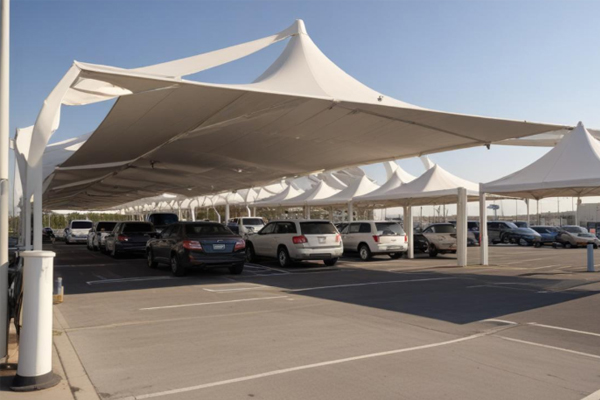
The core of a PVC tarpaulin membrane structure parking canopy is the coordination between the membrane material and the supporting system. PVC tarpaulin generally consists of a woven fabric base and PVC coating. The fabric provides tensile and tear resistance, while the PVC coating contributes to waterproofing, weather resistance, and surface protection. Parking canopies remain exposed to outdoor conditions for long periods and must withstand ultraviolet radiation, rainfall, wind, dust, and temperature changes. Material selection therefore needs to consider not only thickness but also strength, weight, light transmission, weather resistance, and processing characteristics. The parking canopy generally uses steel columns, beams, cables, and connectors to create the supporting framework, followed by tensioning the membrane to form curved, wave-shaped, saddle-shaped, or other structures. During design, vehicle clearance, parking space layout, drainage routes, and maintenance access should be considered to ensure that the membrane maintains appropriate tension and achieves a suitable visual appearance.
As the covering material of a membrane structure parking canopy, PVC tarpaulin provides a practical balance between flexibility and mechanical strength through its composite construction. High-strength woven fabric supports the load generated by membrane tension, while the PVC surface helps block rainwater and reduce direct exposure of the base fabric to outdoor environmental conditions. Different parking canopy projects can use different thicknesses, weights, and light transmission levels. For example, residential parking canopies often emphasize shading comfort and visual coordination, while commercial parking areas may select different colors and membrane shapes according to the surrounding architectural style. Industrial park parking canopies generally place greater emphasis on weather resistance and long-term outdoor performance. PVC tarpaulin can also be heat-welded into large membrane sections, reducing potential weak points associated with traditional sewing. With appropriate material selection, the parking canopy can provide vehicle shading while creating a lightweight architectural profile.
Matching PVC Membrane Specifications with Parking Canopy Structures
The dimensions of the parking canopy membrane should be determined according to the number of parking spaces, steel structure span, membrane shape, and installation tension. PVC tarpaulin should not simply be cut according to the ground area. The three-dimensional structure needs to be considered when developing the membrane pattern, including the dimensions required for installation and tensioning. Single-row parking spaces can use relatively simple single-slope or curved structures. Double-row parking areas can use central supports or continuous membrane surfaces. Large parking lots can use modular membrane structures to facilitate phased construction and future maintenance. Proper matching between membrane specifications and steel structures can reduce membrane wrinkles, localized slack, and uneven tension.
Parking Canopy Type | Recommended PVC Tarpaulin | Main Function | Design Focus |
Residential Parking Canopy | Shading, Weather Resistant | Sun and Rain Protection | Visual Coordination |
Commercial Parking Canopy | Shaped, Light Transmission Type | Shading, Decoration | Visual Appearance |
Factory Parking Canopy | High Strength, Weather Resistant | Rain and Sun Protection | Long-Term Use |
School Parking Canopy | Lightweight, Weather Resistant | Shading, Rain Protection | Safe Access |
Logistics Park Parking Canopy | Waterproof, Abrasion Resistant | Shading, Rain Protection | Large Span |
Public Parking Lot | High-Strength Membrane | Sun and Rain Protection | Modular Construction |
Construction of a PVC tarpaulin membrane structure parking canopy should follow a suitable sequence covering steel structure installation, membrane fabrication, membrane placement, node fastening, and tension adjustment. Before construction, the parking canopy foundation, column positions, and main steel structure dimensions should be confirmed to ensure that the actual structure matches the membrane fabrication data. PVC tarpaulin should be protected from sharp objects during transportation and installation. When unfolding the material, a clean working area should be selected. After positioning the membrane, tension is gradually applied through edge connectors, cables, and fastening devices so that the membrane forms the designed shape. The parking canopy should also include appropriate drainage routes, allowing rainwater to flow away naturally and reducing the load caused by prolonged water accumulation.
The installation quality of a membrane structure parking canopy directly affects membrane flatness, architectural appearance, and long-term performance. A practical construction process can include the following steps:
Inspect the parking canopy foundation: Confirm that the foundation, embedded components, and steel column positions meet the design requirements to ensure stable installation of the steel structure.
Install the support framework: Complete the installation of steel columns, beams, cables, and other structural components according to the design drawings, and inspect the connection nodes.
Inspect the membrane material: Unfold the PVC tarpaulin and check the membrane surface, heat-welded seams, reinforced edges, and connection areas for visible damage.
Position the membrane: Place the fabricated membrane on the steel structure according to the design orientation and complete the initial connections.
Apply tension gradually: Adjust the membrane tension according to the construction sequence so that the PVC tarpaulin forms the intended curved surface while avoiding excessive localized stress.
Check drainage and structural nodes: Confirm that drainage routes are clear and inspect edge fasteners, cables, and connection components.
After installation, the entire parking canopy should be inspected to confirm that membrane tension, structural connections, and drainage conditions meet the requirements for use.
After the PVC membrane structure parking canopy is put into service, the membrane can directly provide a shaded area above parked vehicles. When a vehicle enters the parking space, the membrane can block part of the direct sunlight and reduce solar radiation reaching the vehicle roof. During rainy weather, the membrane surface can guide rainwater toward designated drainage areas, reducing direct rainfall on the vehicle. The parking canopy should be designed with sufficient vehicle clearance, parking width, and driving space to prevent columns, cables, or other structural elements from interfering with vehicle access. For large parking areas, membrane units can be arranged according to the number of parking spaces to create continuous shade coverage. During daily use, vehicles and other objects should not directly contact the membrane, and abnormal membrane conditions should be inspected promptly.
Parking canopies remain exposed to outdoor conditions and therefore require regular inspection of PVC tarpaulin surfaces, heat-welded seams, reinforced edges, cables, and fastening nodes. Leaves, dust, and debris generated by birds can accumulate on the membrane and potentially affect drainage, so they should be removed regularly. After strong winds or heavy rainfall, the membrane structure should be inspected to confirm that there is no obvious slackness, damage, or abnormal water accumulation. PVC membrane materials should be cleaned using methods suitable for the surface, avoiding tools that could damage the PVC coating. Localized abrasion and loose connectors should be repaired promptly. Proper maintenance can help the parking canopy retain its appearance and shading performance.
PVC membrane structure parking canopies can be designed according to site dimensions, vehicle numbers, and building functions, making them suitable for different parking environments:
Residential Communities: Provide daily shading and rain protection for residents' vehicles while improving the visual appearance of parking areas through membrane shapes.
Commercial Centers: Can be installed in shopping centers, commercial streets, and business parking areas to provide outdoor vehicle protection.
Industrial Parks: Suitable for employee parking areas, visitor parking areas, and internal company vehicle spaces.
Schools and Campuses: Can be used for staff vehicles, electric bicycles, bicycles, and other outdoor parking areas to improve parking conditions.
Logistics Parks: Suitable for freight vehicles, employee vehicles, and short-term vehicle parking areas requiring shade and rain protection.
Public Parking Lots: Modular structures can cover large parking areas and are suitable for urban public parking facilities.
Different sites can use different membrane colors, structural forms, and light transmission levels, allowing the parking canopy to coordinate with surrounding buildings and landscapes.
PVC tarpaulin membrane structure parking canopies combine flexible membrane materials, steel support structures, and tensioning technology to create lightweight curved forms that can be difficult to achieve with conventional rigid roofs. For parking lot construction, the facility needs to provide shading and rain protection while also considering site utilization, vehicle access, architectural appearance, and future maintenance. PVC tarpaulin is relatively lightweight and can cover large areas through an appropriately designed steel structure, making it suitable for continuous parking spaces and large parking areas. Membrane materials can be customized according to project requirements, including dimensions, colors, and light transmission levels, providing flexible design options for different types of parking canopies.
Vehicles parked outdoors for extended periods can be exposed to strong sunlight, causing the vehicle surface and interior temperature to rise significantly. A PVC tarpaulin membrane structure parking canopy creates a continuous shading layer above vehicles, reducing direct solar radiation on the roof and windows. For residential communities, commercial parking lots, and company parking areas, installing membrane shading structures can improve outdoor vehicle parking conditions. Light transmission can also be selected according to project requirements to control the natural light level inside the parking area while reducing intense direct sunlight.
The PVC coating helps reduce water penetration through the membrane, giving the parking canopy reliable outdoor rain protection. In regions with long rainy seasons, membrane shape and drainage slopes should be designed according to local rainfall conditions so that rainwater can flow along designated drainage routes. PVC tarpaulin also needs to withstand long-term sunlight, temperature changes, and wind exposure, making suitable weather-resistant material important for long-term performance. Through coordinated material selection and structural design, the parking canopy can maintain stable shading and rain protection across different seasons.
The tensioned characteristics of membrane structures allow PVC tarpaulin to combine with steel structures to create large continuous covered areas, providing good spatial adaptability for sites with many parking spaces. By reducing certain intermediate supports, more open areas can be created for vehicle access and parking. Large parking lots can also use multiple membrane structure units that can be expanded gradually according to the actual parking layout. For irregular sites, customized membranes and steel structures can be used to achieve different shapes and configurations.
PVC membrane materials can create curved, wave-shaped, saddle-shaped, and other architectural forms through different cutting methods, tensioning configurations, and support structures, giving parking canopies a more distinctive appearance than conventional flat roofs. Different membrane colors and light transmission levels can also be coordinated with commercial buildings, residential architecture, and landscape environments. Daily maintenance mainly involves membrane cleaning, connection inspection, drainage inspection, and localized repairs, without complicated procedures. Regular inspection and proper care can help maintain the parking canopy in good operating condition.
If you are purchasing PVC membrane structure parking canopy tarpaulin, PVC parking shelter membrane, vehicle shading tarpaulin, outdoor membrane structure materials, or large parking lot shade tarpaulin, suitable products can be selected according to the number of parking spaces, building span, steel structure type, local climate, shading requirements, and architectural design. For residential communities, commercial centers, factories, schools, logistics parks, and public parking lots, PVC tarpaulin can also be customized according to actual project requirements, including membrane thickness, color, light transmission, dimensions, heat-welded seams, reinforced edges, and installation fastening structures.
WeChat: 0086-13921439224
Email: tarp@newstarventilation.com
Contact us for PVC tarpaulin membrane structure parking canopy products and construction solutions. By providing parking lot dimensions, vehicle capacity, and design requirements, you can obtain suitable membrane specifications for stable vehicle shading and rain protection while creating an outdoor parking space that combines practical performance with attractive architectural design.
