
Hot Keywords:
- All
- Product Name
- Product Keyword
- Product Model
- Product Summary
- Product Description
- Multi Field Search
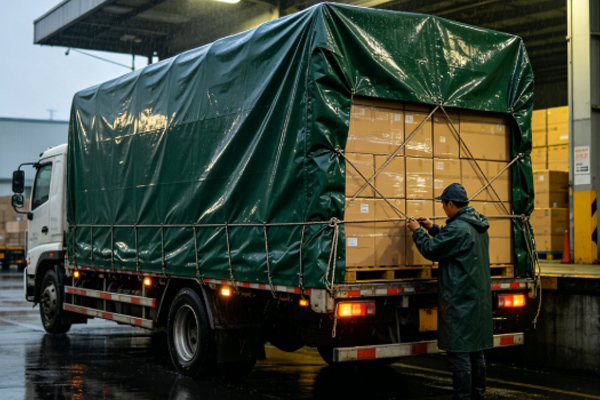
Cargo transportation by road, short-distance delivery, long-distance freight, and warehouse transfer can expose goods to rain, humid air, road dust, and strong sunlight. Cartons, machinery parts, packaging materials, construction products, industrial supplies, and other moisture-sensitive goods may be affected when transported outdoors without reliable covering. PVC tarpaulin is manufactured by combining a high-strength woven fabric base with a PVC coating, providing waterproofing, weather resistance, tensile strength, and flexibility. It can be customized according to the dimensions of trucks, flatbed trailers, cargo vehicles, and other transportation equipment. By connecting eyelets, ropes, hooks, reinforced edges, and other components to vehicle fastening points, PVC tarpaulin can create a continuous external protective layer that reduces direct exposure to rain and outdoor conditions. For logistics companies, freight fleets, manufacturers, warehouses, and large cargo transportation projects, selecting suitable PVC tarpaulin and using proper covering methods can improve moisture and rain protection while maintaining convenient operation for drivers and loading personnel.
PVC tarpaulin generally consists of a high-strength woven fabric base and a PVC coating. The fabric provides the primary tensile support, while the PVC coating improves waterproofing, moisture resistance, and outdoor weather performance. Transportation tarpaulins need to withstand repeated unfolding, folding, tightening, fastening, and airflow generated while vehicles are moving. The material therefore requires not only waterproof performance but also suitable tensile and tear resistance for transportation conditions. Different lengths, widths, thicknesses, and weights can be customized according to truck and cargo requirements, while reinforced edges and eyelets can be added so that the tarpaulin works effectively with vehicle fastening points. Machinery, metal products, timber, construction materials, and other cargo can use customized covering dimensions according to their shapes. For cartons and packaging materials that are particularly vulnerable to moisture, the top and side areas should be sufficiently covered. Large transport vehicles can also use oversized integrated tarpaulins to provide continuous protection across the entire cargo area.
The PVC coating helps reduce the possibility of rainwater penetrating directly through the tarpaulin, creating an external waterproof barrier around the cargo. The high-strength woven fabric supports the tarpaulin under tension during transportation and fastening, making it suitable for repeated deployment and storage. PVC tarpaulin used outdoors for extended periods may be exposed to sunlight, wind, rain, and road dust, so the appropriate specification should be selected according to transportation routes, frequency of use, and local climate conditions. Long-distance logistics fleets can choose products with stronger weather resistance and tensile performance, while reinforced edges, eyelets, and load-bearing areas can be strengthened for frequent use. Short-distance transportation and temporary covering applications may use lighter and more flexible products that are easier to deploy and store.
PVC tarpaulin dimensions should correspond to the length, width, cargo height, and fastening positions of the vehicle. Insufficient coverage can leave cargo edges exposed, while excessive material can make fastening and storage more difficult. During customization, suitable extra material should be reserved around the edges so that the tarpaulin can extend naturally over both sides of the cargo area and be secured with ropes or fastening components. Flatbed trucks, large trailers, sideboard trucks, and specialized transportation vehicles can use different tarpaulin designs. For long-term logistics fleets, standardized sizes can be produced according to commonly used vehicle models, making replacement, storage, and fleet management easier.
Cargo Type | Recommended PVC Tarpaulin | Protection Function | Key Application |
Cartons and Packaging | Waterproof, Flexible | Reduced Rain Exposure | Edge Coverage |
Machinery | High Strength, Weather Resistant | Rain and Dust Protection | Reinforced Fastening |
Metal Products | Waterproof, Abrasion Resistant | Reduced Moisture Exposure | Full Coverage |
Construction Materials | High Strength, Waterproof | Rain and Dust Protection | Large-Area Coverage |
Timber and Boards | Moisture Resistant, Waterproof | Reduced Humidity Impact | Prevent Water Accumulation |
Industrial Components | Waterproof, Weather Resistant | External Environmental Protection | Stable Tension |
PVC tarpaulin used for cargo transportation should be installed according to vehicle structure, cargo arrangement, transportation distance, and weather conditions. After loading, the cargo should be checked for stability before the tarpaulin is unfolded across the top. During fastening, ropes, eyelets, hooks, and vehicle attachment points can be used to create suitable tension. During rainy transportation, the top, sides, and rear sections should be checked for visible gaps that could allow rainwater to enter the cargo area. During long-distance transportation, the tarpaulin should also be monitored for excessive movement caused by wind. For logistics vehicles that require frequent loading and unloading, PVC tarpaulin with convenient folding and rolling characteristics can reduce operating time. After use, dust, mud, and debris should be removed from the surface, and the tarpaulin should be completely dried before storage to reduce the impact of prolonged moisture exposure.
A proper covering process can reduce the possibility of loose sections, exposed cargo, and rainwater entering the cargo area while making daily operation easier for drivers and loading personnel.
Inspect the vehicle and tarpaulin: Check vehicle fastening rings, ropes, hooks, and the PVC tarpaulin surface for visible damage before loading.
Stabilize the cargo: Arrange cargo according to vehicle capacity and keep the cargo height within a suitable range for proper tarpaulin coverage.
Unfold the tarpaulin: Place the PVC tarpaulin smoothly over the top of the cargo and ensure the main cargo area is fully covered.
Secure the surrounding edges: Use eyelets, ropes, hooks, and other accessories to connect the tarpaulin with the vehicle fastening points.
Adjust membrane tension: Gradually tighten each fastening position so the tarpaulin remains relatively smooth and reduces excessive movement during high-speed transportation.
Check rain protection: Inspect the top, sides, rear, and fastening areas to confirm that there are no obvious exposed sections.
After fastening, all connection points should be checked again. Long-distance and highway transportation vehicles should receive a complete covering inspection before departure.
PVC tarpaulin offers flexible application possibilities for general logistics transportation, industrial cargo, construction materials, equipment transfer, and warehouse operations. Flatbed trucks can use PVC tarpaulin to cover machinery, steel products, timber, boards, and other large cargo. Sideboard trucks can use appropriately sized tarpaulins that extend across the top and are secured to both sides of the cargo area. Logistics delivery vehicles can use moderately weighted products that are convenient to open and store during daily operations. Long-distance transportation places greater emphasis on weather resistance, tensile strength, and fastening stability, while short-distance delivery may prioritize operating efficiency. For temporary cargo transfer areas, PVC tarpaulin can also serve as a temporary rainproof cover, helping reduce direct exposure while goods are waiting for loading or unloading.
After transportation, dust, mud, leaves, and other debris should be removed from the PVC tarpaulin surface, particularly contaminants accumulated during long-distance road travel. Suitable soft tools and PVC-compatible cleaning methods should be used to avoid scratching the membrane surface. Regular inspections should focus on reinforced edges, eyelets, heat-welded seams, and fastening points. Loose connections, tears, or visible wear should be addressed promptly. After exposure to strong winds or heavy rainfall, the tarpaulin and fastening components should also be inspected for abnormal conditions. When the tarpaulin will not be used for an extended period, it should be thoroughly dried before folding or rolling and stored in a dry, ventilated location.
PVC tarpaulin creates a continuous covering layer between cargo and the outdoor environment, helping reduce direct exposure to rain, sunlight, and road dust. For logistics companies, the tarpaulin must provide rain protection while also accommodating frequent loading and unloading, long-distance travel, and different vehicle sizes. PVC material can be cut, heat-welded, reinforced, and fitted with eyelets to create customized solutions for different trucks and cargo types. Compared with simple plastic sheets, PVC tarpaulin offers better mechanical strength and repeated-use convenience. Compared with ordinary fabric covers, the PVC coating provides stronger waterproof protection. With suitable structural design, the tarpaulin can maintain stable tension and reduce excessive movement during high-speed transportation.
Rain is one of the most common environmental factors affecting road cargo transportation. Once PVC tarpaulin is installed over the cargo, it can reduce direct contact between rainwater and the goods or packaging. Properly securing both sides and the rear section can also reduce the possibility of rainwater entering through the edges. For cartons, packaging materials, timber products, and certain machinery components, reducing direct rain exposure provides an additional layer of external protection. PVC tarpaulin is an external covering material and does not replace professional packaging or transportation equipment for goods requiring strict temperature or humidity control. The actual protection system should therefore be selected according to the characteristics of the cargo.
The PVC coating provides good waterproof characteristics, while the high-strength woven fabric base provides necessary tensile support. Outdoor tarpaulins used for transportation need to withstand sunlight, rain, wind, and temperature changes. Material specifications should therefore be selected according to the transportation region and expected operating period. Long-distance freight fleets can prioritize weather-resistant products and reinforce the edges and eyelet areas. Actual service life depends on material quality, transportation conditions, fastening methods, maintenance frequency, and other environmental factors, so the appropriate specification should be selected according to actual operating conditions.
Logistics vehicles frequently load and unload cargo at different locations, so tarpaulins need to be convenient to operate. Proper dimensions, eyelet spacing, and reinforced edges can make it easier for drivers and loading personnel to unfold, secure, and store the tarpaulin. Urban delivery vehicles can use moderately weighted and flexible products, while large trailers and long-distance freight vehicles can select higher-strength specifications according to their operating requirements. Standardizing tarpaulin dimensions across a fleet can also reduce replacement difficulties and simplify inventory management.
Different cargo types and vehicles have different requirements for tarpaulin dimensions, thickness, weight, and structure. PVC tarpaulin can therefore be customized according to project requirements. The tarpaulin can be cut according to truck dimensions and equipped with reinforced edges, eyelets, rings, and heat-welded seams. Companies can also select different material specifications according to transportation routes and cargo characteristics. Large machinery, industrial equipment, and construction materials can use oversized integrated tarpaulins, while smaller logistics vehicles can use lighter structures. Customized designs improve the compatibility between the tarpaulin and vehicle, making rainproof and moisture-proof coverage more suitable for actual transportation requirements.
If you are purchasing PVC cargo transportation tarpaulin, PVC rainproof tarpaulin, logistics moisture-proof tarpaulin, PVC truck tarpaulin, flatbed truck rain covers, industrial cargo transportation tarpaulin, or logistics vehicle covering materials, suitable specifications can be selected according to vehicle model, cargo dimensions, transportation distance, loading frequency, and local climate. For logistics companies, freight fleets, manufacturers, warehouses, construction material transportation companies, and industrial equipment transportation projects, PVC tarpaulin can also be customized according to actual requirements, including thickness, weight, color, dimensions, eyelet spacing, reinforced edges, and heat-welded seams.
WeChat: 0086-13921439224
Email: tarp@newstarventilation.com
Contact us for PVC tarpaulin moisture-proof and rainproof products and customized solutions for cargo transportation. By providing vehicle dimensions, cargo types, transportation distances, and operating environments, suitable PVC tarpaulin specifications can be selected to provide reliable rain, moisture, and dust protection for road transportation, logistics distribution, industrial freight, and warehouse transfer operations.
