
Hot Keywords:
- All
- Product Name
- Product Keyword
- Product Model
- Product Summary
- Product Description
- Multi Field Search
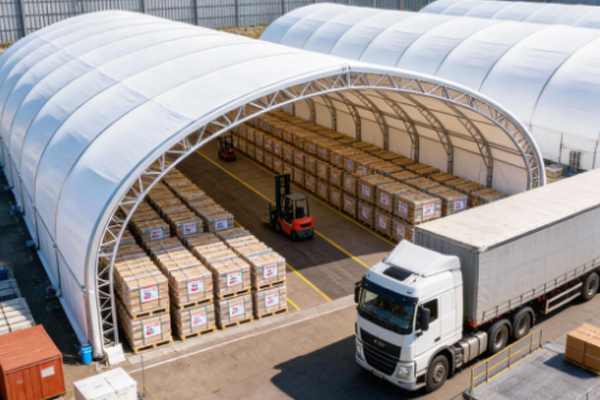
Warehouse loading and unloading areas are important transfer points in the logistics chain, where goods frequently move between transport vehicles and storage facilities. During this process, cargo may need to pass through outdoor or semi-open spaces before entering the warehouse. When rain occurs, cartons, woven bags, wooden crates, palletized goods, packaging materials, and other water-sensitive products may be affected by moisture. Wet ground can also make loading operations more difficult for workers and equipment. PVC tarpaulin offers waterproofing, weather resistance, tensile strength, and flexibility, making it suitable for creating covered spaces above warehouse entrances, loading docks, cargo transfer areas, and truck parking zones. Combined with steel frames, cables, and fastening components, PVC tarpaulin can form a stable overhead rain protection system. Depending on warehouse size, truck height, loading routes, and operating frequency, fixed, continuous, or modular PVC membrane structures can be selected. With appropriate design, PVC tarpaulin can provide a sheltered working area while allowing trucks, forklifts, and workers to move efficiently. For logistics warehouses, e-commerce storage centers, manufacturing warehouses, agricultural storage facilities, and distribution centers, PVC tarpaulin provides a flexible rainproof alternative to conventional permanent roof structures.
PVC tarpaulin is generally manufactured by combining a high-strength woven fabric base with a PVC coating. The fabric provides the primary tensile support, while the PVC coating improves waterproofing, moisture resistance, and outdoor weather performance. Warehouse loading areas differ from ordinary shading facilities because they need to accommodate cargo movement, vehicle parking, forklift operations, and personnel access at the same time. The membrane material therefore needs suitable tensile strength and practical flexibility. Large warehouses can use continuous membrane structures designed according to the length of the loading dock, allowing several loading positions to share one covered area. Smaller storage facilities can use independent structures covering individual warehouse entrances or truck parking spaces. Steel supports can be designed according to site conditions, while the PVC membrane is tensioned into a stable curved surface with a suitable drainage direction. Thickness, weight, color, and light transmission can be selected according to local climate, warehouse requirements, and natural lighting needs.
The fabric base of PVC tarpaulin provides mechanical support, while the PVC coating helps reduce direct water penetration and protects the underlying fabric. When a rainproof structure is installed outside a warehouse for long-term use, the membrane may be exposed to sunlight, rainfall, wind, and dust. The appropriate PVC tarpaulin specification should therefore be selected according to actual operating conditions. Areas requiring frequent manual operation can use relatively flexible products, while large fixed loading shelters can prioritize materials with higher tensile strength and weather resistance. Reinforced edges, heat-welded seams, and fastening holes can be incorporated to improve the connection between the membrane and steel structure, making PVC tarpaulin more suitable for long-term warehouse applications.
The dimensions of a warehouse rainproof tarpaulin should be determined according to warehouse door width, loading dock length, truck height, and temporary cargo storage requirements. If the coverage area is insufficient, cargo may still be exposed to rain during loading and unloading. Excessive coverage can increase structural requirements and maintenance work. Large distribution centers can use continuous membrane structures across several loading doors, connecting truck parking areas with warehouse entrances. Smaller warehouses can install independent modules over individual loading positions. PVC tarpaulin can also be cut and heat-welded according to the shape of the supporting frame, with reinforced edges added to withstand membrane tension. Proper dimensional planning should also include rainwater drainage to reduce the risk of water accumulation on low points.
Warehouse Loading Area | Recommended PVC Tarpaulin | Main Function | Design Focus |
Warehouse Entrance | Waterproof, Weather-Resistant Type | Rain and Sun Protection | Entrance Coverage |
Loading Dock | High-Strength PVC Membrane | Cargo Rain Protection | Large Span |
Truck Parking Area | Waterproof, Weather-Resistant Type | Vehicle and Cargo Protection | Vehicle Height |
Forklift Operating Area | High-Strength Membrane | Rain and Sun Protection | Clear Access |
Temporary Transfer Area | Flexible PVC Tarpaulin | Temporary Rain Protection | Flexible Installation |
E-Commerce Warehouse | Waterproof, Weather-Resistant Type | Loading Protection | Continuous Coverage |
PVC tarpaulin used in warehouse loading areas should be configured according to cargo types, vehicle dimensions, loading methods, and weather conditions. Fixed membrane structures are generally installed above warehouse entrances or loading docks to create a continuous rain-protected passage between transport vehicles and the building. After a truck is parked, workers can transfer pallets, inspect goods, move packages, and complete loading operations under the covered area. Mobile or modular PVC tarpaulin structures can be adjusted according to different loading tasks, making them suitable for temporary cargo transfer and seasonal storage requirements. During installation, the membrane should maintain appropriate tension, while the drainage direction should be positioned away from vehicle and pedestrian operating zones. Sufficient clearance must be provided according to forklift height, truck body height, and warehouse door dimensions so that the membrane and support structure do not interfere with equipment movement. During daily operation, fastening components, reinforced edges, and drainage points should be inspected regularly to maintain effective rain protection.
Warehouse loading zones involve simultaneous movement of cargo, vehicles, and personnel, so PVC tarpaulin installation requires careful planning of structural positions and traffic routes. A practical installation process can improve construction efficiency and reduce future maintenance issues.
Measure the loading area: Determine the coverage dimensions according to warehouse doors, loading docks, truck parking spaces, and temporary cargo transfer areas.
Determine the support structure: Arrange columns, beams, trusses, and other structural components according to the required span and vehicle clearance.
Fabricate the PVC tarpaulin: Cut, heat-weld, and reinforce the membrane according to the structural dimensions, while confirming all connection points.
Install the steel structure: Complete the foundation, columns, and roof support system, then inspect the stability of all connection nodes.
Install and tension the membrane: Unfold the PVC tarpaulin and connect it to the fastening system, gradually adjusting membrane tension according to the design.
Check drainage and access routes: Confirm that rainwater can drain properly and that forklifts, trucks, and workers have sufficient clearance.
After construction, the membrane surface, connection points, supporting structure, and drainage areas should be inspected to confirm that the loading shelter is ready for normal operation.
PVC tarpaulin is mainly used to reduce rain exposure when goods are transferred between trucks and warehouses. After the truck is parked, the rear cargo area should ideally remain within the covered zone so that workers can unload goods under rain protection. Palletized cargo can be transferred using forklifts from the rear or side of the vehicle, while manual handling requires sufficient operating space beneath the membrane. During heavy rain, operations involving water-sensitive cargo can be adjusted while the drainage system is checked to ensure proper water flow. For e-commerce warehouses, packaging storage facilities, and manufacturing warehouses, fixed covered loading areas can be established according to daily loading frequency, reducing the need to repeatedly install temporary rain protection.
After installation, PVC tarpaulin should be inspected regularly for damage, excessive slackness, water accumulation, and heavy contamination. Warehouse environments can contain paper fragments, plastic packaging, dust, leaves, and other debris. If these materials accumulate on the membrane surface or around drainage outlets, rainwater drainage may be affected. Suitable soft cleaning tools should be used to avoid scratching the PVC coating. Following strong winds, cables, fastening components, reinforced edges, and connection points should be checked for abnormal conditions. Small areas of wear or loose connections should be repaired promptly. Mobile PVC tarpaulin that will not be used for a long period should be cleaned, completely dried, and properly stored. Proper maintenance can help preserve the waterproofing performance of the PVC tarpaulin.
PVC tarpaulin membrane structures can create flexible rain-protected spaces around warehouse buildings, particularly in areas where goods are frequently transferred between vehicles and storage facilities. Compared with temporary plastic sheets and simple fabric covers, PVC tarpaulin provides better tensile performance and structural adaptability. Through heat welding, reinforced edges, and dedicated fastening points, it can be fabricated into membrane surfaces suitable for long-term applications. Supported by steel structures, PVC tarpaulin can cover relatively large loading areas while maintaining open space for trucks and forklifts. Warehouse operators can also modify or expand membrane structures when storage capacity, loading stations, or vehicle requirements change. Different colors, thicknesses, and light transmission levels can be selected according to warehouse requirements, allowing the rainproof structure to combine practical performance with a coordinated facility appearance.
During warehouse loading and unloading, goods often need to move through a short outdoor distance between trucks and buildings. Without overhead protection, rainfall can cause packaging materials to become wet and make handling more difficult. PVC tarpaulin installed above warehouse entrances and loading docks creates continuous overhead coverage, reducing direct rain exposure along cargo transfer routes. With a suitable membrane slope, rainwater can be directed toward designated drainage points instead of falling directly into the central loading area. For cartons, packaging materials, machinery components, and other moisture-sensitive goods, overhead rain protection provides an additional layer of protection during loading and unloading.
The PVC coating provides effective waterproofing, while the high-strength fabric base provides mechanical support. Membranes installed outside warehouses for extended periods may be exposed to sunlight, rain, wind, and temperature changes. The appropriate material specification should therefore be selected according to the local climate and intended service period. For coastal areas, high-rainfall regions, or locations with strong sunlight, weather-resistant PVC tarpaulin can be selected according to project requirements. Actual service life depends on material quality, structural design, environmental conditions, and maintenance frequency, so product specifications should be matched to the specific installation site.
Large logistics warehouses often have several loading doors and truck parking positions. A small independent canopy may not provide enough coverage for all working areas. PVC membrane structures can use continuous designs to connect several loading stations under one covered system, reducing exposed sections between loading points. Additional membrane modules can also be installed when a warehouse is expanded. With appropriate column placement, interference with forklift and truck routes can be minimized while maintaining an open loading environment.
Different warehouses have different building dimensions, loading dock heights, and truck configurations, so PVC tarpaulin can be customized according to actual project dimensions. The membrane can be cut, heat-welded, and reinforced, with connection points designed according to the supporting structure. Companies can select different colors and light transmission characteristics to coordinate the loading shelter with the warehouse building. For specialized warehouses, irregular loading platforms, and large-span loading areas, membrane shapes, structural spans, and drainage positions can be customized according to site conditions, improving the suitability of the PVC tarpaulin system for actual operations.
If you are purchasing PVC warehouse rainproof tarpaulin, PVC logistics loading area tarpaulin, warehouse entrance rain covers, PVC loading dock membrane, logistics warehouse rainproof tarpaulin, or large warehouse membrane structure materials, suitable specifications can be selected according to warehouse size, loading dock dimensions, vehicle height, cargo type, and local climate. For logistics centers, e-commerce warehouses, manufacturing facilities, agricultural storage bases, distribution centers, and large industrial parks, PVC tarpaulin can also be customized according to project requirements, including thickness, weight, color, dimensions, light transmission, heat-welded seams, reinforced edges, and fastening structures.
WeChat: 0086-13921439224
Email: tarp@newstarventilation.com
Contact us for PVC tarpaulin rainproof products and customized solutions for warehouse loading and unloading areas. By providing warehouse door dimensions, loading dock size, vehicle types, coverage area, and operating requirements, suitable PVC tarpaulin specifications can be selected to provide reliable rain and sun protection for cargo handling, truck parking, and warehouse transfer operations.
