
Hot Keywords:
- All
- Product Name
- Product Keyword
- Product Model
- Product Summary
- Product Description
- Multi Field Search

During large-scale sporting events, spectator service areas, athlete rest areas, media centers, check-in areas, medical stations, VIP reception areas, and logistics zones all require temporary spaces that are stable, comfortable, and easy to deploy quickly. PVC tents offer features such as rain protection, sun protection, flame retardancy, weather resistance, and customization, making them suitable for venues of different sizes. A well-planned setup solution affects not only the appearance of the venue but also the spectator experience, event organization, and operating costs.
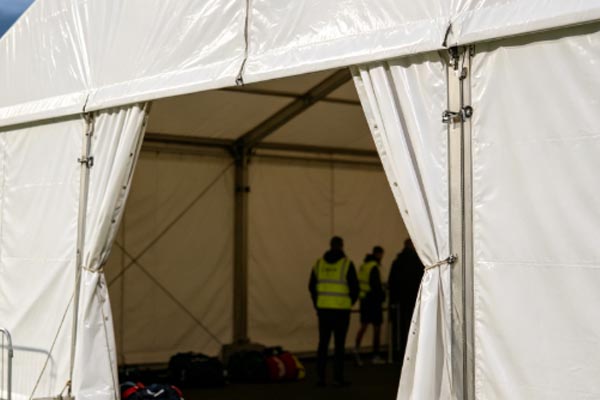
Sporting events are typically characterized by high personnel density, concentrated schedules, open venues, and strict emergency requirements. Ordinary sunshades or simple temporary facilities are often unable to meet the need for stable use.
Outdoor events can easily be affected by heavy rain, strong sunlight, high winds, and temperature drops. Tents therefore need to provide reliable protection and stability.
PVC tarpaulins are waterproof and light-blocking, helping reduce rainwater penetration and improve interior temperatures.
Proper tarpaulin tension, steel structures, and anchoring systems help improve wind resistance.
Sidewalls, door curtains, and connection points can be adjusted flexibly according to weather conditions.
In areas with frequent rainfall, special attention should be paid to drainage slopes, gutters, and downpipes.
Good weather adaptability helps maintain the normal operation of temporary event areas.
Large-scale events include multiple functional areas, each with different requirements for dimensions, layout, and facilities.
Spectator service areas require spacious aisles, service counters, and clearly marked entrances and exits.
Athlete rest areas should emphasize privacy, ventilation, and comfort.
Media work areas need space for tables, chairs, power supplies, and network equipment.
Medical stations should allow medical personnel to enter and exit easily while maintaining a clean environment.
VIP reception areas generally require a higher-quality appearance and decorative finish.
Check-in areas, referee areas, and volunteer service areas focus more on personnel flow and work efficiency.
Proper zoning can prevent overcrowding, disorganized traffic flow, and insufficient facilities.
Sporting event tents are used not only for shelter but also influence the overall appearance of the venue.
PVC tarpaulins can be customized in color and surface finish according to the event theme.
Event logos can be reserved on the roof, sidewalls, entrance headers, and barriers.
A consistent tent style helps create a unified on-site image.
Different functional areas can be distinguished through colors, entrance headers, and signage systems.
Smooth and clean tarpaulin surfaces can enhance the professional image of the event.
Only by combining appearance design with functional planning can tents provide both practical value and promotional benefits.
Site surveys and functional planning before installation are important factors in determining whether a project can be implemented smoothly. In addition to considering tent area, it is also necessary to coordinate personnel flow, equipment transportation, fire access, and emergency evacuation.
It is recommended to establish a functional list during the early planning stage before determining the number, specifications, and interior configurations of the tents.
Functional Area | Main Uses | Key Configurations | Design Considerations |
Spectator Service Area | Information, ticketing, storage, and rest | Service counters, seats, and signage | Aisle width and queue management |
Athlete Rest Area | Pre-event preparation and post-event rest | Seats, lockers, and drinking water equipment | Privacy and ventilation |
Media Work Area | Interviews, office work, and equipment use | Tables, chairs, power supplies, and network facilities | Equipment layout and a quiet environment |
Medical and First-Aid Area | First aid and temporary observation | Medical beds, medicine cabinets, and lighting | Quick access and emergency routes |
VIP Reception Area | Reception, rest, and communication | Carpets, furniture, and decorations | Appearance quality and comfort |
Referee and Staff Area | Event management and rest | Office desks and storage space | Distance from the competition area |
Equipment and Logistics Area | Material storage and equipment maintenance | Shelving, lighting, and ventilation | Waterproofing, security, and transport convenience |
Clarifying the purpose of each area before determining the tent structure and interior facilities can reduce later adjustments.
The site location affects tent stability, personnel movement, and subsequent maintenance, so on-site measurements should be conducted before installation. Check whether the ground is level and firm, confirm that there is no risk of water accumulation, avoid underground pipelines, drainage ditches, trees, and high-voltage facilities, reserve fire access, ambulance routes, and equipment transportation routes, avoid positioning tent entrances directly toward the prevailing wind direction, observe how surrounding buildings, stands, and advertising facilities affect lighting and ventilation, and select suitable anchoring methods according to whether the ground is grass, sand, asphalt, or concrete.
Large sporting event venues are often crowded, so the tent layout must prevent conflicts between entrances, exits, and service passages.
Spectator routes and staff routes should be separated whenever possible.
Medical tents should be located near major pedestrian areas without blocking main passages.
VIP and media areas should have relatively independent entrances and exits.
Exits must remain clearly visible in every tent, and no miscellaneous items should be stacked in these areas.
Large tents should have multiple evacuation directions.
Emergency lighting and clearly visible exit signs should be provided for nighttime use.
A well-designed traffic flow system can reduce congestion risks and facilitate the rapid evacuation of personnel in emergencies.
The actual performance of PVC tents depends not only on tarpaulin thickness but also on base fabric strength, coating quality, welding techniques, steel structure specifications, and anchoring methods.
Events may last for several days or weeks, or the tents may need to be reused. Materials should therefore be selected according to the service period and site environment.
Short-term events: Focus on installation efficiency, transport convenience, and basic waterproof performance.
Long-term events: Focus on weather resistance, tear resistance, and connection stability.
Hot regions: Pay attention to light blocking, heat insulation, and ventilation.
Rainy regions: Confirm waterproofing, seam sealing, and drainage design.
Coastal regions: Consider salt spray, humidity, and corrosion protection for metal components.
Windy sites: Increase tarpaulin strength and the wind-resistance rating of the steel structure.
Material specifications should be selected according to actual environmental conditions rather than simply pursuing greater thickness or weight.
Event tents are often equipped with lighting, audio systems, air conditioners, catering equipment, and electrical wiring, so flame retardancy and electrical safety require special attention.
Confirm that the tarpaulin has the required flame-retardant performance.
Arrange power cables properly to prevent friction against the tarpaulin.
Keep catering areas separated from rest areas and spectator areas.
Provide insulation and protection around heating equipment.
Open flames must not be used casually inside tents.
Keep equipment areas and passages clean to avoid obstructing evacuation.
Flame-retardant materials, standardized electrical installation, and reasonable zoning together form the basis of safety protection.
The larger the tent span, the more complex the wind and service loads it must withstand. The structure of a small tent cannot be applied directly to a large tent.
Small service tents can use lightweight frames for easy installation.
Medium-sized rest areas should reinforce columns, beams, and roof connections.
Large-span spectator areas should focus on checking overall structural stability.
If lights, signs, or display screens need to be suspended, load-bearing points should be designed in advance.
Tents that are frequently assembled and dismantled should use connection methods that are easy to inspect and replace.
Ground anchors should be selected according to geological conditions, such as ground stakes, expansion bolts, or ballast weights.
Structural design should balance safety, load-bearing capacity, transportation, and repeated use.
There are many people and pieces of equipment at large sporting events, so safety management should cover the entire process of design, construction, and use.
Check whether ground anchors, stakes, guy ropes, and ballast weights are secure.
Reinforce windward sides, corners, and door openings.
Ensure that tarpaulin tension is even and prevent sagging.
Check for areas where water may accumulate on the roof and ensure that gutters and downpipes remain clear.
Electrical equipment should be installed and inspected by qualified professionals, with waterproof protection provided for sockets, electrical boxes, and cables.
Fire-fighting equipment should be placed in clearly visible and easily accessible locations.
Evacuation routes must not be occupied by tables, chairs, boxes, or promotional materials.
When wind conditions reach the limits specified by safety management regulations, use should be suspended or the tents should be dismantled.
Only by combining structural safety, drainage, fire protection, and on-site management can event operation risks be reduced.
Standardized installation, maintenance, and procurement management can reduce on-site rework, shorten setup time, and minimize the impact on event preparation schedules and operating costs.
Before formal construction, confirm the drawings, materials, site conditions, and division of responsibilities. Check whether the tarpaulins, steel frames, and accessories are complete and undamaged, and arrange installation according to weather conditions. During installation, first secure the columns and foundations, then install the frame, tarpaulin, sidewalls, and interior facilities in sequence. At the same time, check structural stability, drainage, lighting, and equipment operation, and avoid forcibly pulling the tarpaulin.
PVC tents are not disposable products. During dismantling, first disconnect the power, remove equipment, and clear away miscellaneous items. Then remove the tarpaulin, connectors, steel frame, and anchoring devices in sequence. After dismantling, clean the tarpaulin with clean water and a soft brush, dry it thoroughly, and store it by area and accessory category. Apply rust protection to the steel structure and store it in a ventilated, dry place away from direct sunlight. At the same time, set up a restricted area to prevent unauthorized entry and reduce damage and accessory loss.
For events held repeatedly, it is recommended to record tent usage.
Record installation and dismantling dates.
Keep records of tarpaulin dimensions, structural drawings, and accessory lists.
Mark locations of damage, leakage, or deformation.
Record repairs, replacements, and cleaning.
Track the frequency of use of each area.
Optimize procurement and layout based on historical data.
Through recordkeeping and analysis, tent utilization can be improved and repeated investment reduced.
When purchasing, suppliers should be evaluated comprehensively based on their products, services, and project experience.
Confirm whether customization according to site dimensions is supported.
Learn about their processing capabilities for tarpaulins, door curtains, sidewalls, and transparent windows.
Verify the tarpaulin material, thickness, strength, and flame-retardant performance.
Inspect the quality of welding, edge wrapping, eyelets, and connection points.
Understand the production lead time, transportation, and on-site installation arrangements.
Ask about repair, replacement parts, and emergency services.
Compare the total costs of transportation, installation, dismantling, ballast, anchoring, drainage, cleaning, and maintenance.
Select a solution suitable for repeated use according to the event scale and service period.
Considering overall costs and the service cycle is generally more reliable than simply choosing the lowest quotation.
For temporary space construction at large-scale sporting events, tents must not only meet basic shelter requirements but also adapt to high pedestrian traffic, extended use, and changing weather conditions. Newstar Plastic Industry Co.,Ltd. provides PVC tarpaulins, PVC-coated materials, and customized processing services based on the actual purposes of different event areas. The company supports cutting, heat sealing, welding, edge wrapping, and localized reinforcement processes, making it convenient to build functional spaces such as spectator service areas, athlete rest areas, media offices, medical and first-aid areas, and VIP reception areas. These solutions help optimize on-site zoning, personnel flow, and the overall event service experience.
