
Hot Keywords:
- All
- Product Name
- Product Keyword
- Product Model
- Product Summary
- Product Description
- Multi Field Search
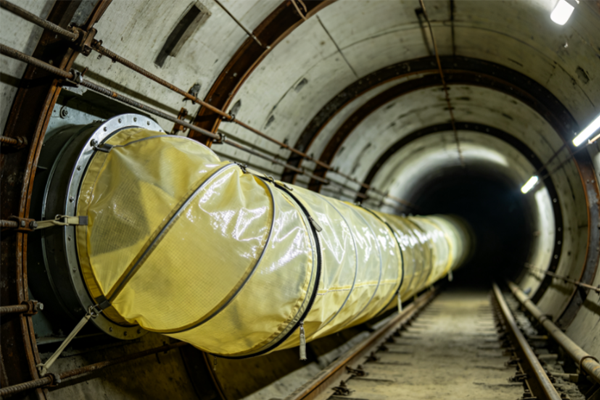
One of the biggest challenges in tunnel construction is solving underground ventilation problems. As excavation depth and tunnel length continue to increase, dust, equipment exhaust gases, and heat generated during construction can gradually accumulate. Without an efficient and stable ventilation system, not only will the working environment for construction workers be affected, but equipment performance and overall project progress may also be reduced. Many engineering projects prioritize ventilation planning during the early design stage. As an important component of tunnel ventilation systems, PVC ventilation ducts help continuously deliver fresh air to construction areas, improve working conditions, and provide reliable support for ventilation engineering.
Tunnel construction environments are very different from above-ground projects. Due to enclosed spaces and limited natural air exchange, dust and exhaust gases generated during construction are difficult to remove naturally. Especially during long-distance excavation, underground operations, and periods when multiple machines operate simultaneously, ventilation requirements become more demanding. Therefore, developing a proper ventilation plan and selecting suitable ventilation equipment and PVC ducts are essential for ensuring smooth project progress.
As tunnels continue to extend, the distance between the tunnel entrance and the working face becomes longer, making it difficult for fresh air to reach deep construction areas quickly. Without proper ventilation design, air quality near the excavation face can deteriorate significantly.
Fresh air cannot be delivered to the working area in time;
Underground temperatures may rise;
Workers may experience fatigue more easily;
Construction efficiency may be affected.
By connecting PVC ventilation ducts with ventilation fans, fresh air can be delivered directly to designated areas, reducing ventilation pressure caused by increasing tunnel length.
For large tunnel projects, ventilation is not simply about installing equipment. It requires proper planning based on tunnel length, workforce size, and equipment operation conditions. Stable air supply helps create a more comfortable working environment and supports continuous project progress.
Tunnel excavation, blasting, concrete work, and other construction activities generate large amounts of dust. At the same time, diesel-powered equipment releases exhaust gases. If air circulation is insufficient, these pollutants can remain inside the tunnel.
Reduce dust concentration in the air;
Speed up exhaust gas removal;
Improve the working environment for construction workers;
Reduce the impact of poor air conditions on operations.
Proper use of PVC ventilation ducts helps create effective air circulation, allowing polluted air to be removed faster and improving underground air quality.
Tunnel construction is not a fixed process. From excavation and support work to later equipment installation, each stage has different ventilation requirements. If the ventilation system cannot be adjusted flexibly, some areas may experience insufficient airflow.
Excavation stages require stronger dust control;
Equipment-intensive stages require better air exchange;
Later construction stages require continuous ventilation.
Therefore, choosing PVC ventilation ducts that are easy to adjust and install allows the ventilation system to better adapt to changing construction conditions.
Tunnel ventilation systems usually need to operate for long periods. Ventilation ducts must not only transport air but also withstand challenging construction conditions such as humidity, dust, friction, and frequent movement. Therefore, the choice of duct material directly affects ventilation efficiency and maintenance costs. PVC ventilation ducts are widely used in tunnels, mines, and underground engineering projects due to their lightweight structure, convenient installation, and good durability.
Underground construction conditions change frequently, and ventilation ducts often need to be extended as excavation progresses. If the material lacks stability, overall air supply performance may be affected.
Provide good wear resistance;
Suitable for long-term construction use;
Easy to install and adjust on site;
Reduce frequent replacement needs.
Compared with traditional ventilation materials, PVC ventilation ducts are more suitable for projects requiring continuous air supply and can help construction companies reduce maintenance pressure.
In practical applications, ventilation ducts must consider not only airflow performance but also transportation, installation, and adjustment convenience. PVC materials meet the flexibility requirements of construction sites.
Different tunnel projects have different requirements for airflow distance and ventilation capacity. Proper selection of duct specifications and layout planning based on actual conditions can maximize system performance.
Application Scenario | Construction Challenge | PVC Ventilation Duct Solution |
Long-distance tunnel excavation | Difficult to deliver air to deep areas | Extend duct layout to increase ventilation coverage |
Blasting construction areas | Concentrated dust and exhaust gases | Improve airflow circulation and working conditions |
Underground equipment areas | Continuous heat accumulation | Provide stable air exchange |
Temporary construction areas | Frequent location changes | Easy movement and reinstallation |
Multi-operation construction sites | Different ventilation requirements | Flexible ventilation route adjustment |
In actual construction projects, ventilation systems need continuous optimization as work progresses. PVC ventilation ducts provide good adaptability and help projects adjust layouts according to different construction stages.
For long tunnel projects, complicated duct installation can increase management challenges. PVC ventilation ducts are relatively flexible and easier to handle on site.
Faster installation process;
Easier removal and adjustment;
More convenient repair and replacement;
Reduced construction interruptions.
For tunnel projects requiring continuous operation, an easy-to-maintain ventilation system helps reduce unnecessary delays and ensures smoother construction.
When selecting tunnel ventilation ducts, companies should not focus only on product price. The tunnel length, construction environment, and service period should also be considered. Different projects have different requirements for duct diameter, material performance, and installation methods. Poor selection during the planning stage may lead to insufficient airflow and reduced service life.
Tunnel length, number of workers, and equipment quantity all influence ventilation requirements. If the duct size is too small, it may not provide sufficient airflow.
Design according to tunnel length;
Match ventilation fan capacity;
Consider future tunnel extension.
Proper duct selection improves air delivery efficiency and prevents excessive operating pressure on the ventilation system.
Tunnel construction environments are complex, and ducts may be affected by equipment impact, ground friction, and long-term operation.
Check tensile strength;
Pay attention to connection durability;
Prevent damage during construction.
Durable PVC ventilation ducts reduce replacement frequency and improve long-term value.
Even with suitable ducts, improper installation locations can reduce ventilation performance.
Avoid blocking construction passages;
Ensure proper airflow direction;
Regularly inspect operating conditions;
Adjust according to construction progress.
Scientific installation improves air coverage and allows the ventilation system to operate more effectively.
A complete tunnel ventilation system requires proper product selection, installation planning, and regular maintenance. Many engineering issues do not come from a single piece of equipment but from insufficient planning during long-term construction. Therefore, ventilation solutions should be designed from the perspective of the entire construction cycle to ensure the system continues meeting project requirements.
Proper planning before construction begins can reduce later adjustments.
Design duct locations according to construction routes;
Reserve space for future extension;
Adjust according to construction stages.
Early planning improves construction organization and ensures more stable ventilation operation.
Different engineering environments require different ventilation solutions.
Small projects focus on installation flexibility;
Large projects require stable supply;
Long-term projects focus on product durability.
Choosing suitable PVC ventilation ducts helps reduce future management issues.
During long-term operation, ventilation systems require regular inspections to prevent small issues from affecting overall performance.
Check whether ducts are damaged;
Inspect whether connections are loose;
Handle abnormal conditions promptly.
Good maintenance practices extend duct service life and improve ventilation stability at construction sites.
Tunnel construction ventilation PVC duct solutions help engineering projects improve underground air conditions, enhance construction safety, and increase operational efficiency. Whether for long-distance tunnels, underground projects, or other ventilation engineering applications, choosing suitable PVC and Canvas ventilation products can provide more reliable air delivery solutions for construction sites. NEWSTAR PLASTIC INDUSTRY CO.,LTD. provides high-quality PVC and Canvas material products, offering professional solutions for ventilation engineering, construction projects, and industrial protection applications.
