
Hot Keywords:
- All
- Product Name
- Product Keyword
- Product Model
- Product Summary
- Product Description
- Multi Field Search
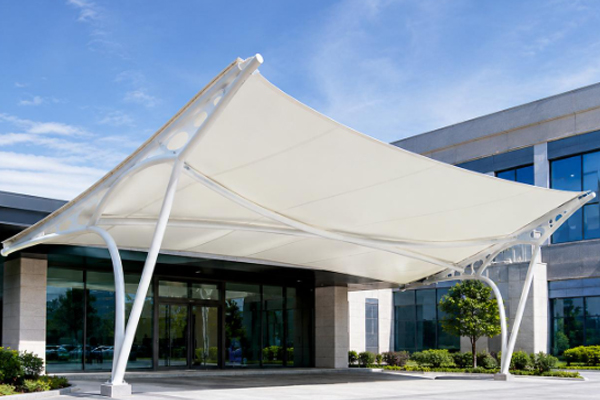
PVC tarpaulins are widely used for outdoor covering, cargo transportation, warehouse protection, industrial isolation, construction projects, and temporary structures. While the main body of a tarpaulin provides protection against water, sunlight, wind, and abrasion, the edge area often determines whether the product is easy to secure, resistant to tearing, and durable during long-term use. A properly designed PVC tarpaulin edge can create a stronger connection with ropes, fasteners, support frames, hooks, and other accessories while reducing damage caused by concentrated tension. Common edge designs include reinforced hems, metal eyelets, webbing reinforcement, rope loops, and customized connection edges. Selecting the appropriate edge structure according to the tarpaulin size, installation method, load conditions, and working environment can improve durability while making installation and removal more convenient.
A reinforced hem is one of the most common structures used around the edges of PVC tarpaulins. During production, the edge of the fabric can be folded and then processed through high-frequency welding, heat sealing, or another secure joining method to create a thicker and stronger protective area. The reinforced edge helps reduce fraying, curling, and localized damage. When the tarpaulin is subjected to continuous tension, the reinforced hem can also reduce the direct concentration of stress on the main PVC fabric.
For large PVC tarpaulins, the width of the hem should be designed according to the actual product dimensions. If the tarpaulin needs to be rolled and unfolded frequently, an excessively thick edge may affect folding and storage. For products used for long-term cargo coverage or large outdoor structures, additional reinforcement can be introduced to improve edge tensile performance. The hem can also be manufactured in a color matching the main tarpaulin or in a contrasting color to make the edge easier for workers to identify during installation.
Metal eyelets provide clearly defined fastening points for PVC tarpaulins and are suitable for installation with ropes, bungee cords, hooks, straps, and other connection accessories. Eyelets are normally distributed around the perimeter of the tarpaulin at specific intervals, allowing the fastening force to be distributed more evenly. For large tarpaulins, too few eyelets may cause excessive tension at individual points, while excessive eyelet density can increase manufacturing costs. The spacing should therefore be selected according to the tarpaulin size and installation requirements.
Common eyelet designs include:
Standard metal eyelets: Suitable for general covering, rain protection, and cargo protection applications with simple installation requirements.
Heavy-duty eyelets: Designed for environments exposed to stronger wind or applications requiring frequent fastening and removal.
Reinforced washer eyelets: Additional reinforcement around the eyelet can enlarge the load-bearing area and reduce the risk of localized tearing.
Large-diameter eyelets: Suitable for thick ropes, hooks, or fastening straps and commonly used on large industrial tarpaulins.
Customized eyelet spacing: Eyelet positions can be manufactured according to frame dimensions or installation structures for better compatibility.
Eyelets alone do not determine the fastening performance of a tarpaulin. The thickness of the PVC material around the eyelet, reinforcement layers, and hem construction also need to work together. A properly integrated design can improve stability during long-term use.
For PVC tarpaulins that need to withstand higher tensile forces, high-strength webbing can be incorporated into the edge structure. Webbing helps distribute the tension generated by ropes, fasteners, and fixing devices, preventing excessive stress from being concentrated in a single area of the PVC coating. Large transport tarpaulins, truck covers, warehouse covers, and construction tarpaulins may experience significant tension around their edges, particularly under windy conditions. Adding reinforcement webbing can improve structural stability.
The webbing can be concealed inside the hem or installed as an exposed reinforcement layer. A concealed structure provides a cleaner appearance and can reduce direct exposure of the webbing to sunlight and rain. An exposed webbing structure makes wear easier to inspect and can be combined with D-rings, loops, and other connection components. During manufacturing, the bonding or welding strength between the webbing and PVC base material must also be properly controlled to prevent separation after repeated stretching.
For PVC tarpaulins installed on vehicles or large frames, additional webbing reinforcement can be placed around key fastening positions. This improves the load-bearing capacity of connection points without unnecessarily increasing the material across the entire tarpaulin, helping control both product weight and manufacturing costs.
For PVC tarpaulins that require frequent installation and removal, rope loops, D-rings, straps, and similar edge structures can provide greater flexibility. Rope loops allow fixing ropes to pass continuously along the edge, while D-rings can be used with bungee cords, hooks, or straps. Connection straps can be customized according to frame positions, allowing the tarpaulin to connect securely with different types of supporting structures.
A combined design can be used for specific applications. For example, a continuous rope loop can be installed along the long edges, while reinforced webbing and D-rings can be added at the corners. This allows the central portion of the tarpaulin to remain evenly secured while providing stronger connection points at the corners. For tarpaulins that need to be opened frequently, quick-release straps can also be added so operators can open part of the cover without removing every fastening point.
The edge connection structure should also consider the flatness of the tarpaulin after installation. If fastening points are poorly distributed, local wrinkles may appear and create low areas where rainwater can accumulate. Properly spacing the fastening points and adjusting the edge structure according to the tarpaulin dimensions can help maintain a flatter covering surface.
Different applications require different PVC tarpaulin edge structures. A standard cargo cover may focus on eyelet spacing and fastening convenience, while a large warehouse tarpaulin may require greater attention to load distribution, wind resistance, and long-term installation stability. Truck tarpaulins are often removed and installed repeatedly, so their edges should be designed for efficient handling. Construction tarpaulins may need to connect with scaffolding, temporary barriers, or structural frames, making it important to determine connection positions and accessory specifications in advance.
For high-frequency applications, reinforced hems, heavy-duty webbing, and metal fastening components can be combined to improve abrasion resistance and tensile strength around the edges. For short-term covering applications, a simpler combination of hems and eyelets may be sufficient, helping control the overall product cost while meeting basic fastening requirements. For oversized PVC tarpaulins, additional intermediate fastening points can be incorporated according to the installation span to prevent excessive tension from being concentrated around the outer perimeter.
When designing customized PVC tarpaulins, manufacturers should also consider whether the edge structure can prevent water accumulation, whether the tarpaulin can be folded conveniently, how easily it can be stored during transportation, and whether connection points can remain stable after long-term exposure to ultraviolet radiation, rain, and dust. By combining suitable materials, structural designs, and processing techniques, PVC tarpaulin edges can be better adapted to specific operating conditions.
PVC tarpaulin edge design affects more than appearance. It directly influences fastening performance, service life, installation convenience, and overall durability. Reinforced hems, metal eyelets, webbing, rope loops, D-rings, and customized connection structures can be combined according to specific requirements. For PVC tarpaulin manufacturers and suppliers, edge processing methods, fastening intervals, and application environments should be considered together with the tarpaulin dimensions and material selection. A well-designed edge structure allows PVC tarpaulins to maintain stable performance during transportation, storage, covering, and outdoor protection while providing users with easier installation and reliable long-term service.
