
Hot Keywords:
- All
- Product Name
- Product Keyword
- Product Model
- Product Summary
- Product Description
- Multi Field Search

PVC tarpaulin is used not only for rain protection, sun protection, and cargo covering, but also for custom graphics based on brand display, advertising, and product identification needs. Different printing methods vary in graphic complexity, order quantity, color performance, and outdoor durability. Choosing the right process helps balance visual quality with practical use.
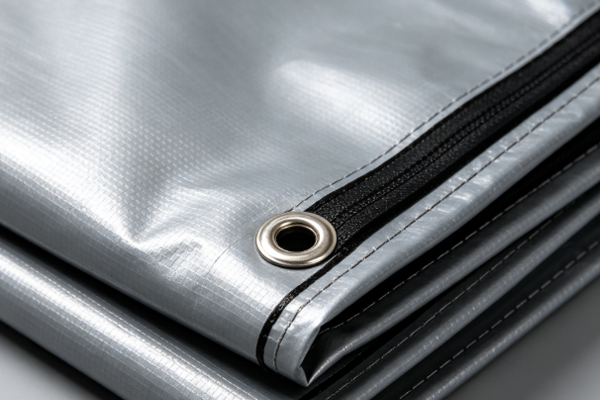
The printing method for PVC tarpaulin should be selected according to the material surface, graphic design, and order quantity. Common options mainly include screen printing, digital printing, and UV digital printing.
Screen printing is suitable for highly repetitive logos and simple graphics and is practical for batch customization of PVC tarpaulin.
Suitable for company logos, text, numbers, and simple graphics.
Single-color or limited spot-color designs are easier to control.
It offers good production efficiency for repeated designs.
It is practical for durable products such as truck tarpaulins and industrial covers.
This process is more suitable for relatively simple designs and larger orders.
Digital printing can output graphics directly from electronic files. It is suitable for gradients, photos, multi-color graphics, and complex designs, while also making small-batch customization and different versions easier. Advertising tarpaulins, event backdrops, and brand display products are well suited to this method. The more complex the design, the greater the flexibility of digital printing.
UV digital printing is a digital inkjet process that uses UV-cured ink to form graphics. It provides good detail reproduction and supports fast production. In actual production, ink adhesion to the PVC surface still needs to be confirmed.
Suitable for small text, complex logos, and multi-color graphics.
Fast curing after printing makes it convenient for sample production.
Adhesion to different PVC coatings should be tested in advance.
For frequently folded tarpaulins, the flexibility of the ink layer also needs attention.
UV digital printing is suitable for projects requiring fine graphics and small-batch customization.
After selecting the printing method, the material itself and subsequent processing can also affect the finished result. The equipment and ink type are not the only factors to consider.
Image clarity and color reproduction are related to the flatness and base color of the tarpaulin surface as well as the printing equipment settings.
White or specially printable materials generally help with color reproduction.
Glossy and matte surfaces can create different visual effects.
High-resolution graphics require suitable printing resolution.
Large graphics also require consistent colors between different batches.
For large-area tarpaulin printing, color stability and overall image quality are equally important.
PVC tarpaulin is often rolled, folded, transported, and used outdoors. Ink adhesion directly affects the condition of the printed graphics during use.
The ink needs to bond well with the PVC coating.
Areas subject to frequent friction should be checked for wear resistance.
Outdoor applications also require attention to water and weather resistance.
The printed material should be dried or cured according to the process requirements.
The material, ink, and printing parameters need to be properly matched as a whole.
The surface treatment of PVC tarpaulin can change how the ink contacts the material, so the same printing method may produce different results on different materials.
Glossy materials usually provide more noticeable color presentation.
Matte materials can reduce some visual interference caused by reflections.
Special coatings require confirmation of ink compatibility.
Actual material sampling is recommended before mass production.
Confirming the specific PVC surface condition before printing can reduce the risk of rework after mass production.
During purchasing, the purpose of the graphics and the working environment of the tarpaulin are often more important than simply comparing printing equipment.
Truck tarpaulins are exposed to stretching, folding, friction, and sunlight for long periods. Printed graphics need to match the way the tarpaulin is used.
Company logos and text can prioritize screen printing.
Multi-color brand graphics can use digital printing based on design complexity.
Large repeated logos require attention to production efficiency and overall cost.
Graphic placement should be planned in advance for products such as truck side curtains.
The key for truck tarpaulin printing is combining graphic durability with material performance.
Event tents, exhibition tarpaulins, and promotional tarpaulins are often used for brand display and require higher graphic detail and color quality. Complex graphics are suitable for digital printing, while brand logos and simple text can use screen printing. Large color backgrounds require attention to graphic alignment at seams. Long-term outdoor use also requires consideration of weather resistance. Display tarpaulins need to balance visual quality with outdoor conditions.
Engineering covers and equipment protection tarpaulins usually have simple printed content, mainly for identification, warnings, or brand marking.
Simple text and logos can use screen printing.
Small customized orders can consider digital printing.
Warning information needs to remain clearly visible from a distance.
Printing positions should not interfere with subsequent cutting, welding, or installation.
For engineering applications, practical graphic functions should take priority over complex visual effects.
When entering the purchasing stage, printing requirements and tarpaulin specifications should be confirmed together. This makes it easier to control finished-product quality and order costs.
Different PVC coatings and surface treatments may have different printing compatibility. Clear material requirements should be provided before purchasing.
Confirm the weight, thickness, and width.
Confirm glossy, matte, or other surface treatments.
Confirm graphic size, number of colors, and printing position.
Confirm the application environment and outdoor exposure time.
Once the material specifications are confirmed, the printing process can be matched more appropriately.
Printing costs should not be judged only by the processing cost per square meter. Plate making, plate changes, graphic quantity, and production efficiency should also be considered.
Screen printing is suitable for large-volume production of repeated graphics.
Digital printing is suitable for orders with frequent graphic changes.
UV digital printing is suitable for some high-detail and small-batch requirements.
Mixed orders with multiple graphics require a new calculation of overall costs.
Considering order quantity and graphic complexity together provides a more useful basis for process selection.
Actual samples can help identify issues with color, adhesion, clarity, and graphic changes after folding before mass production.
Check whether the colors meet the approved sample requirements.
Check the clarity of small text and logo edges.
Test the tarpaulin through folding, stretching, and rubbing.
Outdoor products can also be checked for weather resistance.
Confirming the sample before mass production can reduce the risk of obvious color differences and printing defects in the final order.
PVC tarpaulin printing is not simply about choosing one type of equipment. Screen printing is more practical for simple logos and repeated graphics, while digital printing can be considered for complex color graphics and small-batch customization. UV digital printing is suitable for some projects requiring fine details and fast curing. Newstar Plastic Industry Co.,Ltd. can provide customized solutions based on PVC tarpaulin specifications, printing requirements, and application scenarios.
