
Hot Keywords:
- All
- Product Name
- Product Keyword
- Product Model
- Product Summary
- Product Description
- Multi Field Search

Large tarpaulins are usually characterized by their large surface area, relatively high weight, and large volume after folding. They are commonly used for truck transportation, vessel covering, construction, warehouse covering, large equipment protection, and rain protection for outdoor cargo. Compared with ordinary small-sized tarpaulins, large PVC tarpaulins require more attention to folding methods, handling methods, packaging protection, and storage conditions during transportation and storage. If the tarpaulin is not properly organized before transportation, obvious creases may form during folding or rolling. If rainwater, sand, or oil remains on the surface during storage, the material surface may be affected after long-term storage.
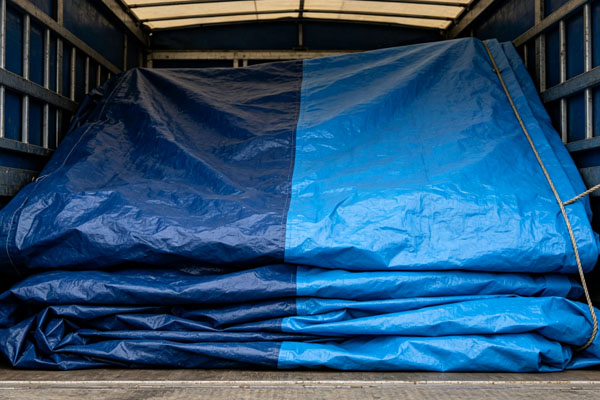
After use, large tarpaulins should not be dragged directly, randomly crumpled into a ball, or stored in a damp condition for a long period. In particular, for tarpaulins that have undergone heat-sealed splicing, edge hemming, and eyelet installation, the edges and seams should be protected from excessive compression. During transportation, sharp objects should be prevented from puncturing the tarpaulin, and long-term exposure to high temperatures, rainwater, or chemicals should also be avoided. Proper transportation and storage methods can not only reduce surface wear but also help maintain a flat surface for subsequent unfolding and installation, making large tarpaulins easier to reuse.
Before transporting a large tarpaulin, check whether there is standing water, mud, gravel, oil, or other debris on the surface. If the tarpaulin has just been used outdoors, it is recommended to clean it first and then dry it according to the material condition. For PVC tarpaulins in particular, sharp particles remaining on the surface may cause friction against the material during folding and rolling. If the tarpaulin has already been damaged, it should also be inspected before transportation to prevent small tears from expanding during handling.
Large tarpaulins have a large surface area when unfolded, making them difficult for one person to handle. If they are dragged directly across the ground, the bottom surface may easily rub against concrete, gravel, or metal edges.
Use several people to assist with handling whenever possible to reduce pulling at a single point.
Use pallets, packing straps, or suitable handling tools to assist with movement.
Avoid allowing eyelets, D-rings, and reinforcing rib areas to bear excessive tension directly.
Check the loading platform for sharp protrusions before loading.
For very large tarpaulins, rolling is generally easier to handle and can also reduce friction between a large area of material and the ground.
Large tarpaulins can be folded or rolled depending on their actual size and transportation conditions. For large and thick PVC tarpaulins, repeated small folds may create noticeable creases at the folding points, so larger folds or rolling can be used. During rolling, the fabric surface should be kept as flat as possible, and structures such as fasteners and rope loops should not be rolled into areas that will be heavily compressed. The roll diameter should not be too small to avoid excessive bending of the material. For tarpaulins that need to be folded for transportation, the long and short sides can first be folded to a reasonable width and then secured with packing straps. Do not simply crumple the entire tarpaulin into an irregular bundle.
During transportation, packaging materials should provide a certain level of protection against dust, moisture, and friction. After a large tarpaulin is rolled, it can be wrapped with protective film, woven bags, or other suitable packaging materials. If the tarpaulin needs to be transported over a long distance, the packaging should also be checked to ensure that it is secure. Vehicles generate vibration during transportation. If the packaging becomes loose, the tarpaulin may move, causing its edges and fasteners to rub against other cargo. For extra-large tarpaulins made from multiple heat-sealed sections, the seams should also be protected from being compressed by heavy objects for long periods during packaging.
One important step before storing a tarpaulin is to make sure that the material is completely dry. If a damp tarpaulin is folded and sealed for long-term storage, it may develop an odor and the surface condition may also be affected. If the tarpaulin has been exposed to rain, it can be unfolded or hung after use so that the moisture can fully evaporate. Do not place a visibly damp tarpaulin directly into a bag for long-term storage. If there is sand or mud on the surface, clean it first before storage to prevent particles from continuously rubbing against the material while it is folded.
The storage area for large PVC tarpaulins should be kept as dry and well ventilated as possible, while long-term exposure to direct sunlight should be avoided. High temperatures may affect the performance of some tarpaulin materials, while prolonged exposure to sunlight may accelerate surface aging.
The storage location should also be kept away from:
Sharp metal objects and wood splinters.
Oils, solvents, and chemicals that may damage the tarpaulin.
Areas with long-term standing water.
High-temperature heat sources and open flames.
If shelves or pallets are used for storage, make sure the supporting surface is flat and avoid keeping the tarpaulin pressed against sharp points for long periods.
Large tarpaulins are relatively heavy themselves. If they are also subjected to pressure from other cargo for a long time, the folded areas and fastener locations may become deformed. Therefore, the tarpaulin can be stored separately or placed above other cargo, while sharp objects should not be placed directly on its surface. If the tarpaulin has many metal fasteners installed, pay attention to the stacking order to prevent the fasteners from pressing against each other and scratching the surface.
Both methods can be used, depending on the tarpaulin size, thickness, and available transportation space. For thicker or larger PVC tarpaulins, rolling can be considered first to reduce repeated small folds. If transportation space is limited, the tarpaulin can also be folded using larger fold widths.
It is not recommended. Long-term sealed storage in a damp condition may cause odors and changes in the material surface condition. After use, the tarpaulin should be cleaned and thoroughly dried before folding or rolling.
It can be placed temporarily for a short period, but the ground should be clean and flat. For long-term storage, pallets, shelves, or other support structures are recommended to prevent prolonged contact with gravel, standing water, and sharp objects.
Heavy or sharp cargo should not be placed directly on the tarpaulin. Heavy objects may keep the tarpaulin under pressure for a long time, while sharp edges may cause scratches, punctures, or local deformation.
When transporting and storing large tarpaulins, the main focus should be on protecting the material surface, edges, seams, eyelets, and reinforced areas. Before transportation, remove sand, mud, and other debris, check the tarpaulin for obvious damage, and choose an appropriate folding or rolling method according to the material thickness and size. During handling, dragging should be minimized. In particular, large PVC tarpaulins should not be moved long distances directly across rough ground. After use, the tarpaulin should be thoroughly dried, and damp material should not be sealed for storage. The storage area should be dry and well ventilated, while exposure to direct sunlight, high temperatures, oils, and sharp objects should be minimized. The tarpaulin can be placed on pallets or shelves to reduce direct contact with the ground, while other heavy objects should not be left pressing on the material surface for long periods.
For large tarpaulins made with heat-sealed seams, the spliced areas also require special protection. During folding or rolling, the seams should not remain under severe bending or concentrated pressure for long periods. For tarpaulins with eyelets, D-rings, and reinforcing ribs, these structures should be prevented from pressing against each other. Following the sequence of cleaning, drying, organizing, packaging, and storage after use can help large tarpaulins remain in good condition and reduce problems such as sticking, deformation, and damage during subsequent installation.
