
Hot Keywords:
- All
- Product Name
- Product Keyword
- Product Model
- Product Summary
- Product Description
- Multi Field Search

A practical PVC tarpaulin is more than a sheet of waterproof fabric used to cover cargo or equipment. It needs to be designed according to real working conditions, including material selection, structural configuration, dimensions, fastening methods, and operating procedures. Tarpaulins used in logistics transportation need to withstand wind, vibration, and movement during vehicle operation, while agricultural tarpaulins need to handle long-term exposure to sunlight and rain. Industrial equipment covers may need to provide dustproof and moisture-resistant protection while still allowing convenient access for inspection and maintenance. Because applications vary, practical tarpaulin design should create a suitable balance between protection, operating efficiency, durability, and maintenance convenience.
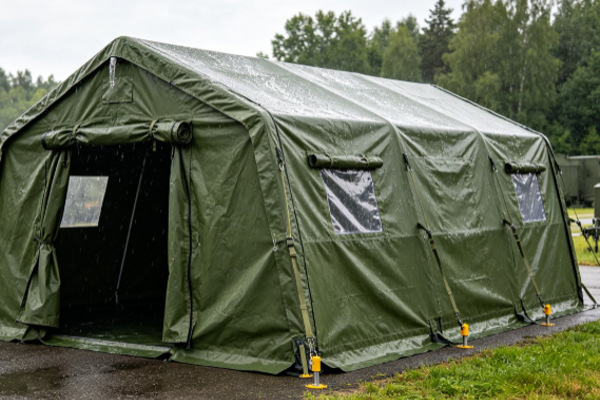
Tarpaulin dimensions directly affect coverage performance and installation difficulty. A practical design should not simply follow the surface dimensions of the object being covered. It should also consider edge fastening, overlapping areas, tension, and drainage space. If the tarpaulin is too small, exposed areas may remain around the edges, allowing rain, dust, and sunlight to enter. If it is too large, the additional weight, storage difficulty, and wind resistance may increase. Therefore, PVC tarpaulin dimensions should be planned according to the actual size of the cargo, vehicle, equipment, or supporting structure.
Structural design should also match the actual operating process. Regular cargo can generally use rectangular tarpaulin structures, which are convenient to unfold, fold, and transport. Vehicles, machinery, and equipment with irregular shapes may require custom cutting, curved edges, or localized openings to improve the fit between the tarpaulin and the covered object. For large tarpaulins, reinforced straps and additional fastening points can be added according to expected load conditions, helping distribute tension more evenly. A well-designed structure can reduce repeated adjustments during installation while keeping the tarpaulin surface relatively smooth and stable.
Practical tarpaulins may need to withstand repeated unfolding, folding, stretching, and fastening, making the basic performance of PVC fabric particularly important. Different applications require different material specifications, including suitable fabric thickness, base fabric construction, and PVC coating. Logistics transportation requires good tensile and abrasion resistance, outdoor applications require reliable weather resistance, while equipment protection may require a combination of waterproof, dustproof, and long-term covering performance. Choosing suitable PVC fabric can help reduce cracking, abrasion, and performance deterioration during regular use.
Manufacturing processes also have a direct influence on product durability. Edge binding can reinforce the perimeter of the tarpaulin, while reinforced areas around eyelets can reduce stress concentration. Suitable heat-welding or sewing processes can improve the strength and sealing performance of joints. For areas that frequently contact the ground, vehicles, or equipment, additional abrasion-resistant structures can be incorporated to reduce damage caused by friction.
Material weight should also be considered in practical design. Although a heavier tarpaulin may provide greater mechanical strength, excessive weight can make installation, transportation, and storage more difficult. A suitable PVC fabric solution should achieve a reasonable balance between strength, flexibility, and weight so that workers can handle the product efficiently in real working environments.
Tarpaulins often need to be installed, adjusted, removed, and reused during daily operations. Therefore, operating convenience is an important part of practical design. If the fastening system is overly complicated, installation time can increase and workers may accidentally damage the fabric during operation. A suitable connection system should make fastening procedures clear and efficient while providing sufficient stability after installation.
Common convenient design features include:
Properly distributed fastening holes: Hole positions should be arranged according to tarpaulin dimensions and expected loads so that tension is distributed more evenly and excessive stress is avoided in individual areas.
High-strength rings: Reinforced rings can be used with ropes, hooks, or elastic straps for quick and reliable fastening.
Quick-connect accessories: Tarpaulins that are frequently opened and closed can use buckles, quick-release fasteners, or other convenient connection systems.
Handling straps: Large tarpaulins can include lifting or handling straps to make installation and transportation easier for multiple workers.
Practical opening sections: Tarpaulins used for warehouses, equipment maintenance, and temporary spaces can include zippers or opening structures, reducing the need to remove the entire cover.
Fastening systems should not be designed only for installation speed. The operating environment must also be considered. Outdoor tarpaulins require corrosion-resistant and durable connection components, vehicle tarpaulins need to handle continuous vibration during transportation, while warehouse covers may place greater emphasis on opening and closing efficiency. Matching the fastening system with the actual workflow can significantly reduce unnecessary operating steps.
Water resistance is one of the key functions of PVC tarpaulins, but practical design should not rely solely on the waterproof performance of the material surface. The installed shape, seam locations, and drainage paths can also influence actual protection. If a tarpaulin surface contains obvious low points, rainwater may accumulate in specific areas. Long-term water accumulation can increase the load on both the fabric and supporting structure. Therefore, large tarpaulins should be designed with suitable slopes and tension according to the site structure.
For long-term outdoor applications, proper surface tension and support structures can guide rainwater toward the edges and away from protected areas. Seam locations should preferably avoid areas where water is likely to accumulate, while suitable sealing processes should be used to reduce the possibility of water penetration. Vehicle covers, warehouse tarpaulins, and equipment covers can also incorporate drainage areas according to their specific structures, helping prevent rainwater from entering through connection points.
Some applications also require better control of internal moisture and heat. Agricultural storage, outdoor equipment protection, and temporary workspaces may use ventilation openings, observation windows, or adjustable openings according to actual requirements. Ventilation structures should be coordinated with rain protection so that improved airflow does not unnecessarily weaken the overall shielding effect. Proper integration of waterproofing, drainage, and ventilation can help PVC tarpaulins maintain stable performance under changing weather conditions.
A truly practical tarpaulin should not only provide protection after installation. It should also be easy to clean, inspect, repair, and store. PVC tarpaulins used in transportation and outdoor environments may frequently come into contact with dust, mud, moisture, and oil. Therefore, the surface should ideally be easy to clean. Edges, seams, eyelets, and high-friction areas should also be inspected regularly so that wear or loose components can be identified at an early stage.
When selecting or customizing practical PVC tarpaulins, the following design features can be considered:
Easy cleaning: PVC fabric with a relatively smooth surface can reduce the accumulation of dirt and simplify routine cleaning.
Easy inspection: Eyelets, seams, and reinforced areas should remain accessible and visible so that early signs of damage can be identified.
Easy repair: High-wear areas can be reinforced in advance, making localized repairs easier if damage occurs.
Easy folding: Dimensions and structural design should allow the tarpaulin to be folded in a consistent manner, reducing excessive creasing and compression during storage.
Easy storage: Storage bags, fastening straps, or roll-up systems can be selected according to product dimensions to reduce storage space requirements.
Easy reuse: Connection components and edge structures should have sufficient durability to withstand repeated installation and removal.
The key to practical tarpaulin design is not adding as many functions as possible, but ensuring that the materials, structure, and accessories genuinely support the user's daily operations. Suitable dimensions can improve coverage, durable PVC fabric can extend service life, reinforced edges and fastening systems can improve stability, convenient connection methods can reduce installation time, while drainage, ventilation, cleaning, and storage features can improve the long-term user experience.
For PVC tarpaulin suppliers, customized solutions can be developed according to the customer's application environment, covered objects, usage frequency, and maintenance requirements. Such solutions can be applied to logistics transportation, agricultural production, industrial equipment protection, warehouse covering, and outdoor facilities. By combining practicality with durability, PVC tarpaulins can maintain reliable protective performance during repeated use while providing users with a more efficient, convenient, and dependable covering solution.
