
Hot Keywords:
- All
- Product Name
- Product Keyword
- Product Model
- Product Summary
- Product Description
- Multi Field Search
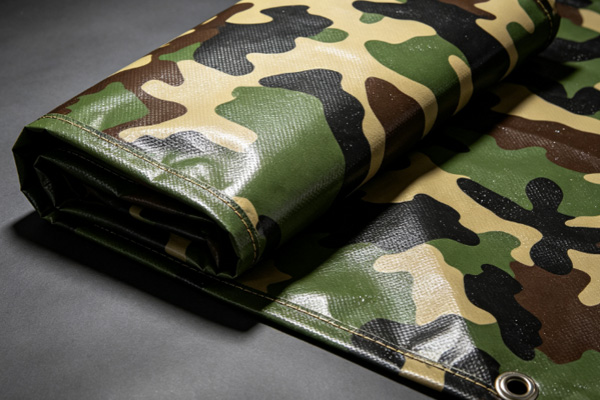
Many people think a camouflage tarp is simply a regular tarp printed with a camouflage pattern. In reality, there is more to it when the tarp is used outdoors. The camouflage pattern is mainly about appearance, while the material, fabric structure, thickness, waterproof performance, and manufacturing process have a much bigger impact on actual use. Camouflage tarps are now used for vehicle covers, camping, agricultural work, equipment protection, and other outdoor applications. Before choosing one, it helps to understand what a camouflage tarp actually is.
A camo tarp is not a specific material. The term generally refers to a tarp featuring a camo pattern, while the actual material can vary between products. For outdoor use, PVC and Canvas are two common options.
PVC camo tarps: Usually made with a fabric base and PVC coating, offering good waterproofing, abrasion resistance, and outdoor durability.
Canvas camo tarps: Made from woven fabric, with a more natural feel and better breathability, making them suitable for applications where fabric texture is preferred.
Other constructions: Some products use different fabrics or surface treatments to meet specific requirements for strength, weather resistance, or durability.
So, simply seeing the words “camo tarp” does not tell you everything about its performance. Camo describes the appearance, while PVC or Canvas largely determines the basic properties of the tarp.
When a camo tarp is actually put to work outdoors, appearance is not the main concern. What really matters is whether it can handle rain, sunlight, friction, and repeated pulling. These conditions can gradually affect the tarp, especially when it is installed outdoors for long periods.
Natural outdoor appearance: Camouflage patterns can blend better into woodland, camping areas, farms, and other outdoor environments.
Protective coverage: A suitable tarp can help reduce direct exposure to rain, dust, and sunlight.
Easy fastening and reuse: Grommets, reinforced edges, and ropes can be used to secure tarps to vehicles, equipment, or temporary structures.
Custom options: Size, thickness, pattern, and certain finishing details can be customized for specific applications.
Different products can perform quite differently, especially in long-term outdoor use. The camouflage pattern is only one part of the product, so the material and specifications should also be checked carefully.
Camo tarps are not limited to one particular outdoor activity. Whenever temporary covering, rain protection, sun protection, or equipment protection is needed, a camouflage tarp may be useful. They can cover vehicles and cargo during transportation, protect agricultural machinery and tools on farms, or serve as temporary rain shelters, ground covers, and equipment covers during camping. They can also be used in woodland work, outdoor construction, and temporary storage. For applications that require frequent handling, tarp weight and flexibility are worth considering. For long-term outdoor use, waterproofing, UV resistance, tear strength, and edge reinforcement become more important.
The most obvious difference is the appearance, but choosing between them should not be based on color alone. Regular tarps can come in colors such as blue, green, and gray, while camo tarps use patterned designs that can blend more naturally into outdoor surroundings and provide a lower-profile appearance.
Different appearance requirements: Camouflage tarps are suitable for users who want the covering to blend with the surrounding environment.
Different application preferences: Camping, woodland work, agriculture, and vehicle covering may have a greater need for camouflage patterns.
Material still determines performance: PVC can be considered when waterproofing and outdoor durability are priorities, while Canvas may be preferred when breathability and a natural fabric feel are more important.
A camo tarp is not simply a decorative material designed to look tactical or outdoorsy. Its main purpose is still to provide reliable covering and protection. When purchasing one, it is worth checking the tarp size, thickness, weight, waterproof performance, tear resistance, grommets, and edge reinforcement rather than focusing only on the pattern. For long-term outdoor use, local sunlight, rainfall, and wind conditions should also be considered. For bulk orders, confirming a sample and detailed specifications before production can make installation, transportation, and future reorders much easier. NEWSTAR PLASTIC INDUSTRY CO.,LTD. supplies PVC and Canvas tarps for vehicle covering, outdoor activities, agricultural work, equipment protection, and other customized covering needs.
