
Hot Keywords:
- All
- Product Name
- Product Keyword
- Product Model
- Product Summary
- Product Description
- Multi Field Search

Many buyers may assume that the only difference between PVC printed tarpaulin and ordinary tarpaulin is whether a pattern is printed on the surface. In reality, printing applications place additional requirements on the tarpaulin surface, ink adhesion, and finished-product processing, while ordinary tarpaulin is generally designed mainly for covering and protection. Understanding these differences can help buyers select materials according to the project requirements and avoid problems such as inadequate printing performance or unnecessarily high material specifications.
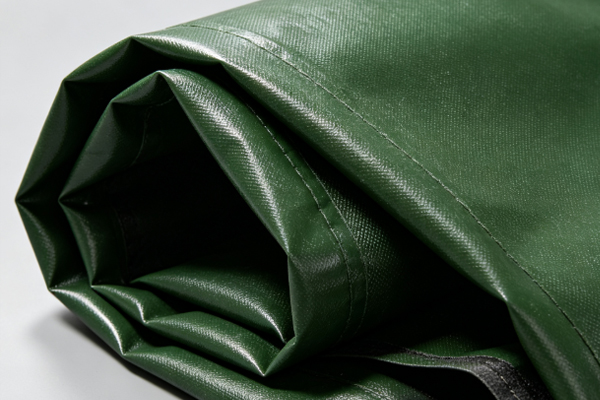
Both types of products can use PVC-coated polyester fabric, but products designed for printing generally require surface optimization to better accommodate subsequent printing processes.
Printed products need to allow ink to adhere consistently, so the surface condition directly affects image clarity and visual presentation.
The surface generally needs to provide good ink receptivity.
White or light-colored printing surfaces help reproduce image colors.
Glossy and matte surfaces can provide different visual effects.
Some products receive specific surface treatments according to the printing process.
This structure allows the tarpaulin to provide both protective performance and visual display functionality.
Ordinary tarpaulin is commonly used for cargo covering, equipment protection, and outdoor rain protection, with less emphasis on reproducing complex graphics.
The PVC coating mainly provides waterproofing and moisture resistance.
The polyester base fabric provides tensile and tear resistance.
Material specifications are generally focused on abrasion resistance, weather resistance, and service life.
For projects without visual display requirements, this type of product has a more clearly defined functional focus.
When tarpaulin is used for advertising or visual display, buyers need to consider not only material strength but also whether the graphics can remain stable and how the printed surface performs during long-term use.
Printed tarpaulin can be matched with UV, solvent-based, eco-solvent, or latex printing processes according to the material characteristics and equipment conditions. The specific process should be determined according to the surface treatment.
It can display advertising text and graphics.
It is suitable for producing large-format images.
Graphic content can be customized according to project requirements.
Different surface finishes can affect the visual quality of the finished product.
For tarpaulin projects that require promotional content, this material can combine covering functions with visual display.
Ordinary tarpaulin can also be used for markings or simple graphics depending on the product, but its core design is generally centered on protective performance.
Color selection mainly serves functional requirements.
Complex graphics are not usually a primary performance criterion.
If detailed printing is required later, surface compatibility should be confirmed separately.
If the main purpose of the project is covering cargo or equipment, there is no need to select higher specifications solely for printing capabilities.
Printed performance depends not only on the tarpaulin itself, but is also affected by the ink, UV protection, PVC formulation, base fabric, and outdoor environment. For long-term use, buyers can focus on:
Color retention of the graphics.
Surface abrasion resistance.
Waterproofing and weather resistance.
Surface condition after folding and rolling.
Checking these factors in advance helps prevent buyers from focusing only on initial printing quality while overlooking long-term performance.
The choice between the two types of tarpaulin is closely related to the final application. Once the primary function required from the material is clear, the purchasing scope becomes easier to define.
For applications that require continuous visual presentation, printed tarpaulin can combine covering and promotional functions.
Outdoor advertising graphics.
Event backdrops and exhibition barriers.
Construction-area promotional displays.
Temporary exhibitions and brand displays.
Depending on the dimensions and installation method, the material can also undergo cutting, heat welding, eyelet punching, and other secondary processing to accommodate different installation structures.
Truck tarpaulins, cargo covers, and equipment covers generally place greater emphasis on the material’s waterproofing, tensile strength, and abrasion resistance. For these projects, buyers can focus on polyester base fabric specifications, GSM, coating structure, and weather resistance. If there is no promotional display requirement, there is no need to add extra costs for printing capabilities.
Truck side curtains, outdoor barriers, and certain temporary construction materials may need to block rain while also displaying text or graphics. For these applications, product specifications can be planned according to finished dimensions, installation method, printing area, and expected service period, allowing the material functions to match the project requirements.
Products with the same name do not necessarily have identical specifications. Clearly defining key parameters before purchasing makes it easier to compare solutions and quotations from different suppliers.
Before requesting quotations, buyers can clarify the graphic dimensions, printing area, finished dimensions, and installation method.
Indoor displays mainly focus on visual quality.
Long-term outdoor use requires greater attention to weather resistance.
Large-format finished products require advance planning for joining methods.
Products that are frequently rolled and unrolled should have adequate flexibility.
This information helps suppliers accurately match the product specifications.
The actual performance of PVC tarpaulin is related to its internal base fabric and surface structure, so products should not be compared solely by name or thickness. When requesting quotations, buyers can confirm:
Polyester base fabric yarn specifications and weaving density.
Finished GSM and thickness.
Tensile strength and tear strength.
Surface treatment type.
Printing method and compatible ink.
UV resistance, mildew resistance, flame retardancy, and other functional requirements.
Once specifications are standardized, buyers can more easily determine what specific configurations account for differences between quotations.
For large-format or long-term projects, buyers can inspect samples before placing the final order. Key factors include actual color, image clarity, surface condition, waterproofing, flexibility, and heat-welding performance. The results can then be used to confirm the specifications for bulk production. Completing sample verification in advance can reduce discrepancies between the finished products and project expectations.
The core difference between PVC printed tarpaulin and ordinary tarpaulin is that the former needs to meet both graphic presentation and material protection requirements, while the latter mainly serves covering, waterproofing, and cargo protection purposes. Newstar Plastic Industry Co.,Ltd. provides PVC printed tarpaulin, PVC tarpaulin, and customized covering materials, with product solutions matched to customer requirements for dimensions, GSM, base fabric, and processing to meet the purchasing needs of different projects.
